
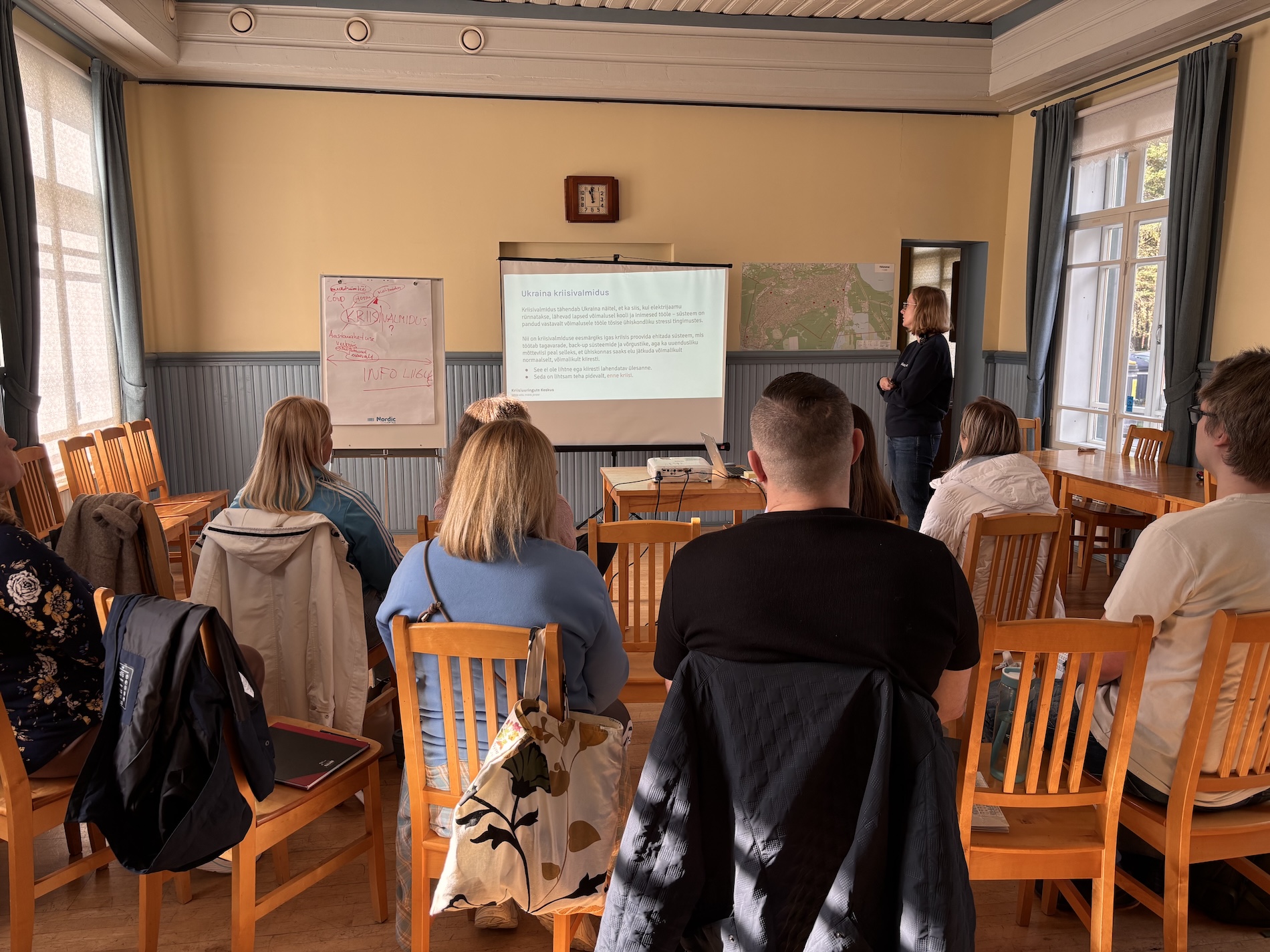
The first KRAKO crisis network training took place in Nõmme
Nõmme starts from a different position when preparing for crises than, for example, Haabersti or Mustamäe. Although the district also has apartment buildings, it is characterised by extensive areas of detached and private houses and a garden-city-style spatial structure. According to Tallinn’s data, Nõmme has considerably more single-family homes than apartment buildings. This means that crisis preparedness must also take into account people who are more dispersed across the area, different types of buildings, local roads and the needs of a wide variety of households.
“While Nõmme does have larger apartment buildings, it is predominantly an area of detached houses, which creates its own challenges for crisis preparedness. In a large apartment building, it may be possible to reach dozens of people through a single stairwell, whereas in areas of detached houses, people and resources are more dispersed. It is precisely in such situations that local people who know their street and neighbourhood become valuable: they can help identify needs, relay information and support the municipality’s activities,” said Anne-May Nagel, co-founder and researcher at the Crisis Research Centre.
During the training day, the Nõmme District Government introduced the principles of crisis preparedness at city and district level, as well as its expectations for the development of the local crisis network. The Crisis Research Centre addressed the role of communities in civil protection and covered the basic knowledge required in this area, while paramedic Andrus Lehtmets focused on practical first aid. These three perspectives – local government arrangements, the capacity of communities to act, and practical skills at individual level – also form a key part of the KRAKO training programme.
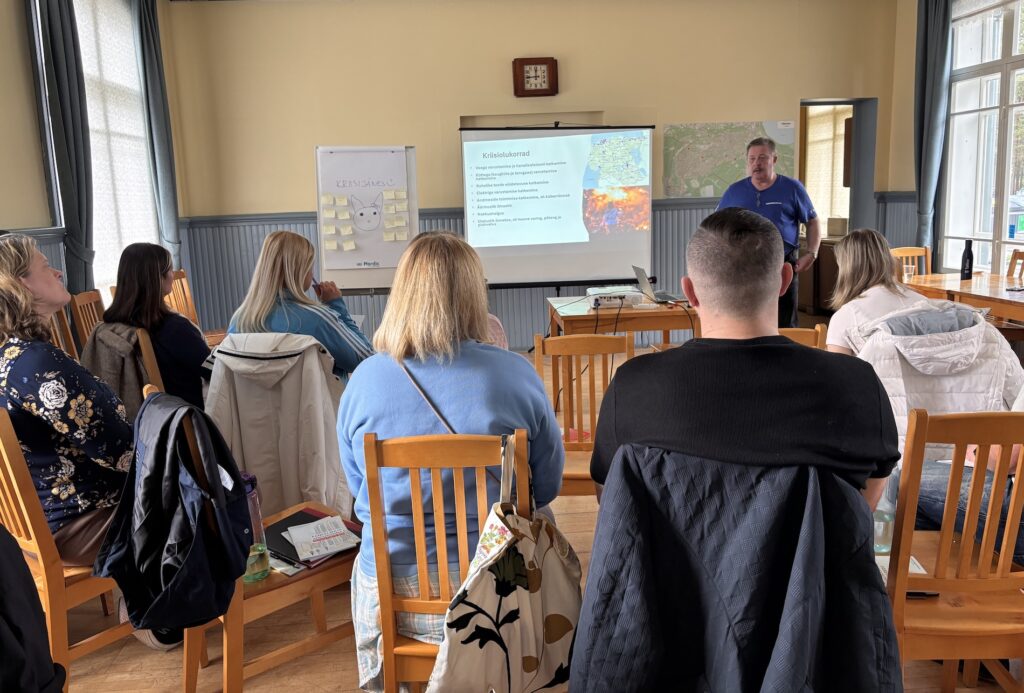
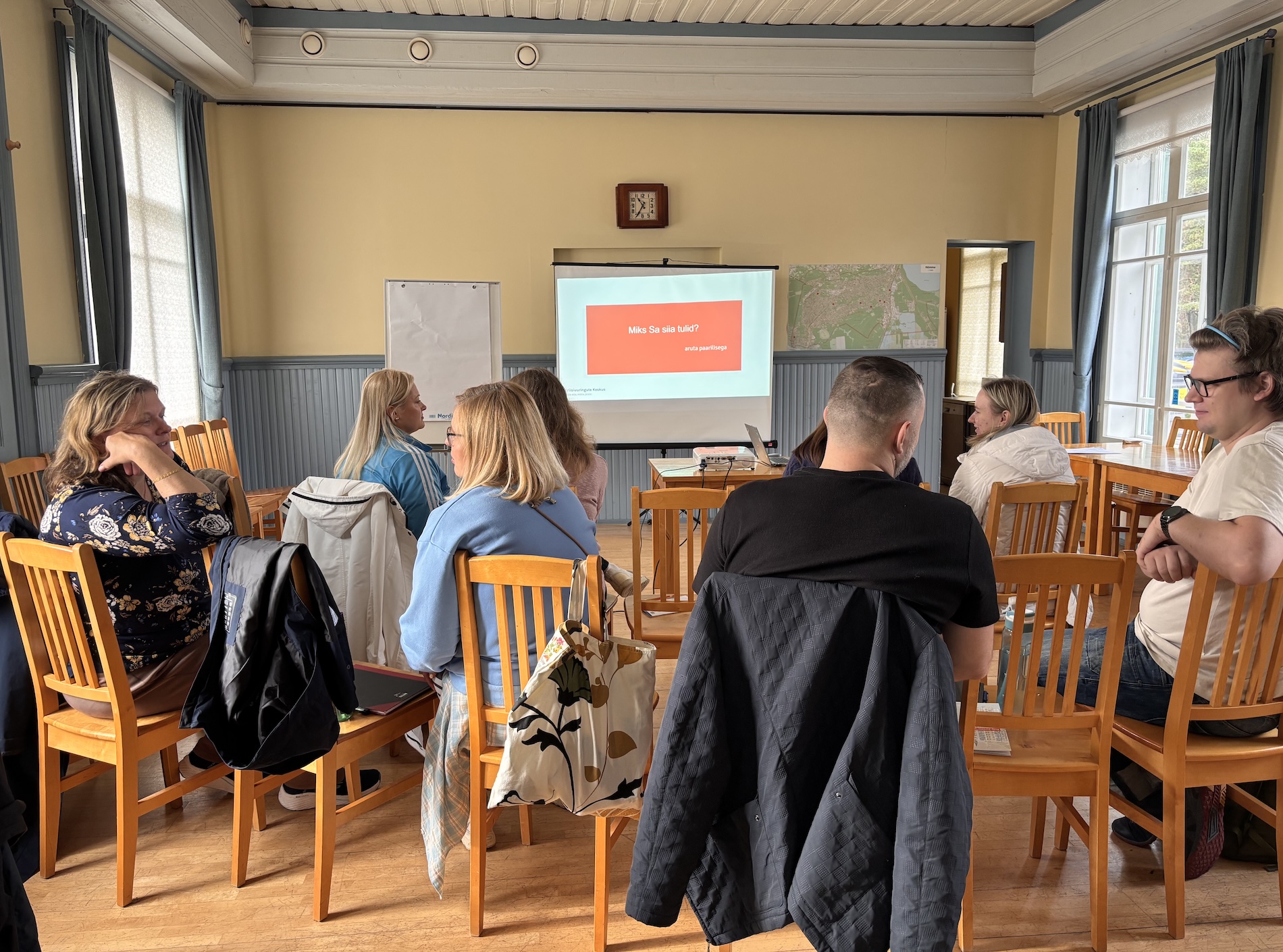
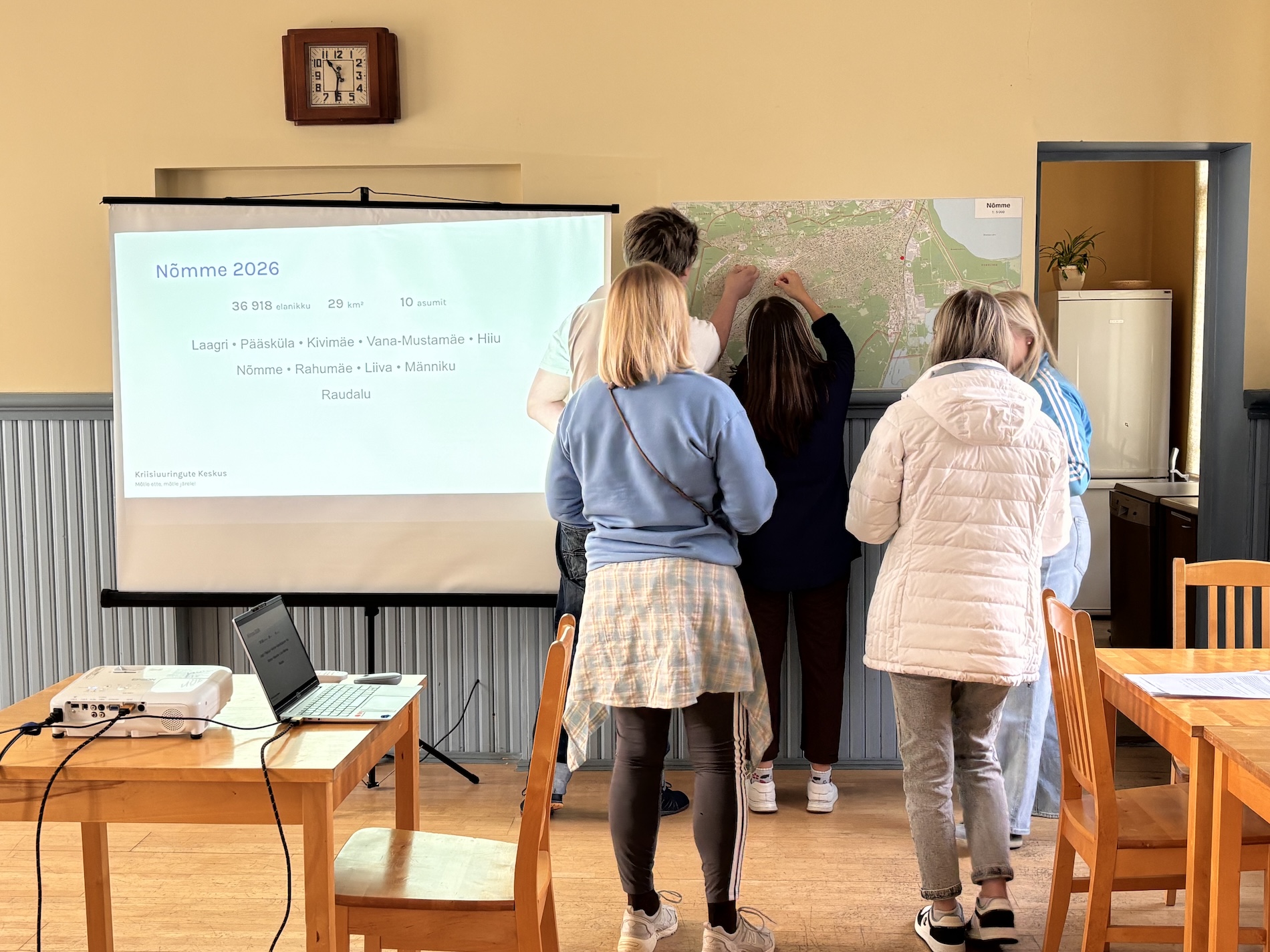
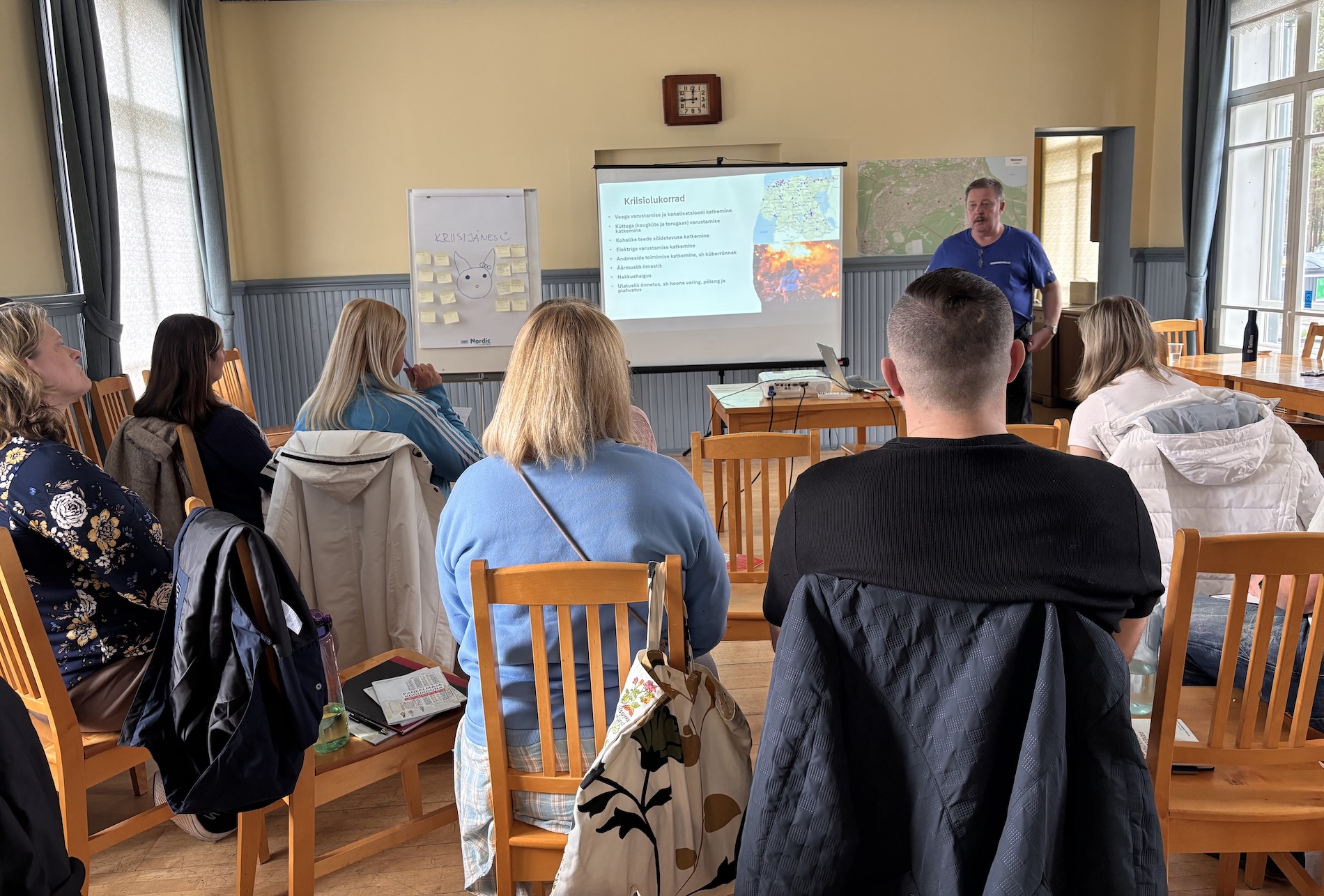
The KRAKO training explores crisis preparedness based on the needs and capacities of each district.
The purpose of the crisis network is not to create a new system alongside the city’s crisis management structures. The value of local residents lies in the fact that they are already present in the area and know the people, places and circumstances in their neighbourhood in a level of detail that cannot be replicated centrally. The municipality, in turn, has a role in connecting this local knowledge with workable solutions and establishing cooperation that can be put into practice when needed, by directing members of the crisis network to support the municipality’s crisis management teams. “Given the strong support from both the Nõmme community itself and the District Governor, Gerry Konnov, we are optimistic about strengthening crisis preparedness capacity in Nõmme,” said Tiit Kruusalu, Crisis Management Specialist at Nõmme District Government.
The next KRAKO crisis network training in Nõmme will take place on October 18 from 10:00 to 14:00, with the second part taking place on November 1 from 10:00 to 15:00. If you would like to better understand your role in a crisis, gain practical knowledge and meet other Nõmme residents who want to contribute to preparedness in their area, you can register for the training via Tallinn’s crisis preparedness webpage.
There is still space available on the next two-part training in Nõmme, taking place on October 18 and November 1. If you would like to strengthen your crisis preparedness and learn how to support your community, we encourage you to register here.
The KRAKO project is implemented by the Crisis Research Centre. The project is co-financed by the City of Tallinn, the Tallinn Municipal Police Department and the Crisis Research Centre.
Photos: Training session on September 20 (Crisis Research Centre, 2026).
🔺The use, distribution, modification or publication of this text or photographs is permitted only with the prior written agreement of the NGO Crisis Research Centre. Any unauthorised use is prohibited.
Jaga postitust: