KRAKO | The 5 Most Frequently Asked Questions in Nõmme
There was no shortage of humour in Nõmme, either. One of the more unexpected questions was even put to Tallinn’s Deputy Mayor, who attended one of the training sessions. KRAKO Project Manager Hannes Nagel answers five of the questions raised.
Who will be responsible for Nõmme’s volunteers once the KRAKO training programme has ended?
“This is a particularly important question, because establishing a volunteer network and keeping it running are two rather different undertakings. The Crisis Research Centre’s role in Nõmme was to bring together people willing to contribute, equip them with essential knowledge and skills, and lay the groundwork for future cooperation. From this point onwards, responsibility for coordinating and managing Nõmme’s crisis network passes to the City of Tallinn, through the Tallinn Municipal Police Department (MUPO). This means that maintaining contact with volunteers, potentially involving them in exercises and clarifying their responsibilities will now fall to the city.
We certainly hope that this will amount to rather more than simply having a list of 25 names somewhere. Keeping volunteers engaged and ready to contribute requires regular communication, a clear understanding of when their help might be needed, and opportunities to practise working together. Without this, even the most motivated people may gradually lose interest. Nõmme now has a promising starting point. The ball is firmly in Tallinn’s court.”
What role does the Crisis Research Centre itself play in Nõmme’s crisis network?
“Our role in this project is perhaps best described as providing foundational knowledge, initiating cooperation within the groups and creating the conditions needed for that cooperation to develop. Over recent years, the Crisis Research Centre has been developing a new methodology to help local people bring together their knowledge, skills and experience, and learn how to put them to use for the benefit of their communities. We do not simply gather people in a room and assume that a network will somehow emerge. Instead, we deliberately create opportunities for people to get to know one another, discover shared interests, recognise each other’s strengths and understand the circumstances in which they might be able to work together. In Nõmme, both groups demonstrated a genuine willingness to do precisely that.
Another important aspect of the Crisis Research Centre’s work is bringing practical experience and academic research together. Through KRAKO, we can gain a better understanding of how local networks take shape, what obstacles they encounter and what is needed for cooperation between volunteers and local authorities to work beyond the training environment. We are not there to replace the local authority or take over its crisis management responsibilities. We can help establish the foundations for effective cooperation, but maintaining and developing that cooperation must become part of the City of Tallinn’s own arrangements. This division of responsibilities allows our development work to deliver value well beyond the lifetime of the project.”
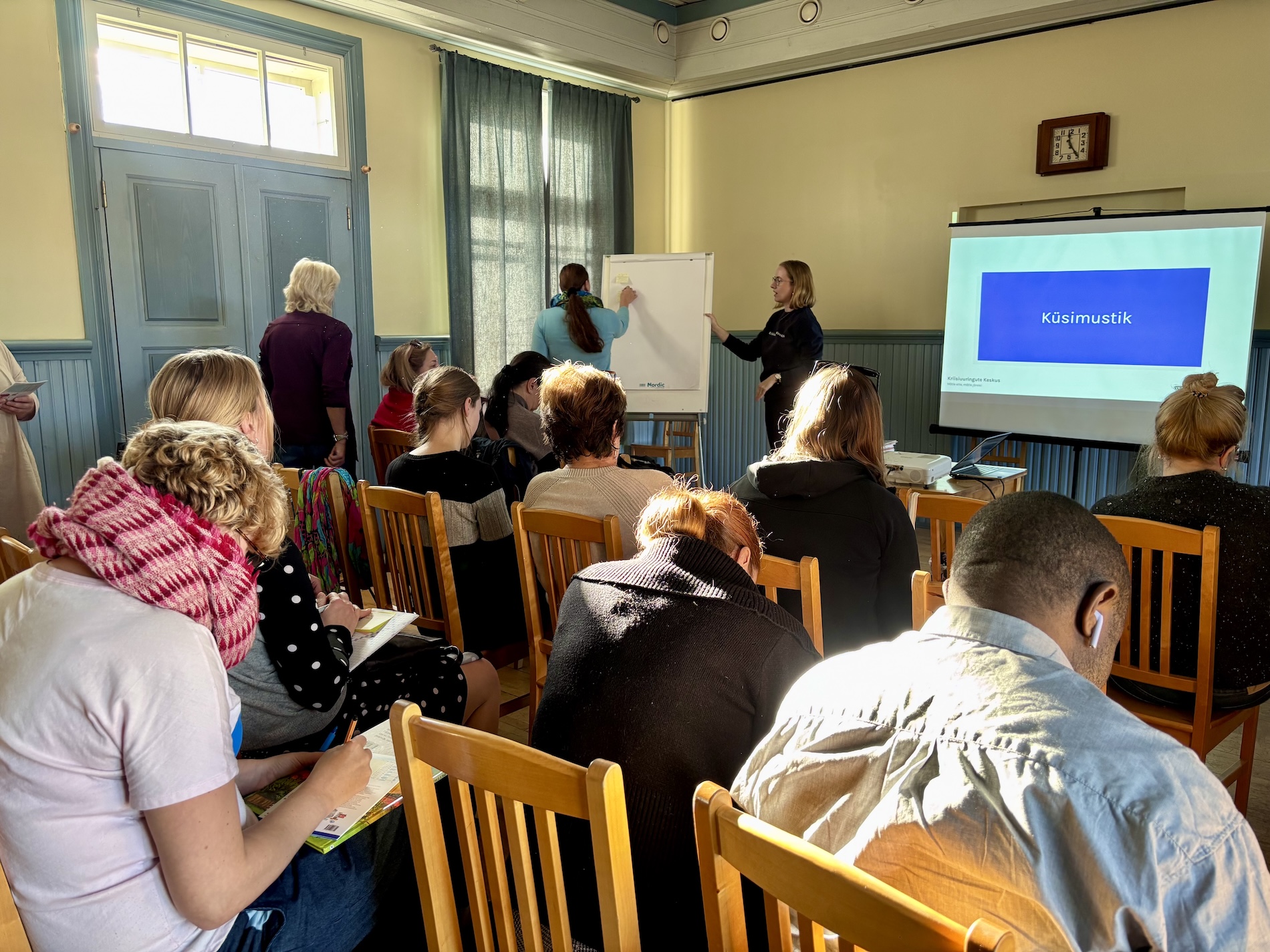
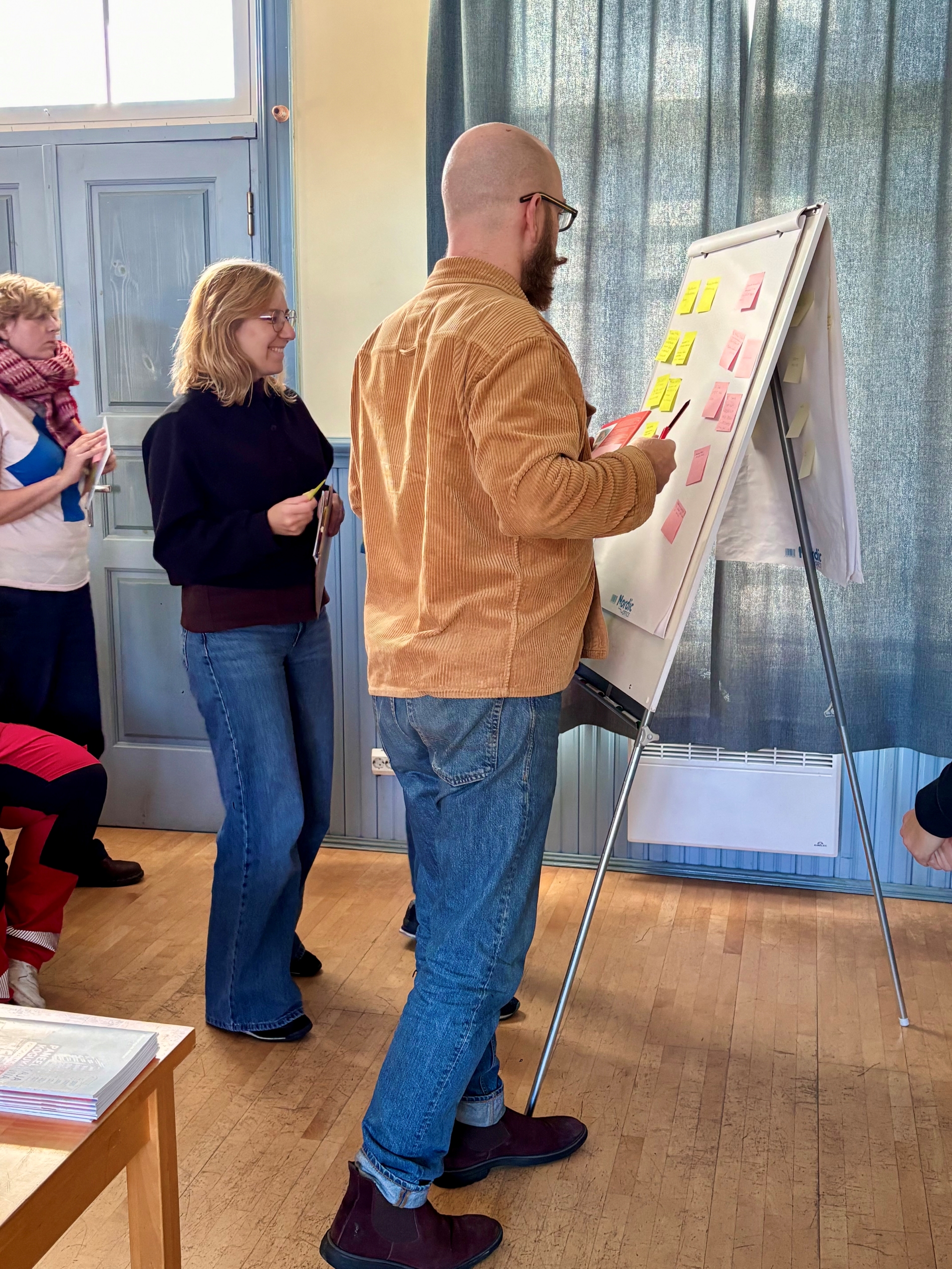
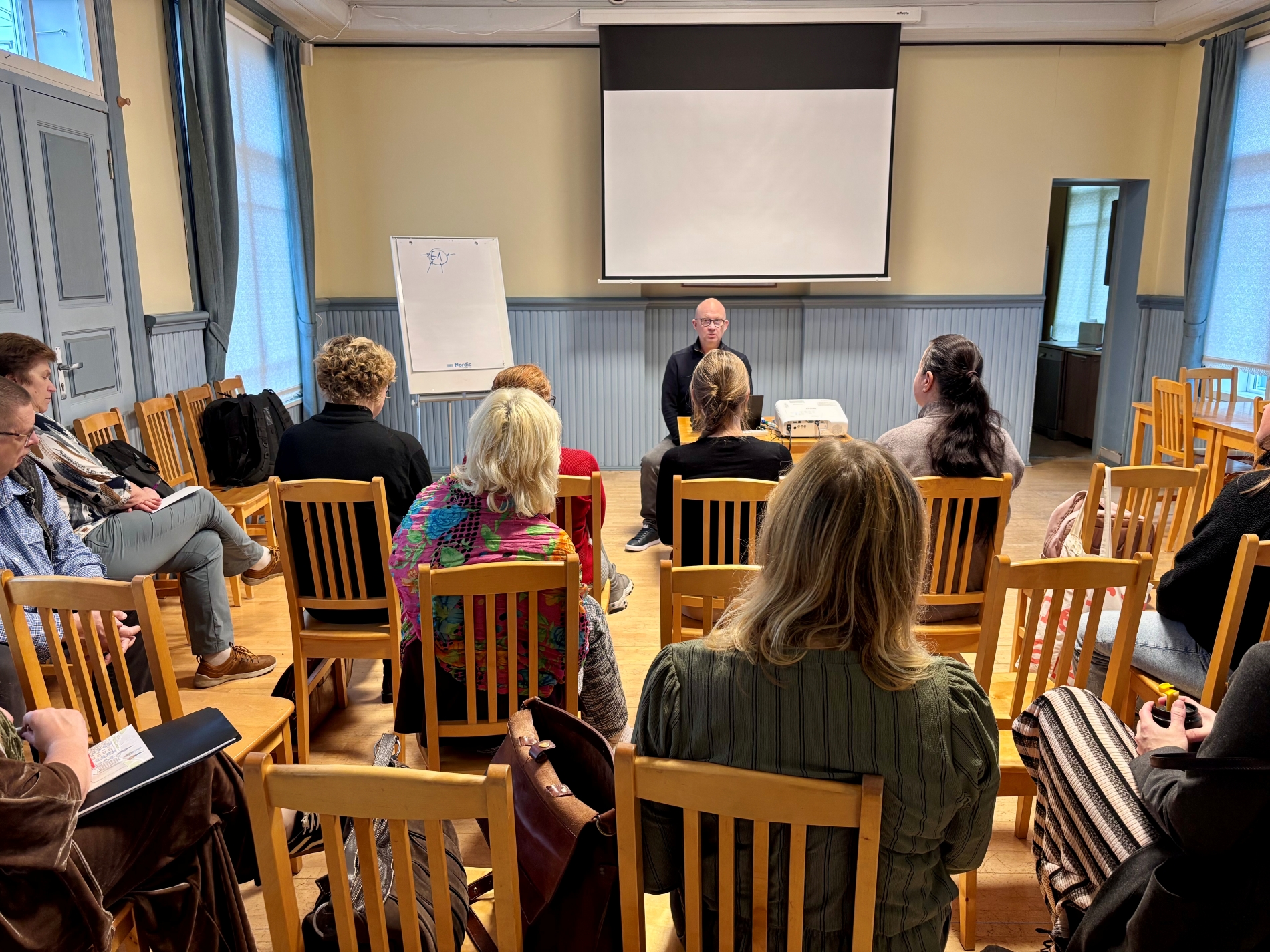
How can we reach people who need help during a crisis in Nõmme, where residents are spread across detached houses and smaller residential streets?
“One thing we need to bear in mind about Nõmme is that a large proportion of its residents live in detached or smaller residential properties, with households spread across a relatively wide area. In a large apartment building, you might be able to reach dozens of people through a single entrance. In neighbourhoods dominated by detached houses, however, the situation is rather different. During a prolonged power cut, for example, it may be difficult to establish which households need assistance, where older people living alone might be particularly vulnerable, or which residents have equipment and resources that could be used to help others.
This is where local residents become invaluable. They know their streets and neighbourhoods far better than any central authority ever could. They can help identify emerging problems, pass on information and alert the city to situations that might otherwise go unnoticed. This does not mean that every volunteer should suddenly become responsible for an entire neighbourhood. It does mean, however, that local knowledge can be enormously valuable during a crisis, particularly when normal communications and essential services are disrupted.”
Are 25 volunteers enough for Nõmme, and what exactly would they do in a crisis?
“When we consider that Nõmme has just one dedicated crisis preparedness specialist, a position that does not even exist in Tallinn’s other districts, bringing 25 additional people into the picture represents a substantial boost to its crisis management capacity. That said, we cannot pretend that 25 volunteers will somehow solve all of Nõmme’s preparedness challenges. Our aim was to establish an initial local network through which cooperation between the community and the city could be tested and developed further. For Nõmme’s crisis preparedness specialist, this network will undoubtedly be a valuable source of support.
Throughout the training programme, we have mapped participants’ skills, experience and willingness to contribute to different activities. The volunteers come from a variety of backgrounds, bringing knowledge and abilities that can complement one another. During a crisis, they could potentially help with sharing information, identifying local needs, directing residents to appropriate services, or carrying out other tasks for which they have received suitable preparation and which have been agreed with the city.
What matters, however, is that we do not make promises or assign responsibilities without first establishing how they would work in practice. Who calls the volunteers into action? Who gives them instructions? Under what circumstances would they be involved, and where would their responsibilities begin and end? These are questions that the City of Tallinn, together with the Municipal Police Department and the Nõmme District Administration, must address as the cooperation develops.
We have laid the foundations for moving forward. The next step is to turn that potential into a practical working arrangement, particularly as the volunteers now have considerable expectations about what comes next.”
Someone in Nõmme even asked the Deputy Mayor whether, alongside childcare, the city should consider setting up a ‘men’s daycare’ during a crisis. How on earth did that question arise?
“That was undoubtedly one of the more memorable moments of our training days in Nõmme! It all began with a fairly straightforward observation: women made up the majority of participants in both training groups. This quickly developed into a lively discussion about where all the men had gone and why so few seemed to be taking part in community crisis preparedness activities.
Of course, lower male participation in our sessions does not mean that men are uninterested in crisis preparedness or have no role to play. Quite the contrary. People have very different responsibilities during emergencies, and some men may, for example, have national defence obligations. But even this perfectly reasonable explanation was not enough to put the brakes on Nõmme’s increasingly spirited debate.
At some point, with impressively straight faces, the discussion turned to whether we might inadvertently have discovered a previously overlooked group in need of support. After all, if emergency planning needs to account for childcare, should we perhaps also consider providing a ‘men’s daycare’ service?
The suggestion went down so well that the question eventually found its way to Tallinn’s Deputy Mayor, who was visiting the training session. Nõmme’s particular brand of dark humour was certainly on fine form!
Naturally, this was a joke that grew out of the participants’ observations and shared discussion, rather than a serious proposal to establish a dedicated welfare service for men. Nevertheless, the original observation raised a perfectly legitimate question: how can we involve more people of different ages, backgrounds and experiences in community crisis preparedness, including more men?
For me, the episode illustrated rather nicely just how lively a Crisis Research Centre training day can become. I have no desire to see people sitting quietly for hours, simply listening to someone talk at them. Quite the opposite. We make extensive use of participatory learning methods and want people to discuss, debate, question, share their experiences and feel comfortable enough to have a laugh along the way.
Preparing for crises is serious business, but that does not mean everyone has to wear a serious expression throughout. Quite the opposite, in fact. What also matters is that, when people feel sufficiently at ease with one another, even the simplest observation can spark a discussion that contributes to the learning experience in ways no trainer could possibly have scripted into the day’s agenda.”
The KRAKO project is implemented by the Crisis Research Centre. The project is co-funded by the City of Tallinn, the Tallinn Municipal Police Department and the Crisis Research Centre.
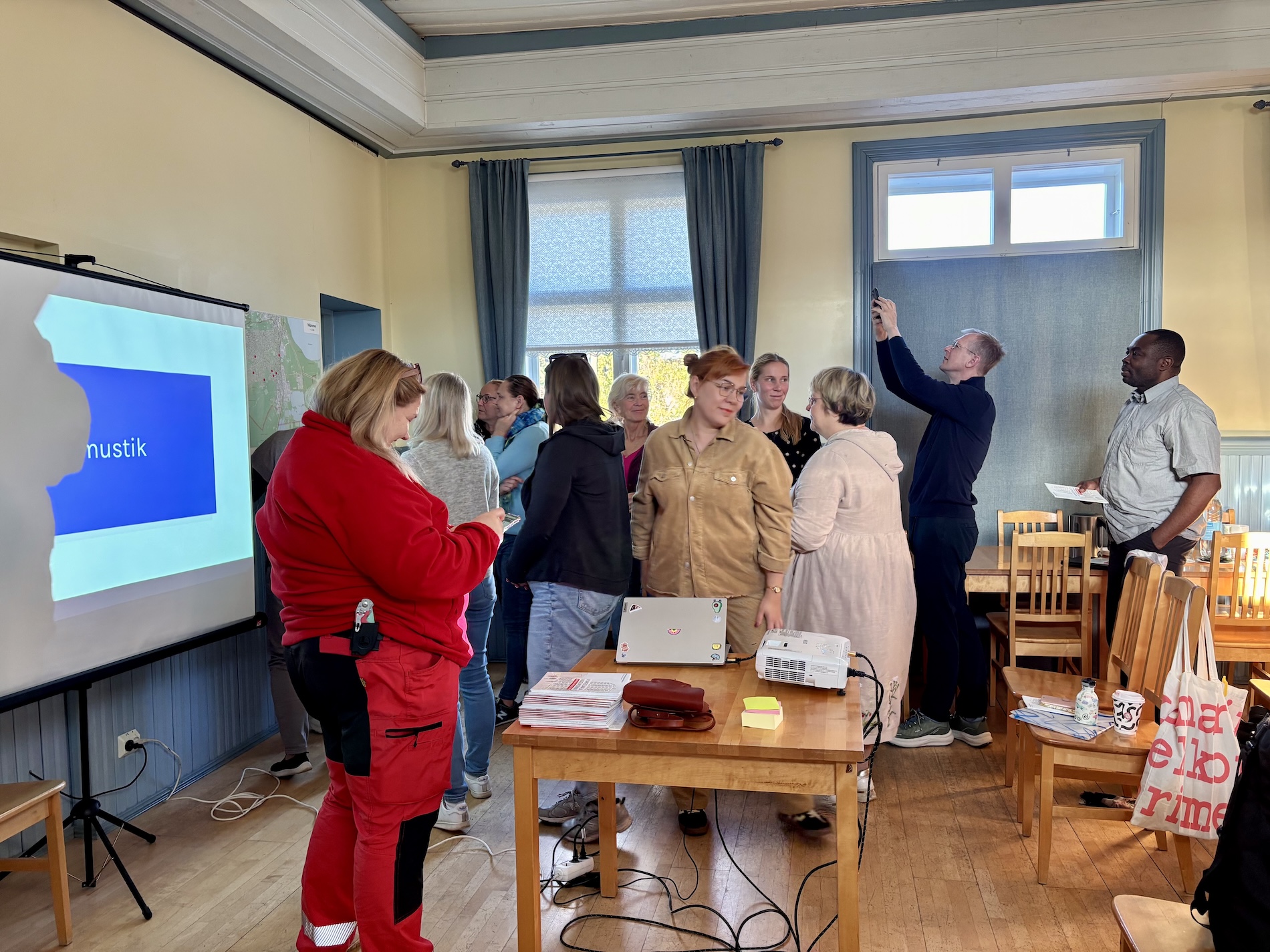
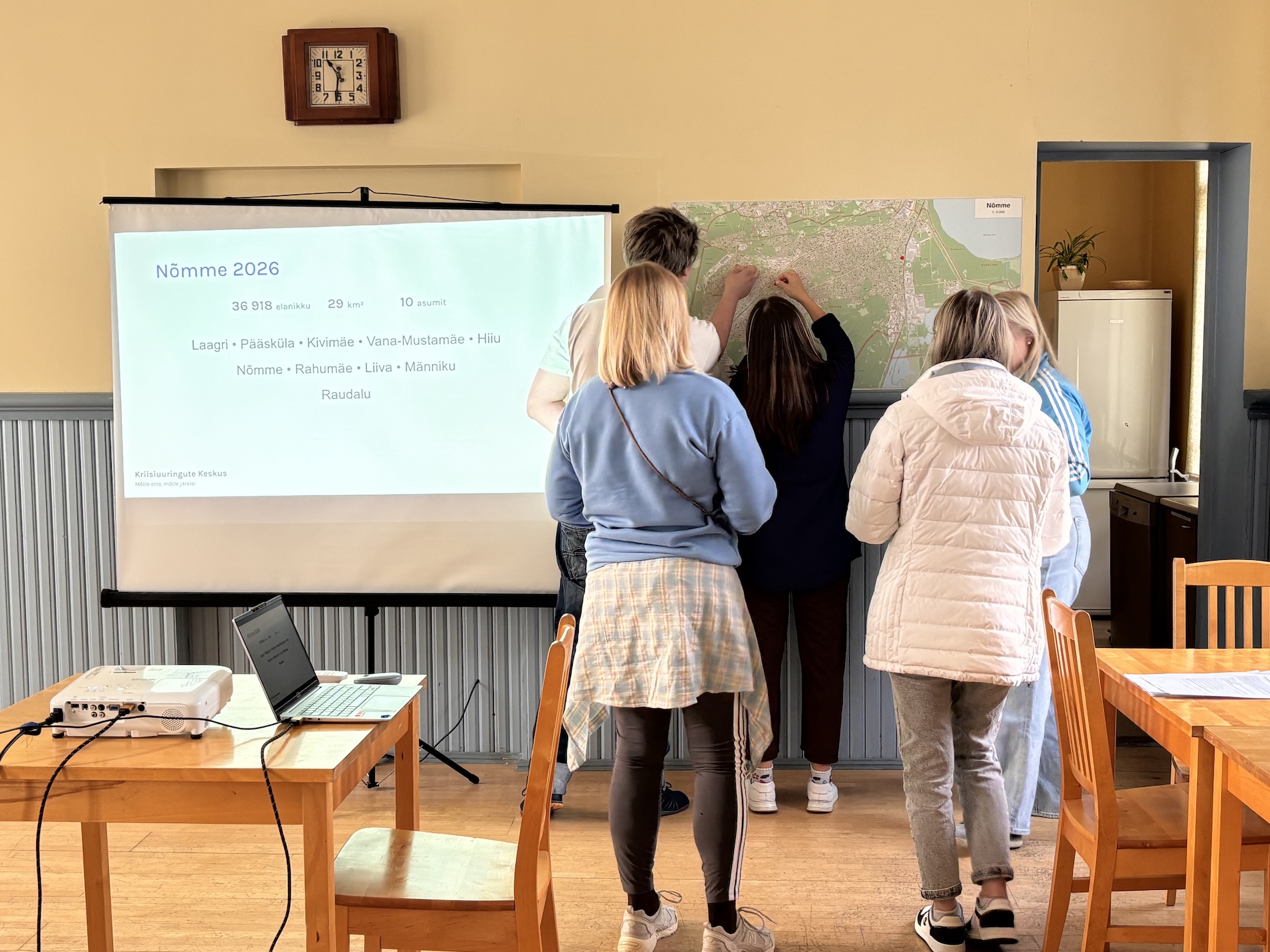
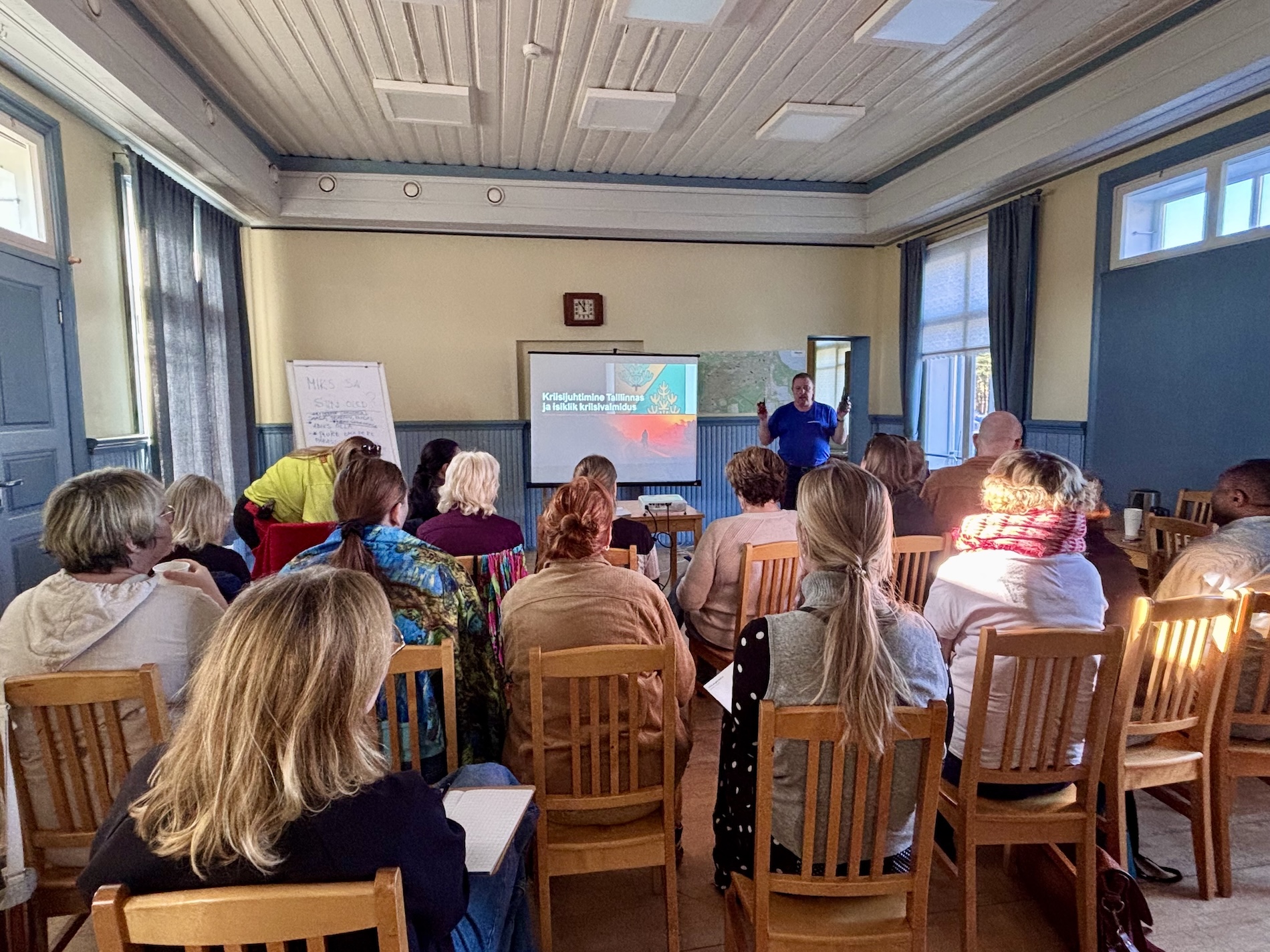
Photos and video: KRAKO training sessions in Nõmme (Crisis Research Centre, 2026).
🔺The use, distribution, modification or publication of text and images is permitted only with the prior written consent of the NGO Crisis Research Centre. Any unauthorised use is strictly prohibited.
Jaga postitust: