
Urban Gardening and Urban Crisis Preparedness: EDENTallinn Seminar Brings Together Practitioners and Experts
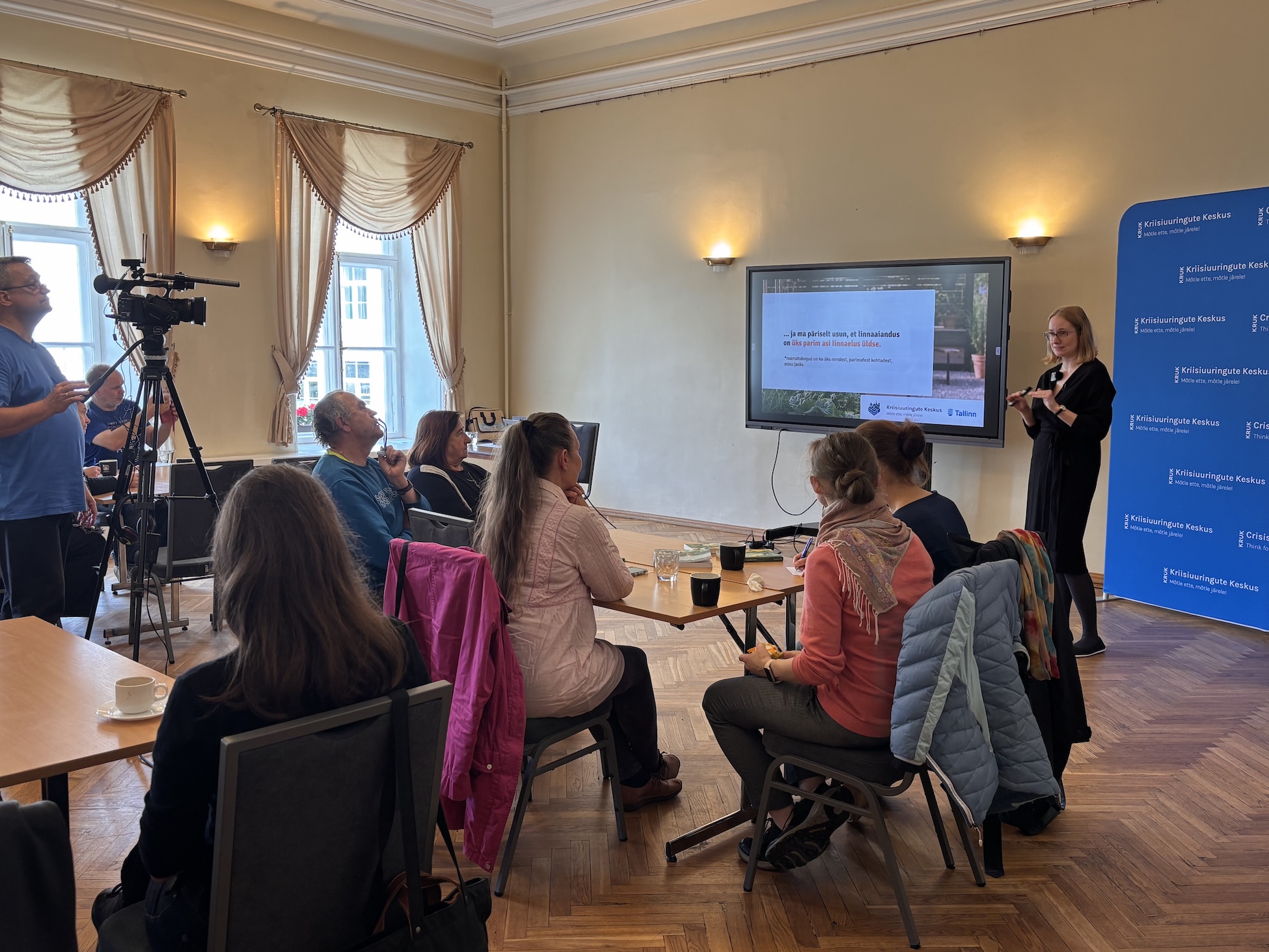
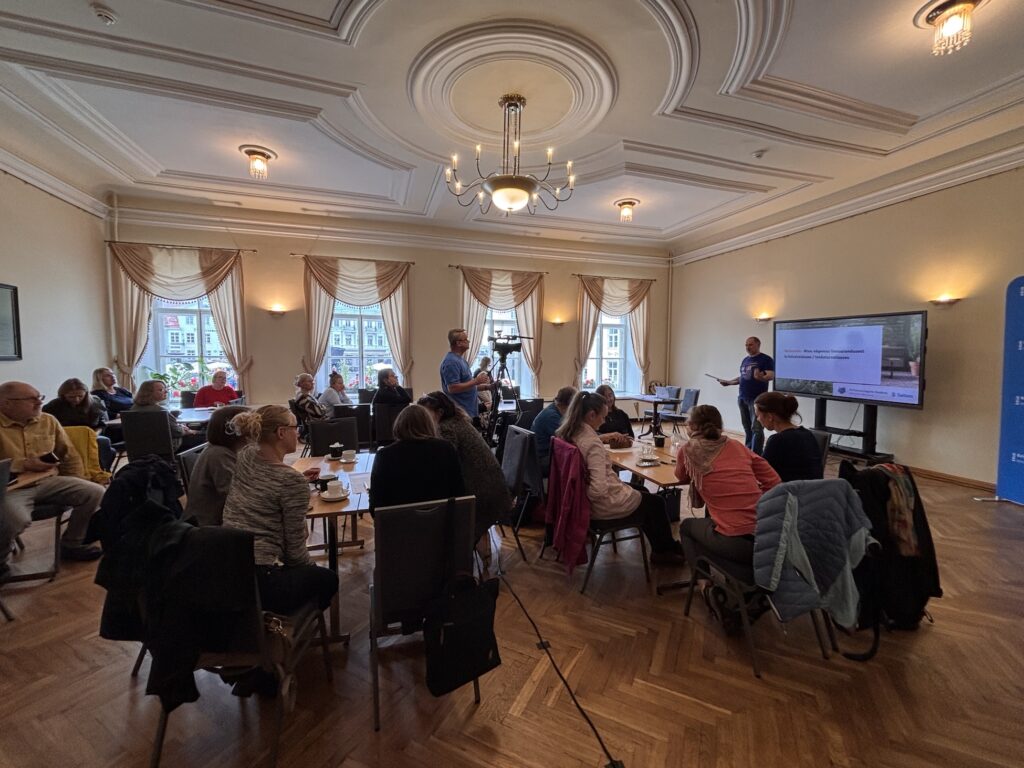
On September 19, the Crisis Research Centre held a seminar as part of the EDENTallinn project, “The Role of Urban Gardening in Food Security”, which explored community and urban gardening from a broader perspective: what role can urban food growing, practical skills and community networks play in strengthening residents’ food security and crisis preparedness?
The seminar focused on the question of what urban gardening can realistically contribute to crisis preparedness. Community gardens cannot replace functioning food supply chains during a crisis or meet the food needs of an urban population, but their value may lie in the practical skills, experience and interpersonal networks that are developed before a crisis occurs.
A welcome message on behalf of the Tallinn Urban Environment and Public Works Department was delivered by Tallinn Deputy Mayor Tiit Terik, who emphasised the importance of such local initiatives in strengthening municipal crisis preparedness. Preparedness for crises is not built through plans and institutional measures alone; it also depends on communities’ capacity to act and on residents’ practical knowledge and skills.
Thousands of people already form an existing network
According to Anne-May Nagel, co-founder and researcher at the Crisis Research Centre, it is important to recognise that a significant network of people and organisations has already developed around urban gardening in Tallinn. “Approximately 2,800 people are involved in Tallinn’s urban gardening network. In the Estonian context, this is a considerable number by comparison, the Women’s Voluntary Defence Organisation has nearly 4,000 members nationwide. Of course, the purpose and level of preparedness of these networks are entirely different, but the comparison helps illustrate just how many people in Tallinn are already engaged in activities that bring together practical skills, the local environment and community cooperation,” Nagel said.
At the same time, the urban gardening network should not be viewed as a crisis response network. Rather, the question is how to recognise and support existing local networks through which people already meet, cooperate and develop practical knowledge. “In crisis preparedness, we talk a great deal about what people should know or keep stocked at home. Just as important, however, is what they can actually do and who they are able to cooperate with in their local community. A community garden is one of the few places in an urban environment where these two dimensions come together very naturally,” Nagel added.
A community garden may be a resident’s first experience of growing food
Urban gardening is particularly important in densely populated urban environments, where many residents do not have a private garden or other opportunities to grow food. Community and educational gardens offer practical experience even to people who have never previously sown seeds, cared for plants or grown produce.
“For many people living in apartment buildings, a community garden may be the first place where they gain real experience of how food grows, what plants need in order to thrive, and how much time and resources growing food actually requires. We are not suggesting that Tallinn could feed itself through community gardens during a crisis. What we are talking about are basic skills and knowledge that make people more aware and increase their capacity to act in a crisis,” Nagel emphasised.
From the perspective of crisis preparedness, the significance of urban gardening therefore extends beyond the amount of food produced. Equally important may be knowledge of growing plants, seasonality and the origins of food, the ability to make use of limited resources, and the social ties that develop through shared activities. In recent years, community gardens have expanded rapidly in Tallinn and can now be found in every city district.
The Tammsaare food forest shows how such cooperation can develop in practice
As one practical example, the Institute of Baltic Studies presented its experience of establishing the food forest at Tammsaare 79b. The community food forest being developed in Mustamäe demonstrates how urban space, food growing, biodiversity and resident involvement can be approached as an integrated whole. The food forest is being developed through cooperation between the Mustamäe District Government, the Estonian University of Life Sciences and the Institute of Baltic Studies Institute, with the local community involved in its establishment and development. It has been designed as a multi-layered planting area featuring, among other things, fruit-bearing trees, shrubs, herbs and other plants.
The Tammsaare 79b example also highlighted one of the central questions of the EDENTallinn project: how can everyday environmental and community initiatives become part of broader local preparedness without assigning them unrealistic responsibilities in times of crisis?
EDENTallinn connects food security, communities and crisis preparedness
DENTallinn approaches community and educational gardens as part of a broader discussion on how urban communities can contribute to food security, environmental awareness and crisis preparedness. The discussions and practitioners’ experiences gathered during the seminar will inform the next stage of the EDENTallinn project. As part of the project, a publication will be produced to help communities, local governments and other interested parties understand the realistic role that community and educational gardens can play in supporting food security and crisis preparedness.
🟠 The project is co-funded by the City of Tallinn and the Tallinn Urban Environment and Public Works Department together with the Crisis Research Centre. Read more about EDENTallinn project news and blog posts here.
Photos: Seminar held on 19 September (Crisis Research Centre, 2026). Videos: Vallo Laurimaa/Tallinn Urban Environment and Public Works Department, 2026.
🔺The use, distribution, modification or publication of the text, photographs and videos is permitted only with the prior written consent of the NGO Crisis Research Centre; unauthorised use is not permitted.
Jaga postitust: