
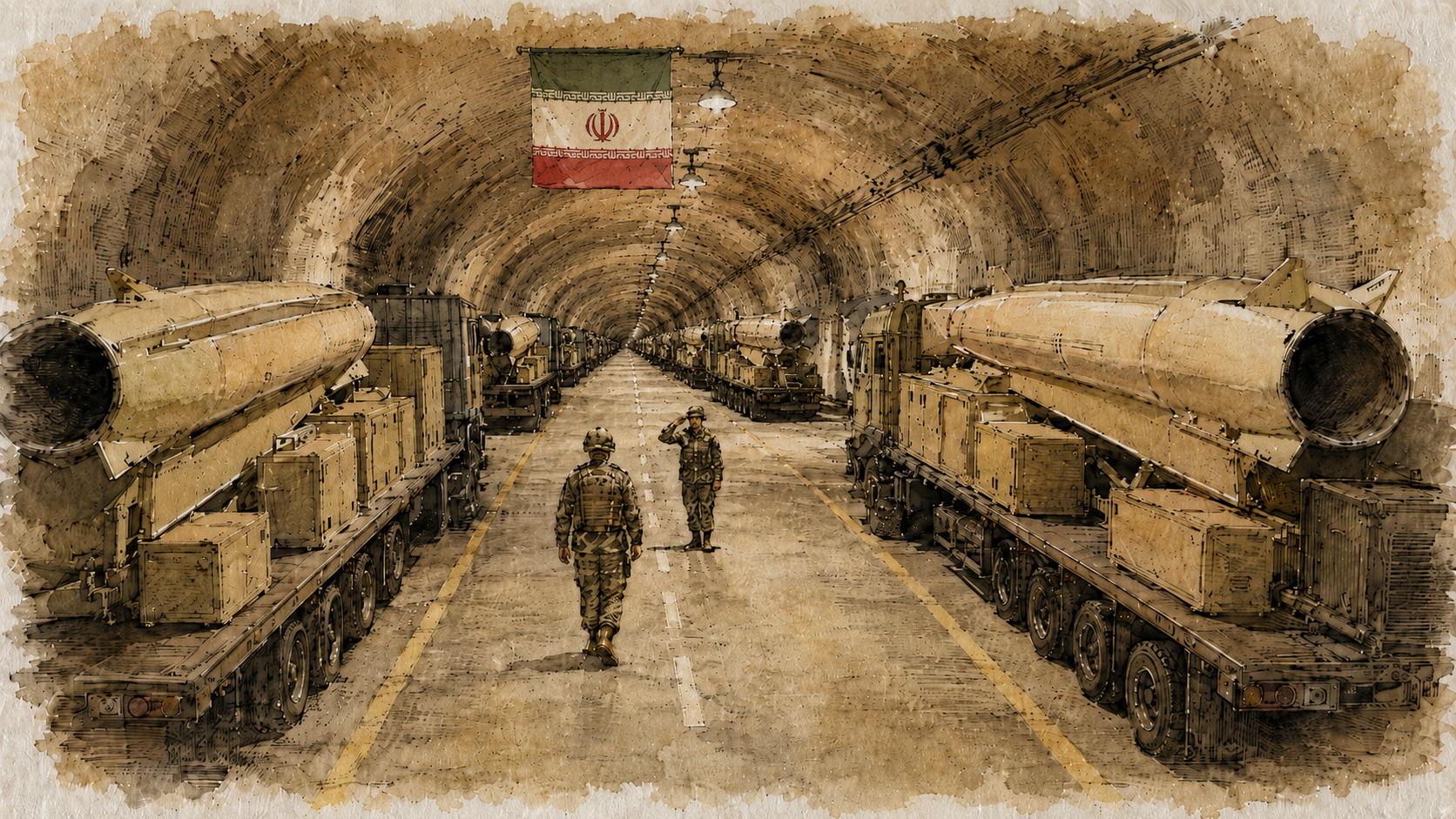
Time as a Weapon: The Logic of Iranian Warfare
There is one country that repeatedly emerges at the centre of crises in the Middle East: Iran. The former empire is no longer what it once was, yet since the 1979 Revolution, Tehran has consistently sought to shape regional politics to its advantage. This raises two questions that haunt every new escalation: what does Iran actually want, and is it a strategically consistent state capable of playing the long game? A closer look at Iran’s confrontations with Israel offers little convincing evidence of overwhelming Iranian power or extraordinary cunning. Yet almost everyone in the region feels the extent of its influence. That influence does not need to be all-powerful to be sufficiently dangerous.
To understand Iran’s contemporary confrontation with the United States and Israel, one must look back not only to the 1979 Revolution, but also to an earlier period when the country’s relationship with the West became deeply contradictory.
The discovery of oil in the early twentieth century suddenly transformed Iran into a strategic resource hub and brought with it significant foreign influence, particularly from Britain. The Anglo-Iranian Oil Company (today’s BP) exercised extensive control over Iran’s oil industry, leaving the country itself with a relatively small share of the revenues. This generated widespread public dissatisfaction and reinforced the perception that Iran’s wealth was effectively in the hands of foreign powers.1,2
Tensions culminated in 1953 when Iran’s democratically elected Prime Minister, Mohammad Mossadegh, decided to nationalise the oil industry in an effort to restore the country’s control over its principal natural resource. In response, the United States and the United Kingdom orchestrated a coup that removed Mossadegh from power and re-established the authority of the pro-Western Shah, Mohammad Reza Pahlavi.³
The event left a deep imprint on Iran’s political consciousness. It reinforced the belief that Western powers were willing to interfere in Iran’s domestic affairs to protect their economic and strategic interests, and that the country’s sovereignty was ultimately conditional. In the decades that followed, the Shah sought to modernise Iran and integrate it more closely with the West. However, this process unfolded in an authoritarian manner and produced a profound structural contradiction. On the one hand, extensive reforms were implemented, including industrialisation, the expansion of education and the development of infrastructure. On the other hand, political participation was restricted and the regime relied heavily on a repressive security apparatus, most notably the secret police known as SAVAK (Sazeman-e Ettela’at va Amniyat-e Keshvar; Persian: سازمان اطلاعات و امنیت).⁴
Modernisation proceeded without political liberalisation, meaning that while Iran became more modern on the surface, it also became more fragile internally. This was further reinforced by what has been described as the “sovereignty paradox”: the regime emphasised Iran’s national greatness and independence while simultaneously depending heavily on American political and military support.⁵
Alongside economic and political tensions, a deeper identity conflict emerged. The Pahlavi regime promoted a secular form of nationalism and emphasised Iran’s pre-Islamic heritage, whereas a large segment of society—particularly the clergy and more traditional social groups—viewed this as the marginalisation of Islam’s role in public life.⁴ As a result, modernisation did not represent progress for everyone. For many, it signified cultural alienation and political repression. Over the decades, pressure accumulated that found no meaningful outlet through institutional politics.
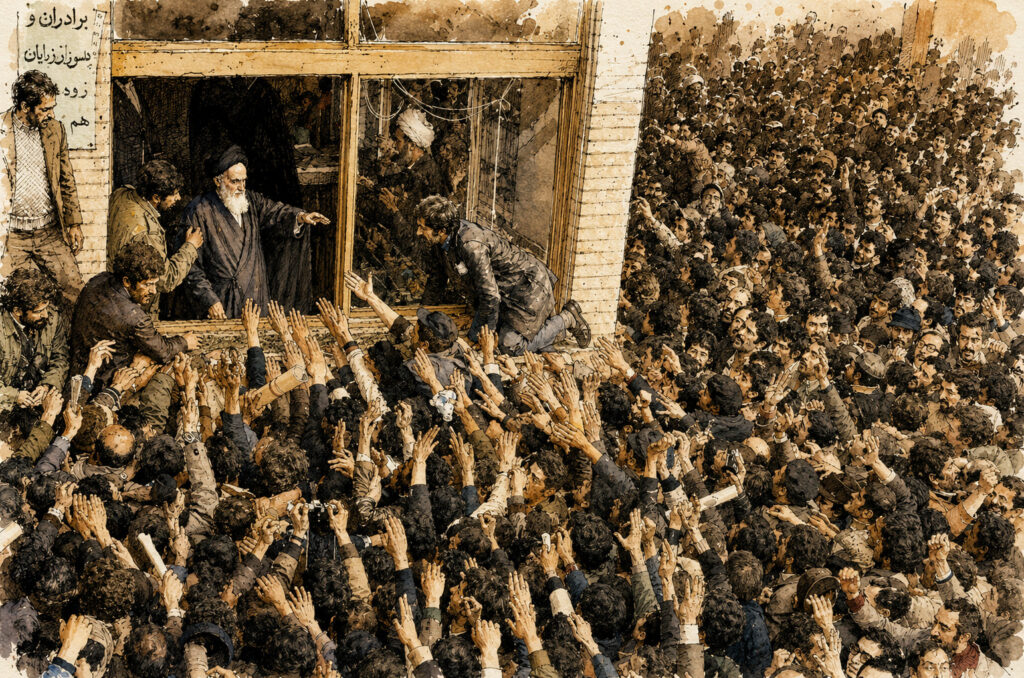
The 1979 Revolution was the explosive culmination of these tensions. With the rise of Ayatollah Ruhollah Khomeini, Iran became an Islamic Republic—a system that consciously defined itself in opposition both to the Shah’s rule and to Western influence more broadly. The revolution was not merely a change of regime but an ideological turning point centred on the belief that Iran needed to free itself from external domination and restore its political and cultural autonomy.⁶ The seizure of the U.S. Embassy in Tehran and the subsequent 444-day hostage crisis were not isolated incidents but symbolic acts that cemented the revolution’s anti-Western identity and severed the strategic partnership that had previously existed with the United States.⁷
Since then, Iranian foreign and security policy has been shaped by a deeply embedded logic of self-defence. Tehran views itself as a state that has repeatedly been subjected to external interference and attempts at destabilisation. This perceived threat has become a central driver behind both the construction of Iran’s regional network of influence and its enduring confrontation with the United States and its allies.⁸ Subsequent events, such as the killing of General Qassem Soleimani, have further reinforced this narrative and strengthened the belief that the conflict with the West is not temporary, but structural in nature.
Seeking Survival — and, If Needed, Escalation Advantage
Thus, over the decades, Iran-backed groups have built an extensive network of influence across the Middle East, which Tehran refers to as the “Axis of Resistance”. This is not merely a flexible network, but a partially integrated operational space in which the activities of different groups can be timed and coordinated. The central logic of this network is simple: to keep confrontation as far away from Iranian territory as possible, while, if necessary, supplementing indirect warfare with limited direct strikes. It is a strategy that does not seek to win a decisive battle, but to wear down the adversary and gradually test the limits of escalation.
Iran’s real strength no longer lies only in indirect warfare, but in its ability to connect proxy groups, direct strikes, maritime pressure, drone warfare and political signalling into a sustained architecture of pressure. The influence projected through Gaza, Lebanon, Iraq and Yemen does not depend on weapons alone, but on a long-term ideological investment in which these groups are not simply mercenaries; they have become carriers of identity and narrative. More precisely, opposition to Israel, the United States and their closest allies forms part of a broader worldview that is not deterred by disruptions in arms supplies or the elimination of individual key figures. In an environment of sanctions and permanent crisis, Iran has built a system oriented toward endurance and adaptation.
Here lies one of the persistent misjudgements in strategies aimed at countering Iran: the assumption that eliminating key individuals can break the system. In reality, such strikes usually reduce only its coordination, tempo and strike capacity temporarily. They may not dismantle the system at all, but instead reinforce its own self-understanding: people can be replaced, facilities can be rebuilt, while the regime narrative constructed around resistance to an external enemy gains renewed legitimacy from the attack. The same applies to the Syrian front. Even if a key corridor has weakened, this does not yet mean the disappearance of Iranian influence, but rather its transformation into something more fragmented and harder to target. At the same time, it cannot be denied that recent years have also brought Iran serious setbacks. The weakening of Syria as a key land-connection hub directly restricts Iranian logistics and reduces the cohesion of its regional network, but the more likely response is not retreat, but dispersal, rerouting and more concealed recovery.
This is precisely where the particular nature of Tehran’s strategic culture becomes visible. Defeat does not necessarily mean withdrawal, but adaptation; and when direct influence declines, indirect pressure is applied instead. The rapprochement between Iran and Russia fits this pattern. It is not adorned by shared values, but driven by geopolitical objectives, where the parties need one another while never fully trusting each other. Iran receives at least partial military and diplomatic support from Russia and, in return, offers technological and defence-industrial cooperation. Yet this relationship does not fundamentally strengthen Iran’s strategic position. Rather, it indicates that Iran seeks both balance and escalation advantage depending on the situation, combining indirect and direct forms of attack. Even a possible ceasefire agreement or temporary arrangement between Washington and Tehran would not alter this basic logic; it would more likely mark an operational pause before the next cycle of adaptation and revenge.
From Indirect War to Nuclear Deterrence
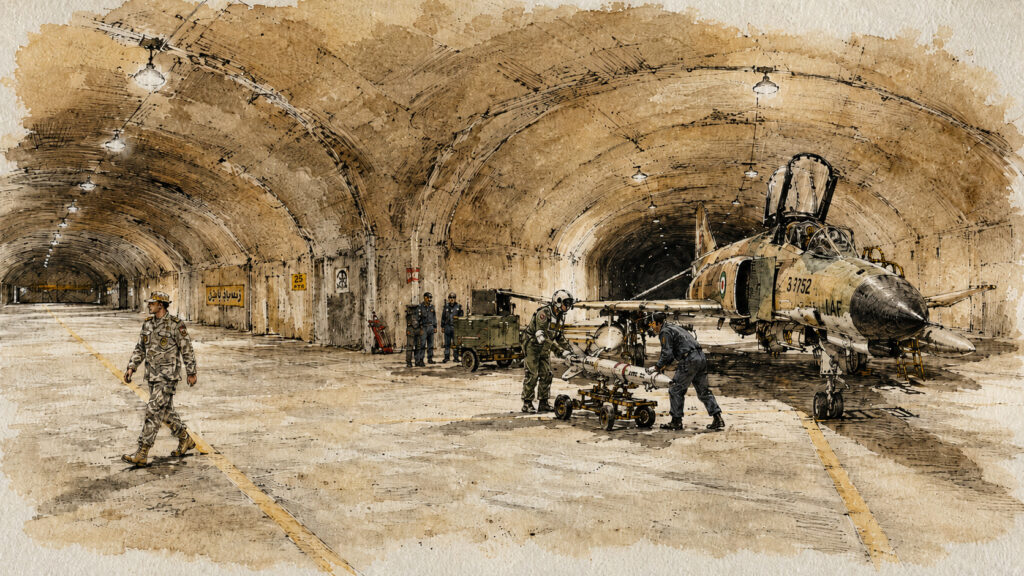
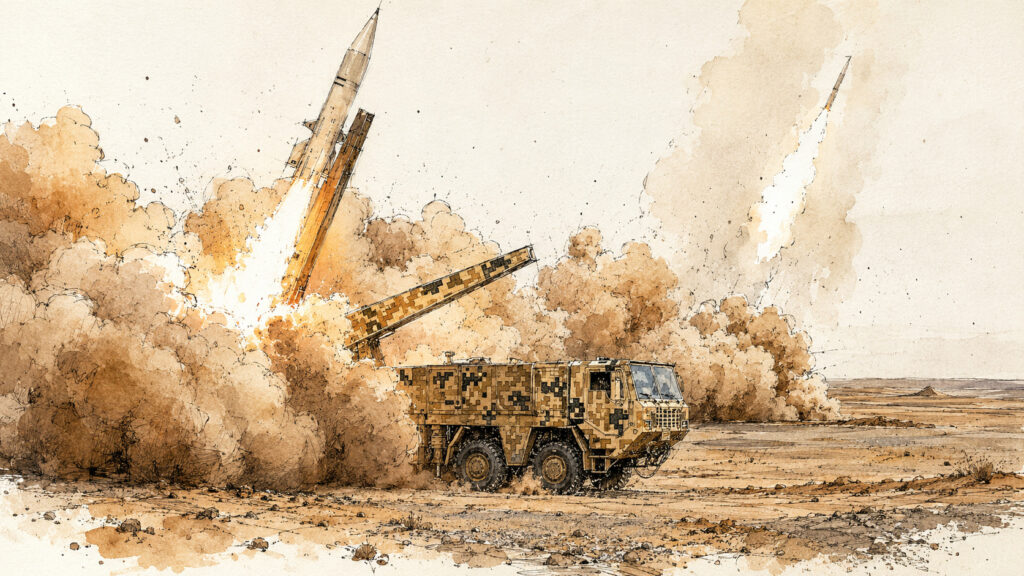
In the long run, Iran could not afford a full-scale war. Yet the operation that began on 28 February 2026 shows that it may become drawn into one in a way that the regime later deliberately reinterprets as proof of its own survival. This situation has led — or may lead — not only to asymmetric responses, but also to limited symmetric retaliation: direct strikes, maritime pressure and a multi-layered strategy of attrition.
Symbolic missile strikes, drone attacks and the disruption of sea routes are not random acts. They are, for the most part, operationally calculated and riskier choices through which the boundaries of escalation are deliberately pushed. At the same time, the conflict no longer unfolds separately across military, economic or information-warfare domains, but simultaneously across all of them. Together, these form a single pressure complex whose impact must be assessed as a whole, not as isolated episodes.
The 2026 war against Iran has shown that drones are no longer merely a cheap supplement to missile capabilities, but an operational instrument in their own right. Their mass use makes it possible to increase the number of targets affected simultaneously, disperse launch platforms, pressure air defence systems and alter the adversary’s defence economy by forcing it to expend more expensive interceptors against cheaper attacking systems. The Strait of Hormuz and the Red Sea are not only spaces of economic pressure, but also instruments of political fragmentation: the more costly and unpopular the conflict becomes beyond the circle of direct participants, the more likely Iran’s opponents are to become divided and less able to intervene as a unified coalition.
The same logic applies in the military dimension: the purpose of attacks is not only to hit targets, but also to gradually exhaust the adversary’s defensive systems. The experiences of Ukraine and Iran show that it is especially important to force the defender to rapidly consume its air and missile defence stocks, because the depletion of interceptors can open the way for subsequent, more dangerous waves of attack. Such a strategy is not aimed at victory in the classical sense, but at gradually breaking the adversary’s tolerance. In the past, this approach has produced results, because even Iran’s opponents cannot endlessly absorb the economic, political and logistical costs of war; the narrower the coalition becomes, the more the continuation of the war depends on the domestic political endurance of individual capitals.
If we look at Israel’s actions, they reflect an entirely different strategic culture and policyᴬ — the primacy of prevention and decisiveness. Israeli airstrikes against Iranian targets, whether in Syria, Iraq or elsewhere, are not random acts, but part of a sustained campaign aimed at keeping the hostile network under constant pressure and, where possible, creating a sufficient operational rupture to temporarily postpone the threat, though probably not to resolve the Iranian question once and for all. These strikes no longer necessarily go unanswered, but Iran’s responses are often dispersed, indirect or temporally delayed, and therefore less politically legible than Israel’s direct strikes. This creates a situation in which Iran is forced to absorb tactical losses in advance, hoping that the factor of time will eventually turn the strategic balance in its favour. But this is precisely where the question arises: how long can such a situation last?
The question sometimes arises whether an India–Pakistan type of nuclear deterrence could be conceivable in the Middle East. The 2026 war against Iran, however, points rather in the opposite direction: Israel does not accept the emergence of strategic parity and uses preventive force to avoid it. Nuclear deterrence may therefore appear tempting, but it is an overly simplified solution. It is true that the existence of nuclear weapons between India and Pakistan has created a certain “cold stability”: both sides know that a full-scale war would lead to mutual destruction. This has forced the conflict to remain limited, in a form where crises do occur but do not easily escalate into existential war. Such a logic, however, requires several preconditions: clear state borders, a direct bilateral confrontation, functioning communication channels and at least some mutual understanding of red lines.
In the Middle Eastern context, these preconditions are much weaker. Iran’s confrontation is not limited to one state, but involves an entire network: Israel, the United States, regional allies and several Iran-backed armed groups. This makes the classical deterrence model far more ambiguous: if the conflict does not take place only between states, but also through their “extensions”, then whom exactly does deterrence affect, and how? In addition, there is no direct and reliable crisis communication channel between Israel and Iran, which, despite tensions, does exist in the India–Pakistan case.
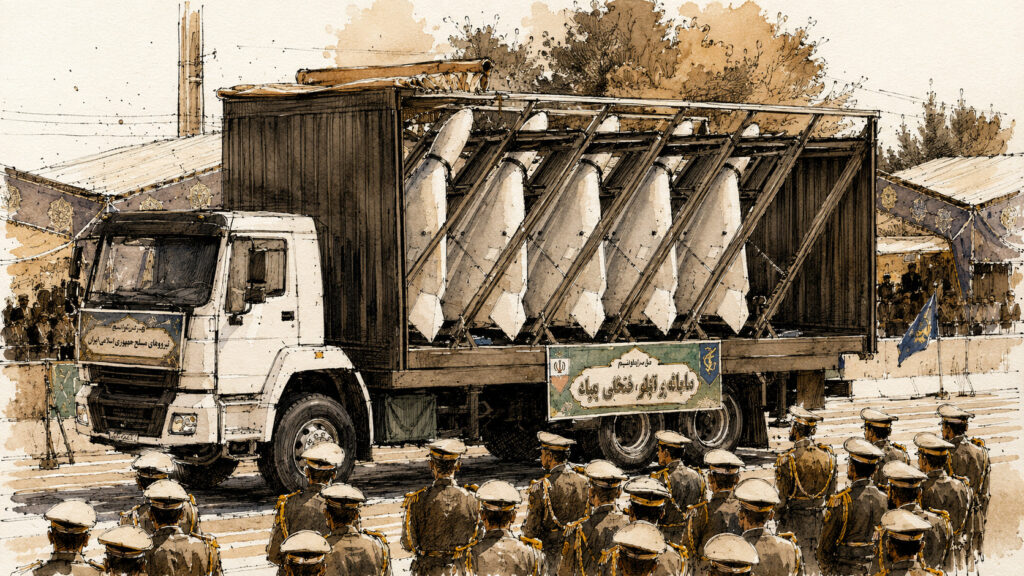
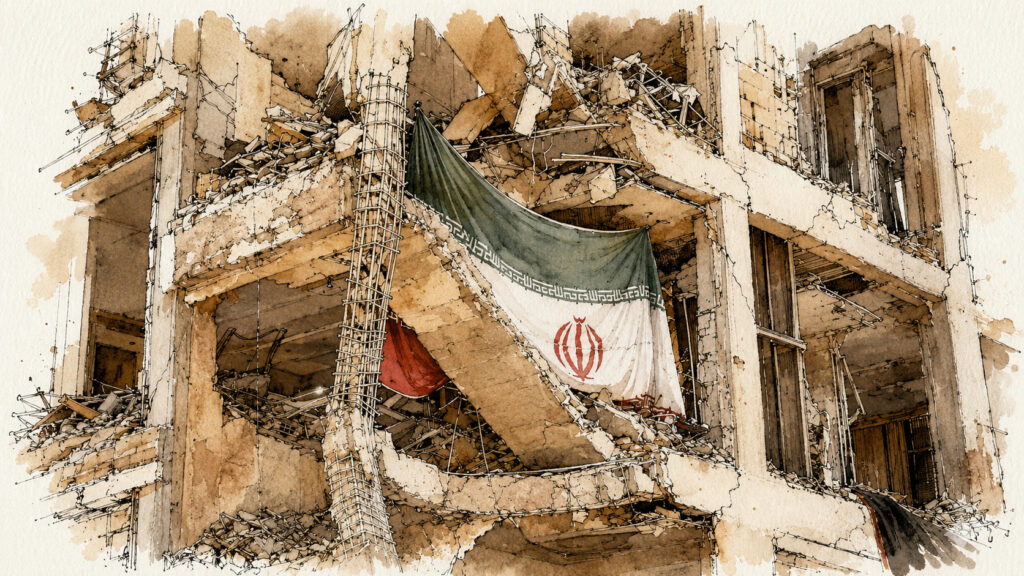
A second problem concerns the logic of decision-making. The India–Pakistan model assumes that both sides will ultimately behave rationally and avoid crossing the red line. But the question of what happens if Tehran consciously decides to accept a higher risk of escalation is not merely rhetorical. This does not necessarily imply irrational self-destruction, but rather a situation in which political pressure, internal crisis or miscalculation leads to a decision that the opposing side interprets as escalation. In such an environment, deliberate “madness” is not required; miscalculation is enough. The more complex the conflict environment, the greater the likelihood of such an error.
It must also be recognised that nuclear weapons would not resolve the existing conflict, but would change its nature. If Iran were to acquire nuclear capability, indirect war would not end; it would become a permanent crisis under a nuclear shadow, where each subsequent move would carry a higher price of miscalculation. This may reduce the likelihood of direct war, but it would increase the danger of continuous crisis and the cost of mistakes. The India–Pakistan scenario is therefore not directly transferable to the Middle East. It may temporarily create an illusion of stability, but it would not resolve the systemic instability arising from a multi-layered conflict and the absence of mutual trust. Rather, it would mean a situation in which all parties live under conditions of constant risk, never fully certain whether the next move will cross the line.
To understand the complexity of possible solutions — whether they involve ideas of nuclear deterrence or something else — it is useful to interpret the region through its recent history. The year 1979 did not only change Iran’s political system. Before the revolution, Iran was not a close partner of Israel, but it was a pragmatic one. With Khomeini’s rise to power, the confrontation became ideological. Israel was no longer treated merely as an adversary, but as a phenomenon whose very existence was seen as a problem. This distinction is decisive: one can negotiate with a geopolitical rival, but not with an existential enemy. Importantly, this did not remain merely an idea; the Islamic Republic began to shape its regional strategy around it.
The creation of Hezbollah and later support for Palestinian armed groups have been part of this strategy: to bring the confrontation to Israel’s borders without entering the war directly. This is where the core of Israel’s threat perception emerges. The issue is not only Iran’s capability, but its intent, which has remained consistent for more than four decades. If a state says that you should not exist and at the same time builds a system capable of gradually pressuring you, then this is no longer rhetoric, but a strategy that can be practically realised.
The current war gives the regime, in its own eyes, a kind of retrospective justification: the external enemy against which the system was built appears to have been confirmed. This makes the response less accidental and more structural. As the old Arabic saying goes, kama tadīn tudān (Arabic: كما تدين تدان) — as you do, so shall it be done to you. Iran’s system should therefore not be assessed only by how severely it is currently under pressure, but also by how it can turn that pressure into new legitimacy, renewed mobilisation and, sooner or later, a desire for revenge.
Remarks
A The Begin Doctrine is a principle of Israeli security policy which holds that hostile states must not be allowed to acquire weapons of mass destruction, particularly nuclear weapons, and that preventive military force should be used if necessary to stop them from doing so. The doctrine takes its name from Prime Minister Menachem Begin, under whose leadership the principle was clearly articulated, although its roots extend further back. As early as the 1960s, for example during Operation Damocles, Israel sought to hinder the weapons programmes of hostile states through covert operations. During the 1970s, this approach evolved into a more systematic policy that combined diplomatic pressure with clandestine activities aimed at limiting the spread of nuclear capabilities in the region. The Begin Doctrine reached its definitive form in 1981 with Israel’s strike against Iraq’s Osirak nuclear reactor, an action justified by Israel as a response to an existential threat. Since then, the doctrine has remained a central element of Israeli strategic thinking, guiding the country toward preventive action even in situations involving significant escalation risks when the strategic balance in the Middle East is perceived to be at stake.
Sources
8 Takeyh, R., 2009. Guardians of the revolution: Iran and the world in the age of the Ayatollahs. Oxford University Press.
Jaga postitust: