
Overview of the Crisis Research Centre’s Activities in 2025
For the Centre, 2025 was an active and successful year, shaped by two main areas of work: project activities and research. Communication of the work carried out was an integral part of both. In project activities, we implemented Estonia’s largest community-based civil protection development projects through the KÜSK Innovation Fund measure, supported by the Ministry of the Interior, as well as one international project funded by the Swedish Institute. Research was mainly carried out within the international project, focusing on how lessons from the war in Ukraine can support the more systematic development of resilience hubs in Estonian and Swedish municipalities.
In 2025, the Crisis Research Centre also co-organised its first international conference, held at the end of October at Malmö University in Sweden. In addition, we organised our first larger seminar in Estonia, focusing on community crisis preparedness. We are grateful to Miltton New Nordics for supporting the event by providing the venue free of charge. We also held the Centre’s first online discussion on sheltering, which attracted strong interest. The year was also marked by the Centre’s participation in several academic conferences. The Centre was an active public voice in its field, and we also consider it an important achievement that we brought our “Kriisioskused” podcast to the Delfi Tasku platform in order to reach a wider audience. We grew our social media following: in addition to our existing Facebook and Instagram accounts, we also opened a LinkedIn account.
Overall, the Crisis Research Centre developed further in several areas in 2025. We are especially proud of implementing the country’s largest projects funded through the KÜSK Innovation Fund measure, and, from the perspective of the Centre’s research work, of the PIMA project, which enabled us to collect and analyse data on the development of civil protection for future academic publications.
Projects and development activities
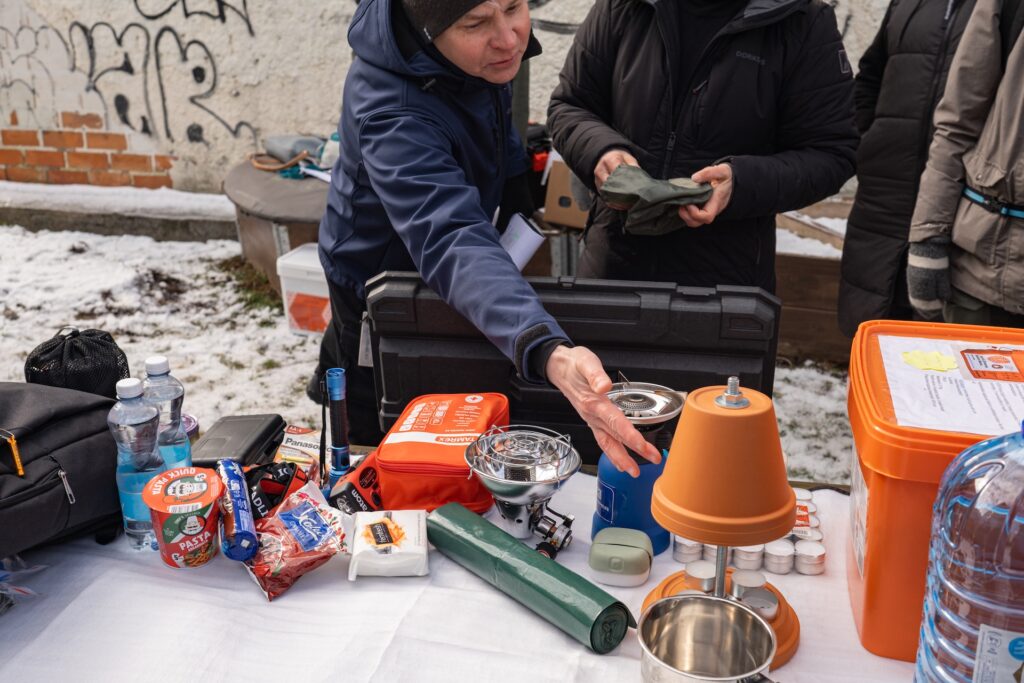
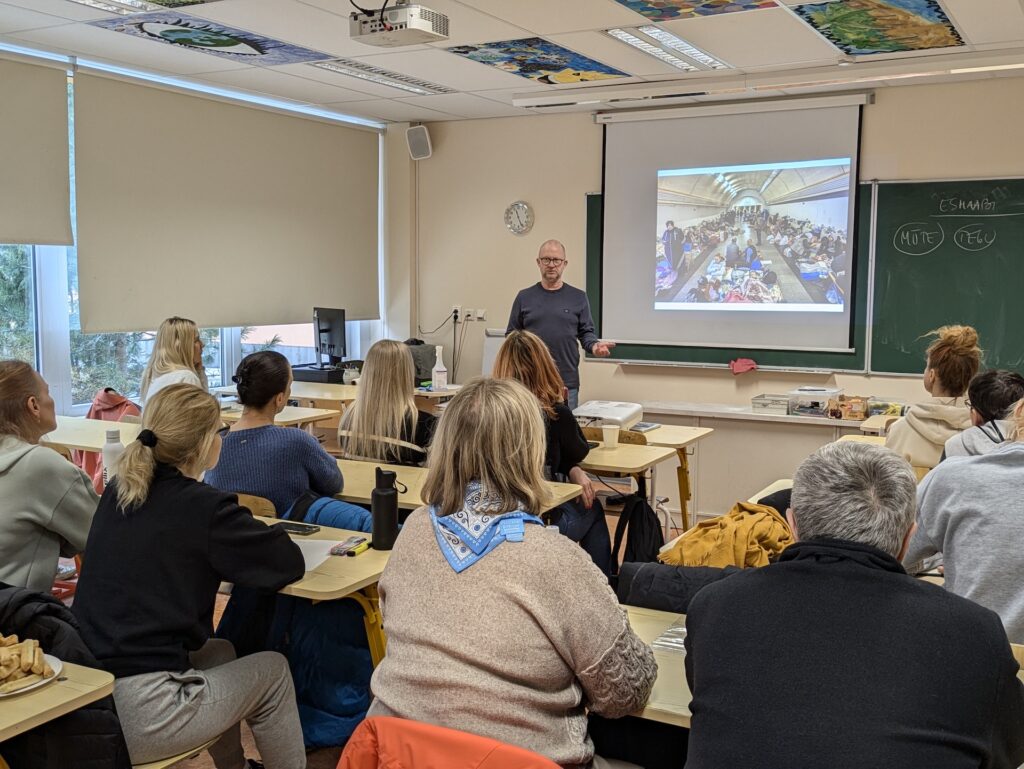
In 2025, with the support of the National Foundation of Civil Society and the Ministry of the Interior, the Crisis Research Centre implemented two national projects, which were the largest in scope within the measure. Among the national projects, the aim of the K24 project was to strengthen community-based civil protection preparedness in the Väike-Õismäe district of Haabersti. As part of the project, initial crisis supplies were procured and community capacities were developed to improve coping in crisis situations. In addition, approximately 400 apartment association members and board members received basic knowledge on how to act in different types of crisis situations. As a result of the project, the initial prerequisites were created in Väike-Õismäe for forming a resilience hub and supporting the community during a crisis within the limits of available supplies.
The K36 project supported the civil protection preparedness of communities in Kohtla-Järve districts. Project activities included procuring initial crisis supplies, developing community capacities, and training 50 apartment association members and board members on how to cope with different types of crisis situations. As a result of the project, additional capacity was created for the community to form a resilience hub and support residents during a crisis within the limits of available supplies. With the support of the National Foundation of Civil Society, the “Apartment building community crisis preparedness textbook” was published by Hannes Nagel, Head of the Crisis Research Centre. The handbook helps people living in apartment buildings improve their preparedness for different crises. It is intended both for individuals who want to strengthen their own preparedness and for those who wish to initiate broader crisis preparedness activities in their apartment building. The content of the handbook has been coordinated with the Estonian Rescue Board.
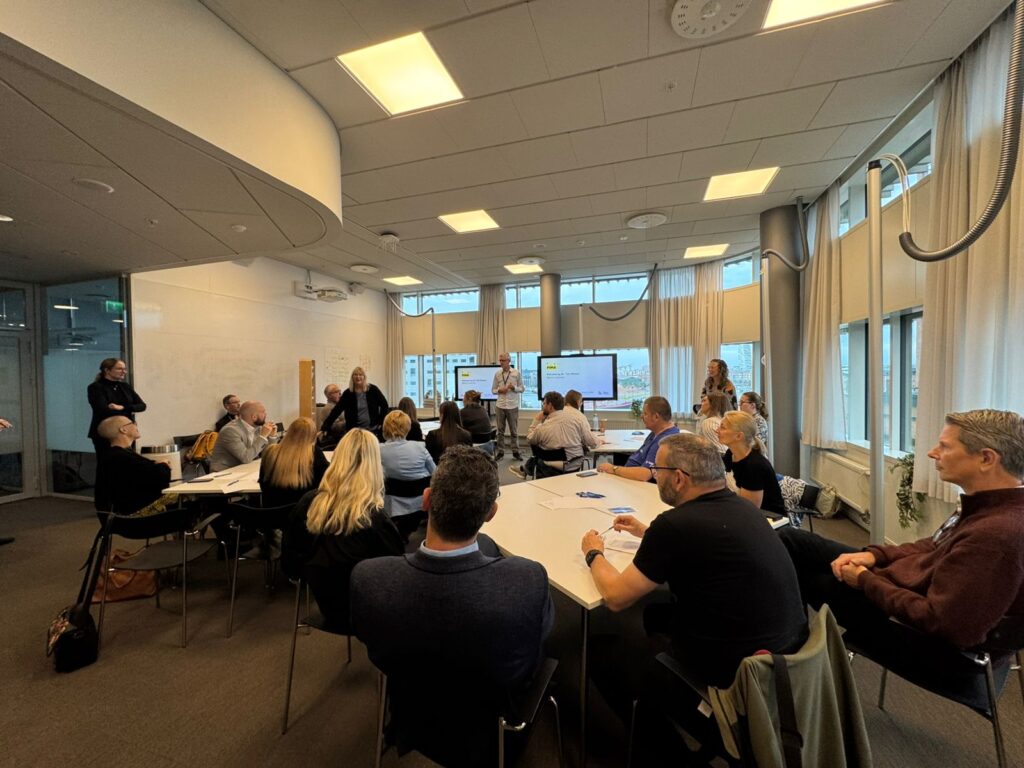
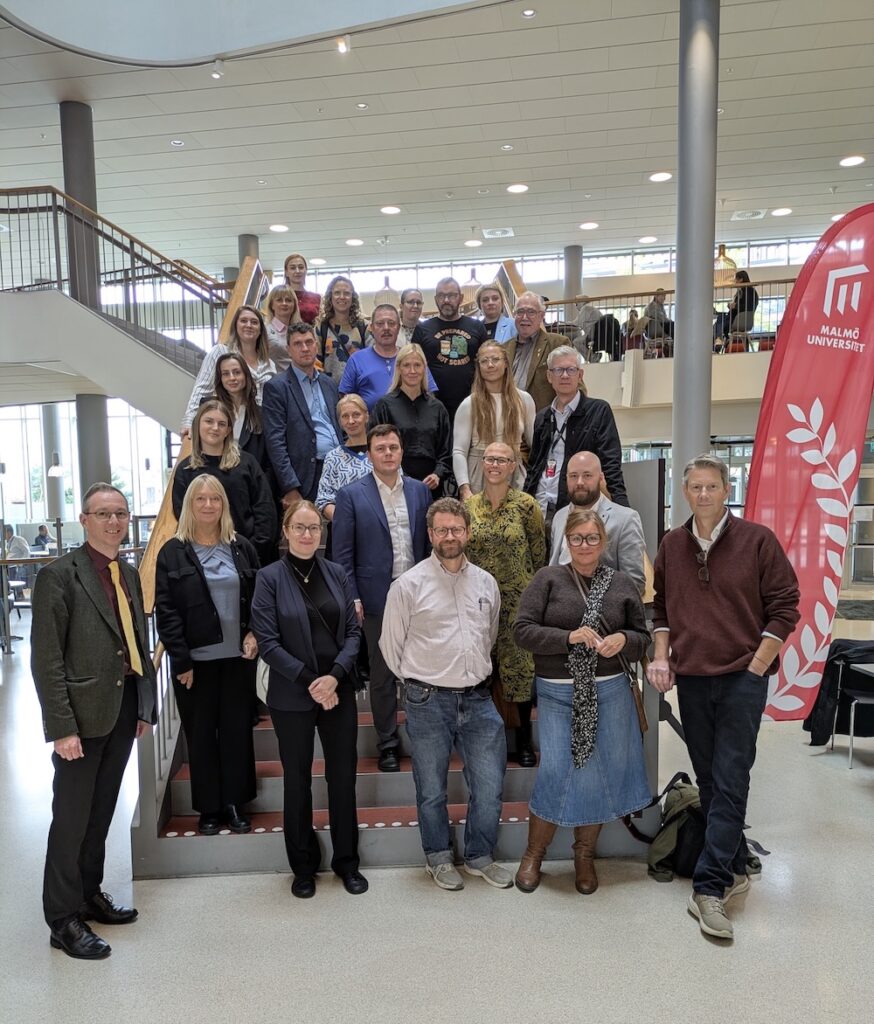
As an externally funded project, supported by the Swedish Institute, the PIMA project — Points of Invincibility for Multi-level Adaptation — was implemented. The project brought together actors involved in the development of local-level resilience hubs in Estonia, Sweden, and Ukraine in order to create a network and prepare a concept document for developing Points of Invincibility. The aim of the project was to support local governments by providing a practical guide for better understanding the creation, equipment, and management of such centres. The project also included a research component, mapping the current state and best practices of resilience hubs through local-level case studies from the three countries. The initial results were presented at an international conference held at Malmö University in Sweden. As part of the project, a practical report was prepared to support the further conceptualisation and development of resilience hubs. The report helps local governments better understand how to create, equip, and manage these centres in a way that takes into account the experiences shared by Ukrainian municipalities during the project. We also gave a presentation on the PIMA project at the EUSBSR Annual Forum held on Gotland.
Research and expert work
In 2025, the Crisis Research Centre’s research and expert work focused mainly on civil protection, community crisis preparedness, resilience hubs, post-crisis learning, and crisis governance. Our research examined, among other topics, how community-based civil protection has been developed in Estonia through collaborative governance, what practical solutions communities tend to prioritise when strengthening crisis preparedness, and which institutional and administrative factors may limit communities’ room for decision-making.
One research direction focused on the 2023 Innovation Fund projects, analysing how communities often preferred material solutions, especially the procurement of crisis supplies, and how regional preparedness levels and cooperation needs differed across Estonia. Another research direction examined the public framing and securitisation of civil protection. This work analysed how public-sector representatives shaped the meaning of civil protection through the ERR news portal in 2022–2024, and how threats were translated into the language of policy, funding, and preparedness measures. The research showed that a gap may emerge between strategic-level decisions and the practical guidance that reaches citizens.
In addition, we studied post-crisis learning and organisational crisis memory. The focus was on the After Action Review method as a tool that helps municipalities and crisis units systematically analyse experiences gained during crises, identify areas for improvement, and turn lessons learned into a more permanent part of organisational work processes. This research direction emphasised that in crisis management, operational response alone is not enough; organisations must also be able to learn from crises and institutionalise those lessons.
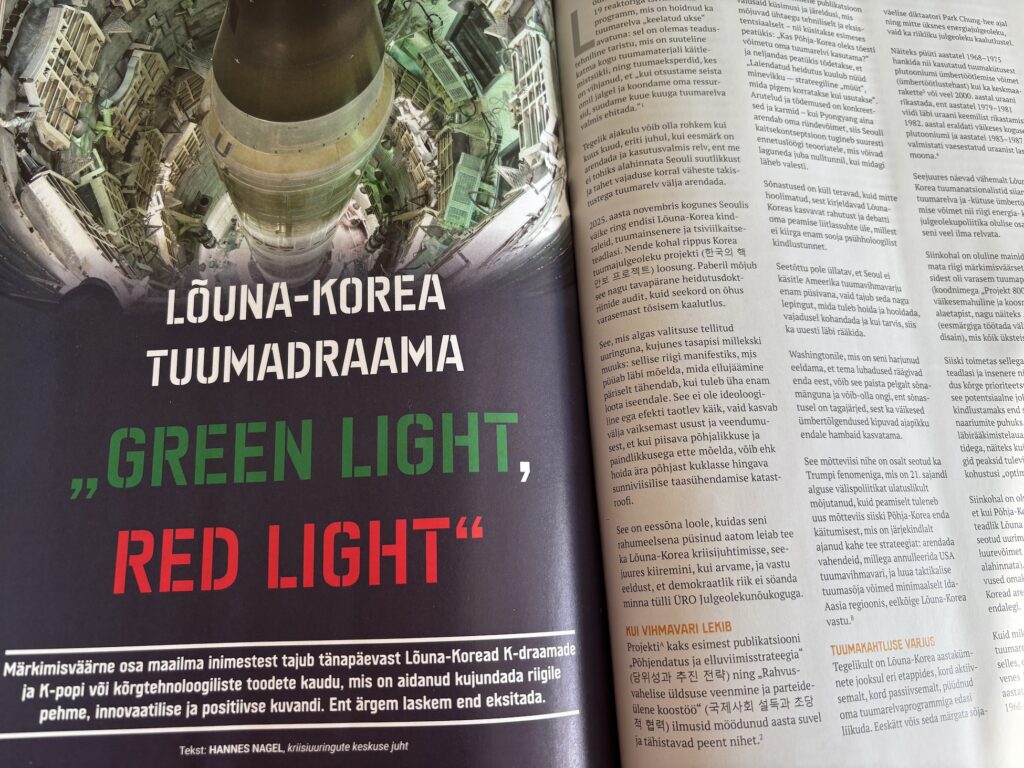
We are also proud that in 2025 we regularly published geopolitical crisis and event analyses in the Estonian Defence League magazine Kaitse Kodu!. Overall, the Centre’s research articles and studies in 2025 contributed to our core focus: how to strengthen the crisis resilience of Estonian society through the local level, communities, the public sector, and collaborative governance.
Conferences, seminars and discussions
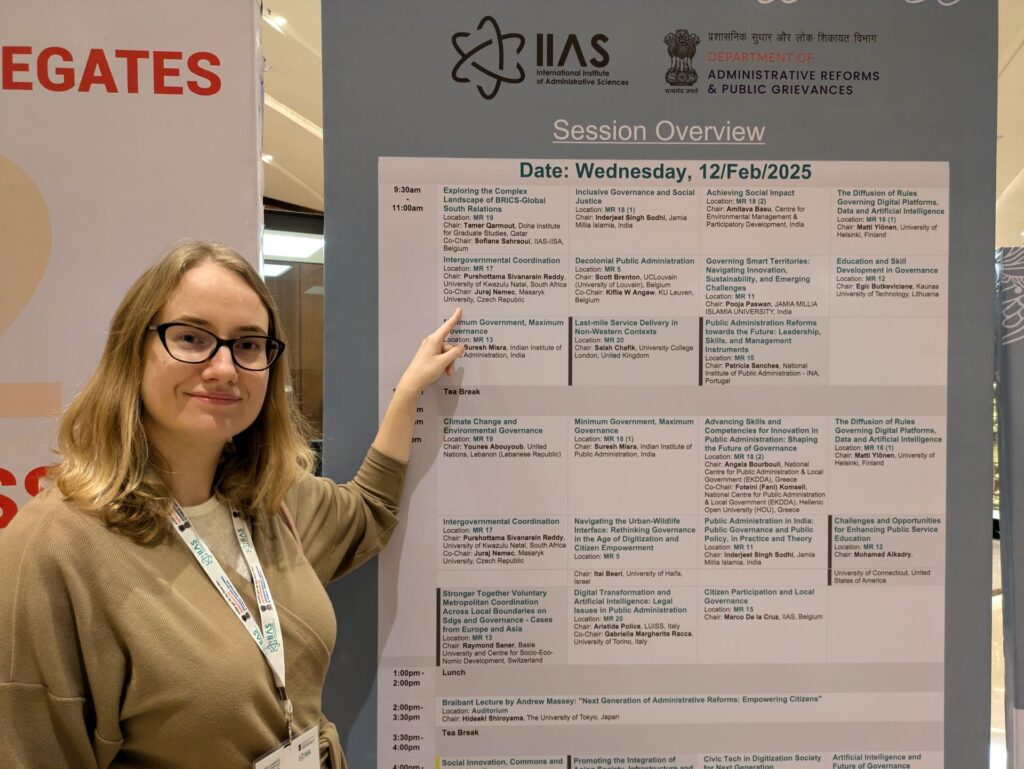
In 2025, researchers from the Crisis Research Centre took part in five conferences, seminars, and professional discussions in Estonia and abroad. At the international level, we gave presentations at the IIAS-DARPG 2025 conference in New Delhi, India, and at the IRSPM 2025 Annual Conference at the University of Bologna in Italy. The presentations addressed research topics related to crisis management, multi-level governance, team sensemaking, and community-based crisis response. In addition, we participated in a crisis management discussion at Tampere University in Finland, where crisis management was discussed from the perspective of learning, adaptation, and recovery. In Sweden, we took part in the PIMA project final conference at Malmö University, which brought together local-level crisis management actors from Estonia, Sweden, and Ukraine and focused on the development of resilience hubs and the role of communities in crisis preparedness.
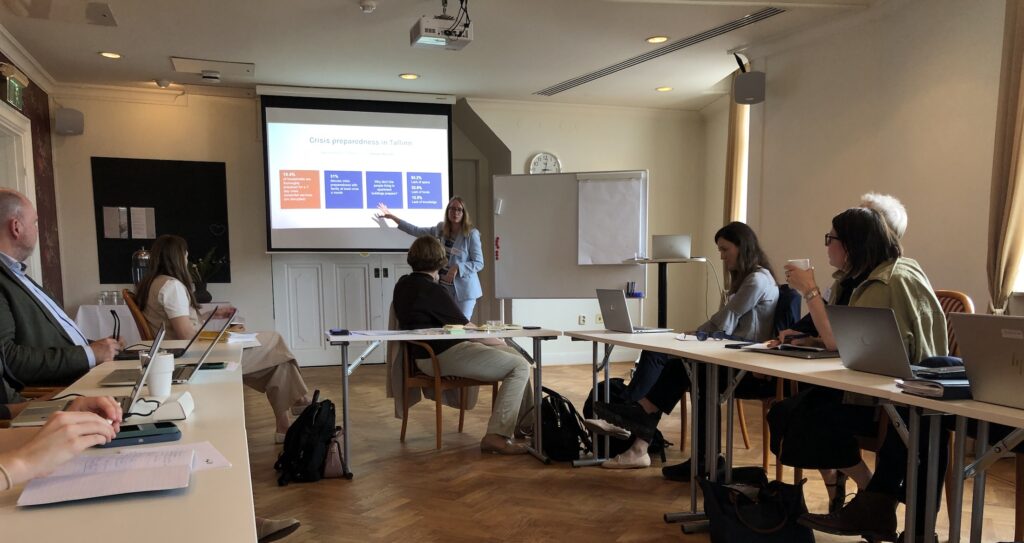
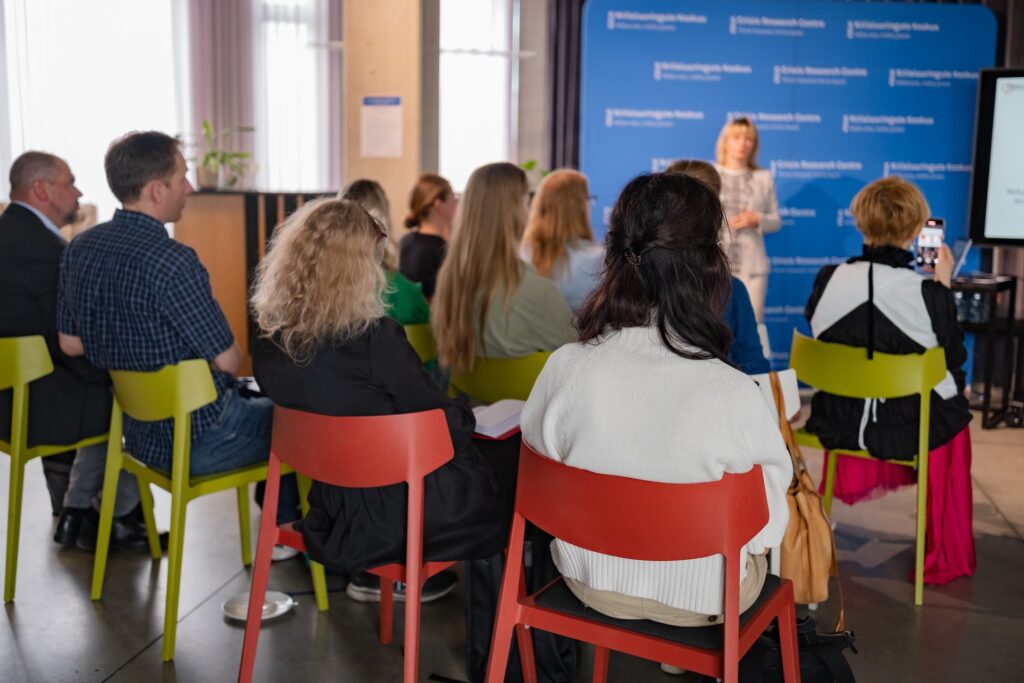
In Estonia, the Crisis Research Centre organised the final seminar of the Väike-Õismäe Community Crisis Skills project, titled “Community Crisis Preparedness – How Are We Doing?”. The seminar included experts from Estonia and Ukraine and focused on the role of communities in preparing for crises, as well as cooperation opportunities between local governments, civil society, and communities before and during crises. At the seminar, we presented the results of the Kohtla-Järve and Väike-Õismäe civil protection projects funded by the National Foundation of Civil Society. The keynote presentation was given by Dr Mariia Tyshchenko, Executive Director of the Ukrainian NGO Poruch. The seminar can be watched on the Crisis Research Centre’s YouTube channel.
We also participated in the Opinion Festival in Paide in the panel discussion “Infrastructure of Trust: Are Libraries Our Most Underrated Defence System?”, which was part of the programme organised in the area of the Nordic Council of Ministers’ Office in Estonia. In April, we organised an online discussion evening for 70 participants, focusing on sheltering, with experts from the Ministry of the Interior and the Estonian Rescue Board as guest speakers. Sharing our knowledge, learning from others, and networking at different events supported the Crisis Research Centre’s research and development activities, strengthened our international cooperation network, and helped present the Centre’s research and practical experience in the fields of community crisis preparedness, resilience hubs, and multi-level crisis management.

Expert advice and knowledge transfer
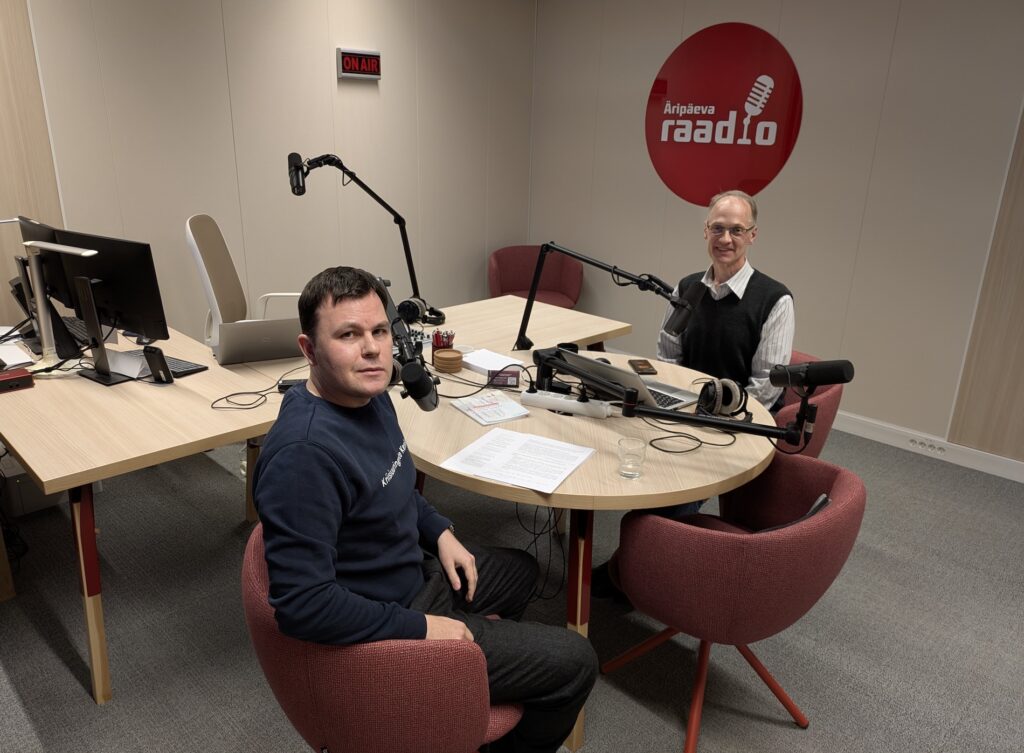
In 2025, we actively contributed to knowledge transfer, public discussion, and the sharing of practical expertise in the fields of civil protection and crisis preparedness. Representatives of the Centre took part in several media appearances and radio programmes, discussing the current state of civil protection in Estonia, gaps in crisis preparedness, the functioning of public warning systems, the role of local governments and communities, and the broader need to strengthen societal resilience.
An important part of our knowledge transfer activities was the continued development of the Crisis Research Centre’s podcast, Kriisioskused. In 2025, the second season of the podcast was recorded and brought to the Delfi Tasku platform to reach a wider audience. The episodes featured experts from different fields and addressed practical crisis preparedness topics, including psychological first aid, the protection of Tallinn residents, the state of civil protection in Kohtla-Järve, the crisis experiences of Ukrainian communities, community crisis preparedness in apartment buildings, crisis preparedness among residents of the capital, and how to prepare an evacuation bag.
Through expert advice and public communication, the Crisis Research Centre helped share research-based and practical knowledge on crisis preparedness with the wider public, communities, local governments, and other stakeholders in the field. The Centre’s activities supported a better understanding of civil protection, helped strengthen crisis preparedness, and contributed to the view that preparing for crises requires both institutional readiness and the informed contribution of communities and individuals.
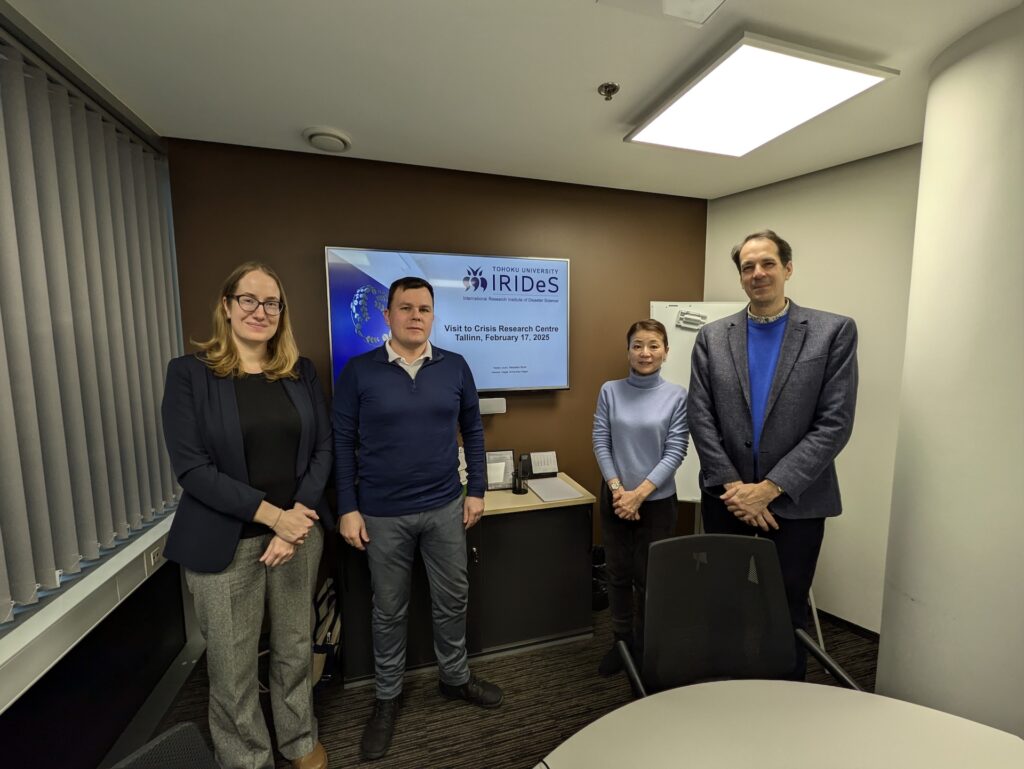
The Crisis Research Centre was also pleased to welcome international guests. In February, we hosted a delegation from IRIDeS, the International Research Institute of Disaster Science at Tohoku University in Japan, to identify possible areas of cooperation focused on the community-level management of human-made crises. At the community crisis preparedness seminar held in May, we had the honour of hosting Brigadier General Oleksandr Potii, Head of the State Service of Special Communications and Information Protection of Ukraine, who spoke about the importance of protecting critical infrastructure in improving communities’ ability to cope during a serious crisis.

We were an active public voice in our field. We appeared twice on Kuku Radio, were featured more than 20 times in online media, and eight times in print media. We also appeared as guests on the National Library’s radio programme to discuss the important role of libraries in national security. We brought the Kriisioskused podcast to the Delfi platform, and in 2025 new episodes were released featuring experts from different fields. The 2025 episodes of the podcast were funded by the Ministry of the Interior through the National Foundation of Civil Society. The episodes can be listened to on Delfi Tasku.
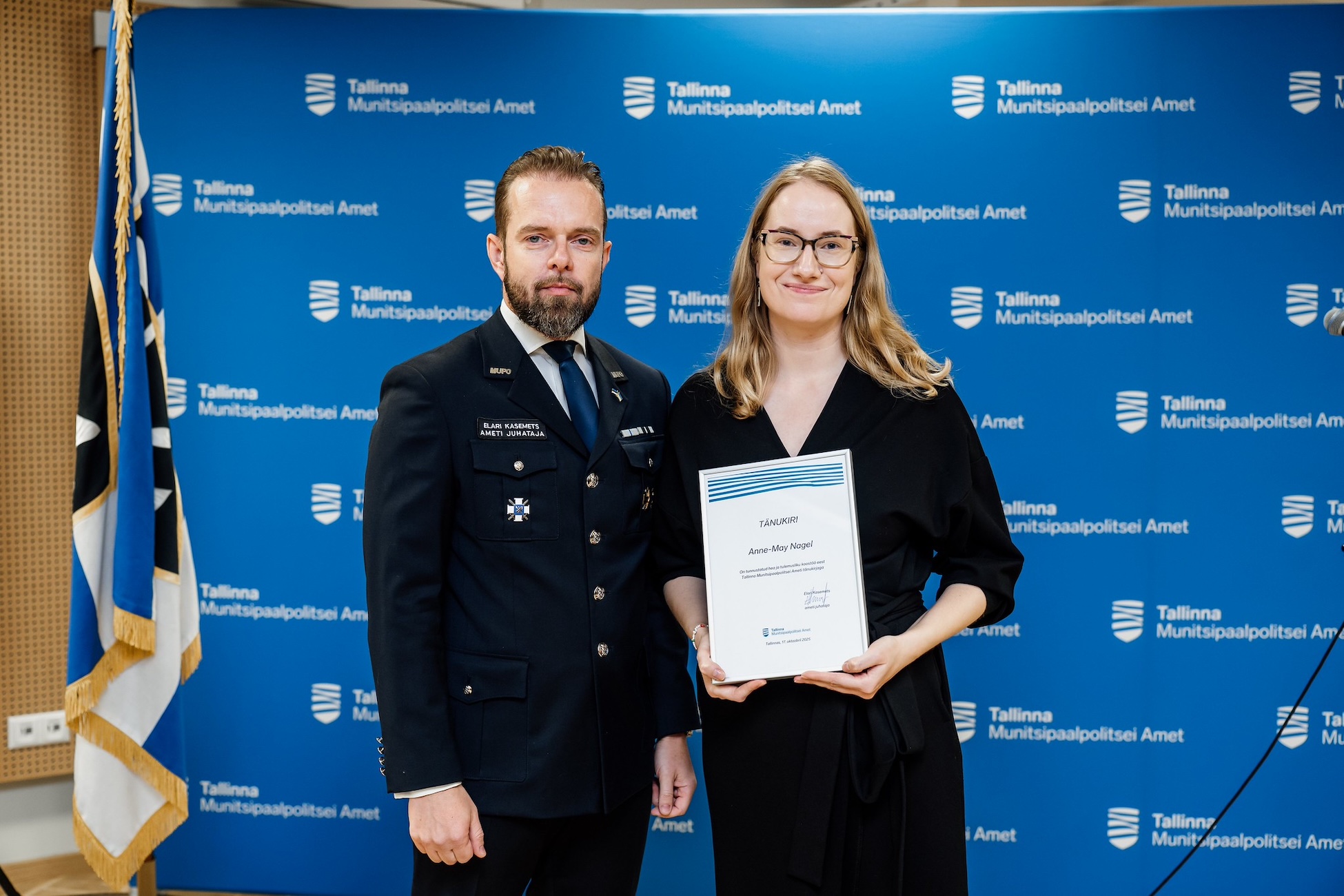
We also received a letter of appreciation from the Tallinn Municipal Police Department for our contribution to the development of civil protection and crisis preparedness. On 17 October, Anne-May Nagel, researcher at the Crisis Research Centre, received a letter of appreciation from the Tallinn Municipal Police Department for active and effective cooperation. The letter of appreciation was presented at the formal celebration of the Municipal Police Department’s 22nd anniversary, where cooperation partners who have made a significant contribution to strengthening the safety, crisis preparedness, and community cooperation of the City of Tallinn were recognised.
🧡 We would also like to separately thank Airgate Tallinn OÜ for its support to our organisation, which contributes to the sustainable development of the Crisis Research Centre’s activities.
Jaga postitust: