
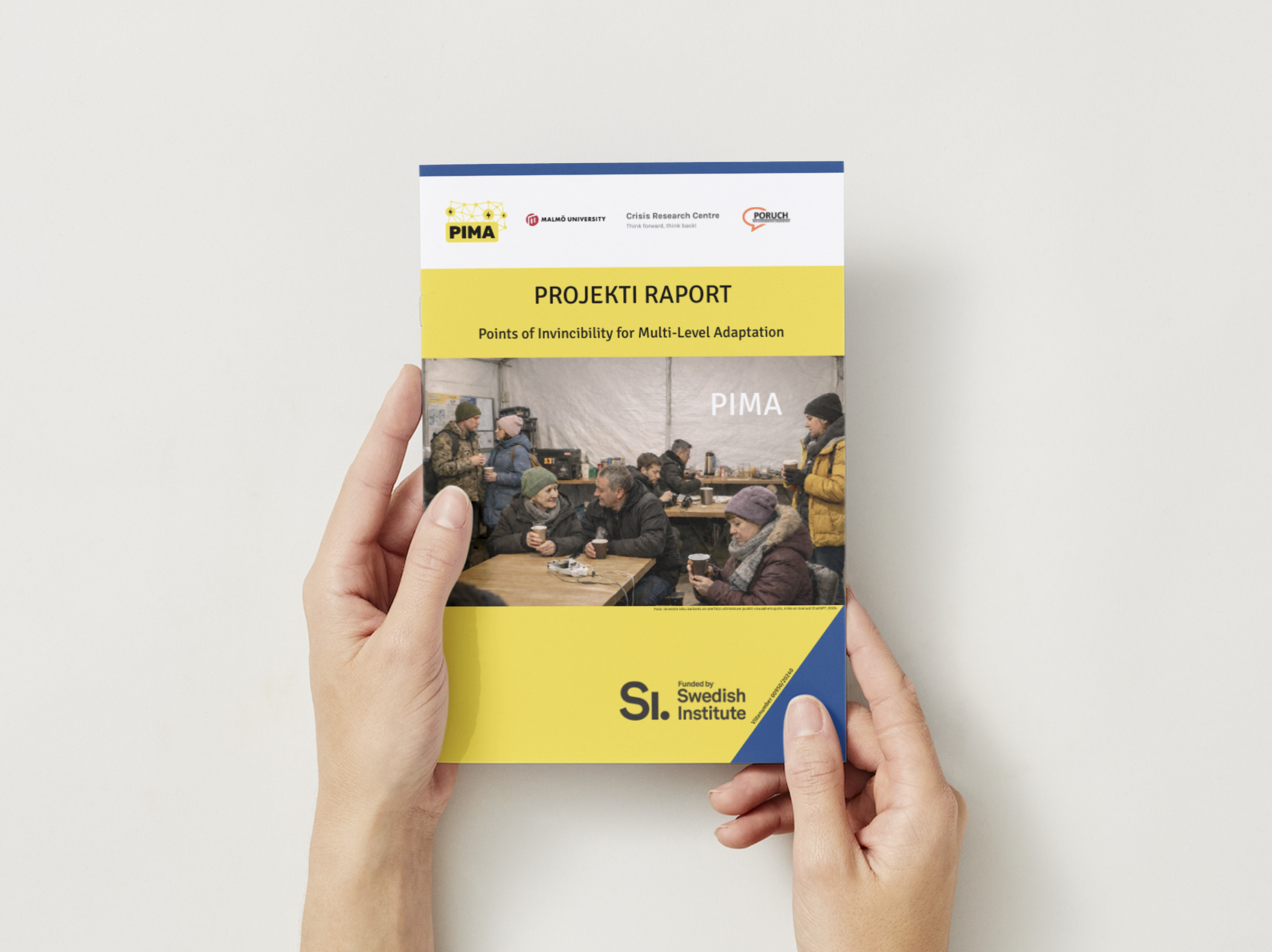
PIMA report published: recommendations for policymakers on developing resilience centres
The PIMA project brought together local government representatives from Estonia, Sweden and Ukraine to explore how community-based crisis centres providing essential services — such as water, food, heating, electricity, internet access and reliable information — can strengthen local resilience. The project was not simply about transferring Ukraine’s experience, but about understanding how elements of Ukraine’s Points of Invincibility model could be adapted to different socio-cultural contexts in order to build comparable capacity in the Baltic Sea Region. Particular attention was given to inclusiveness, accessibility and the effective use of existing local needs and resources.

The example of Ukraine clearly shows that resilience is not something achieved once and for all. On the contrary, it is repeatedly tested over time. Continued power outages and pressure on infrastructure in 2025 further underline that resilience centres must remain flexible, community-based and integrated into the everyday practices of local governance. Through research, webinars and international knowledge exchange, participants explored how municipalities can establish and maintain such centres together with communities and partner organisations. The project resulted in a concept paper on good practices for resilience centres, a thematic webinar on inclusive crisis centre development and an international conference held in Malmö.
The initiative also led to the creation of the PIMA+ network — the first local-level civil protection initiative of its kind in the region, promoting cross-border cooperation and supporting the shared goal of strengthening community-based societal resilience.
To join the PIMA+ network, please contact here the Crisis Research Centre, which coordinates the network’s development and cooperation in Estonia.
Photos: PIMA report (Crisis Research Centre, 2026).
Jaga postitust: