
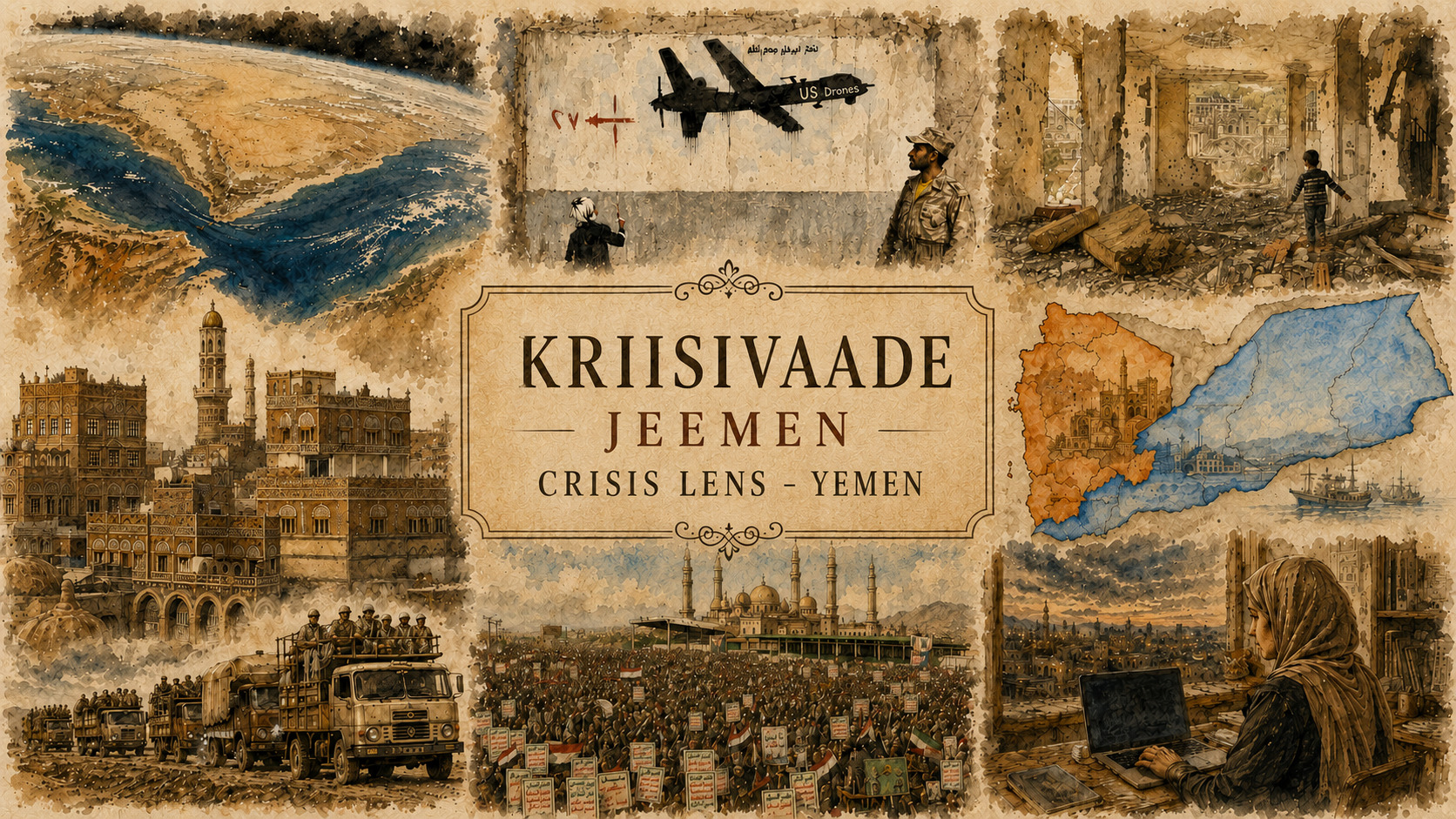
CRISIS LENS | Houthi retaliation: why does it matter to us?
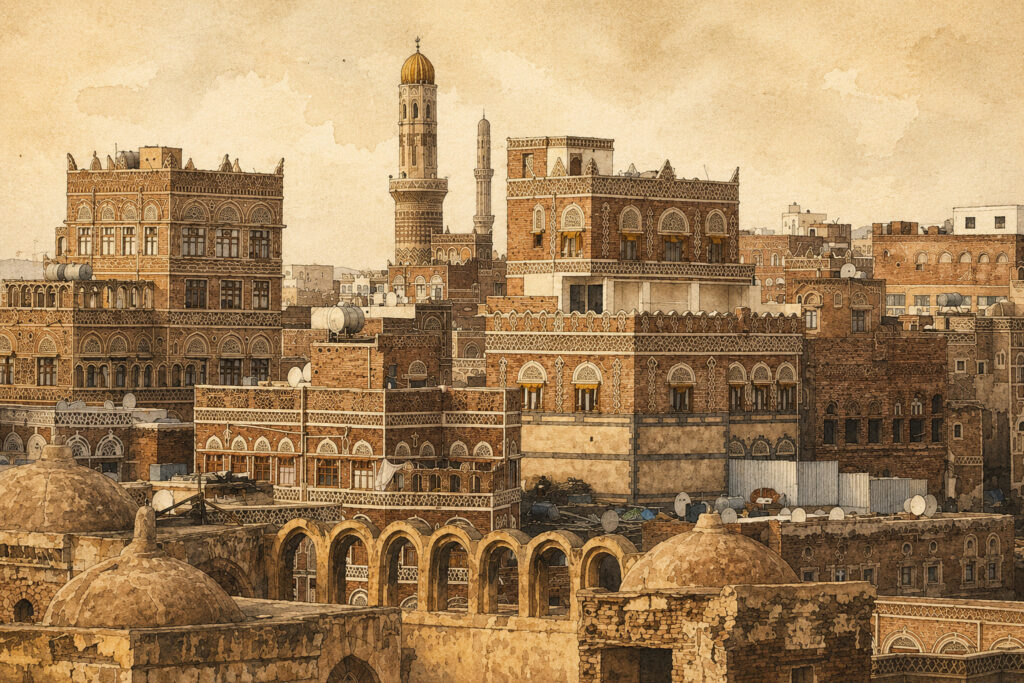
Yemen has not always been a region battered by misfortune — there were times when the area prospered so greatly that the Romans knew it as Arabia Felix (English: prosperous or fortunate Arabia).A To grasp the depth of Yemen’s present-day challenges and hardships, as well as the role of the Houthis, we need to go back to May 1990, when the Yemen Arab Republic still existed in the north and the People’s Democratic Republic of Yemen in the south.
As their names suggest, the region also bears the classic legacy of the Cold War. The drawing of hostile dividing lines was reinforced by the difficult end of British colonial rule in 1967, clashes between the two states, internal tribal uprisings, and, of course, a full-scale war in 1972, whose aftermath was eventually addressed in Cairo.
The final years of the Cold War were particularly difficult for South Yemen, as the Soviet Union, itself approaching collapse, was no longer able to provide the generous socialist economic assistance that had sustained the Arab Marxists. Alongside the 1972 Cairo Agreement, this was one of the factors that prompted South Yemen to unite with North Yemen on 22 May 1990, creating the modern Republic of Yemen. Unlike the German reunification, however, the integration broke down as early as 1994, when independence was restored in the south.
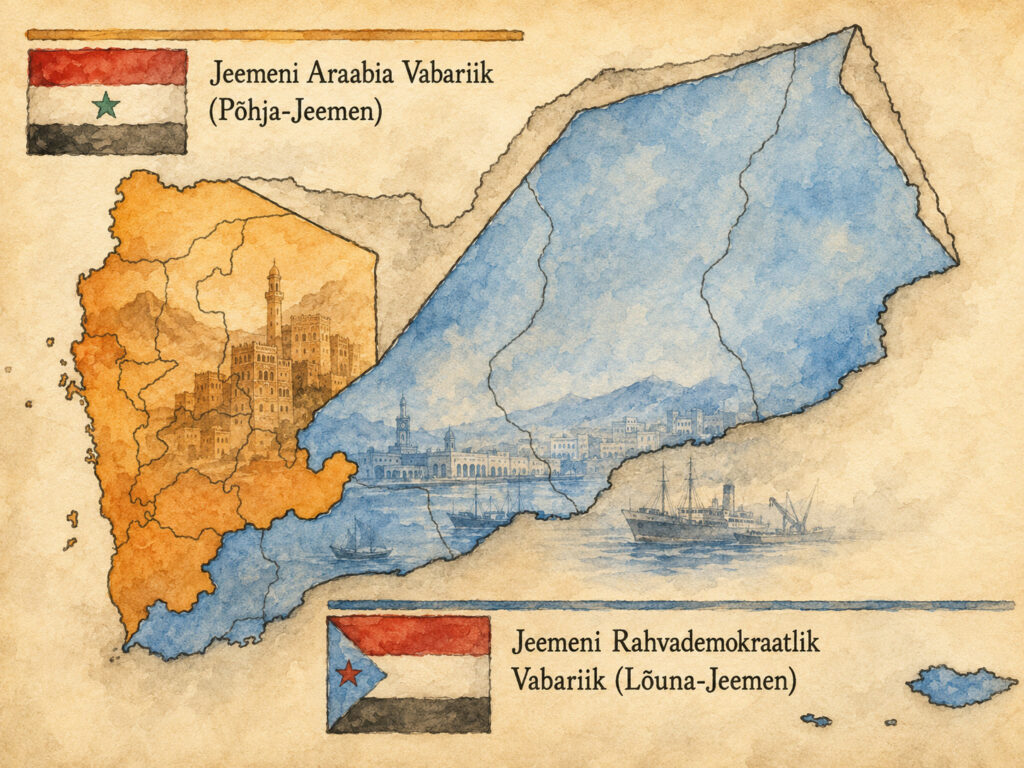
In the north, however, the events were interpreted as secession, which was followed by a second civil war lasting 64 days. In the south, depending on the perspective of the parties involved, it was seen either as an occupation by North Yemen or as the restoration of the territorial integrity of the unified state. The seeds of later civil war are important here, because the republic was reunified under the northern government, which then set about purging the country of socialism. The tensions that followed gradually pushed the fragile republic first into crisis, then into the third civil war that continues to this day, and ultimately into war with Jews and Americans. All of this has unfolded under Houthi leadership.
The al-Ḥirāk al-Janūbiyy (English: Southern Movement), which seeks independence for South Yemen, re-emerged in 2007 and has actively pursued greater autonomy. The conflict has since developed into a typical proxy war, in which the Iranian-backed Houthi rebels who overthrew the government are confronting a Saudi-led international coalition. Other actors are also involved, including the United Arab Emirates, whose support for various armed groups has likewise done little to promote peace.
More than four million people have been displaced by the third civil war, while the country suffers from chronic shortages of medicine and food, cholera outbreaks and widespread poverty. The only thing currently flourishing in Yemen is the continuing famine.
The role of the Houthis in Yemen’s history
The Houthis are a large clan originating from Sa’dah Province in north-western Yemen and practise the Zaydi branch of Shia Islam, which is followed by around 35% of Yemen’s population of more than 34 million. Theologically, the Houthis occupy a position between Sunnis and Shias,4 although today they are predominantly a military-political organisation. The Zaydi Imamate ruled Yemen for nearly 1,000 years before being overthrown in 1962.
The first civil war also dates back to the 1960s, when Saudi Arabia and Egypt supported opposing sides. The conflict culminated in the end of the Yemeni kingdom and established a Cold War-style division of the country into North and South Yemen. Since then, the Zaydis, having lost political power, have sought to restore their influence and authority in Yemen, rooted in a thousand-year history. At the same time, it should be noted that not all Zaydis support the Houthi movement, and it is important to remember that Zaydis are a minority in a country with a Sunni Muslim majority, although they dominate the northern highlands along the Saudi Arabian border.
Amid the difficult circumstances of the 1980s, the Shabāb al-muʾmin (English: Believing Youth) movement was established on the basis of the Houthi clan to revive Zaydi traditions, as a state-supported threat was perceived in the form of Saudi Salafist clerics1 attempting to gain a foothold in Houthi areas. The Believing Youth began with school clubs and summer camps, where sermons were delivered, among others, by several figures who would later become prominent in Middle Eastern conflicts, including Mohammed Hussein Fadhlallah, a Lebanese Shia cleric regarded as a spiritual mentor of Hezbollah, and Hassan Nasrallah, Secretary-General of Hezbollah.2
By contrast, the Al-Ḩūthiyyūn (English: Houthi) movement takes its name from the Houthi clan’s religious leaders, the brothers Mohammed and Hussein al-Houthi,2 and is officially known as Anṣār Allāh (English: Supporters of God).3 It emerged in the late 1980s, likewise in northern Yemen, as a means of religious and cultural revival among Zaydi Shias.
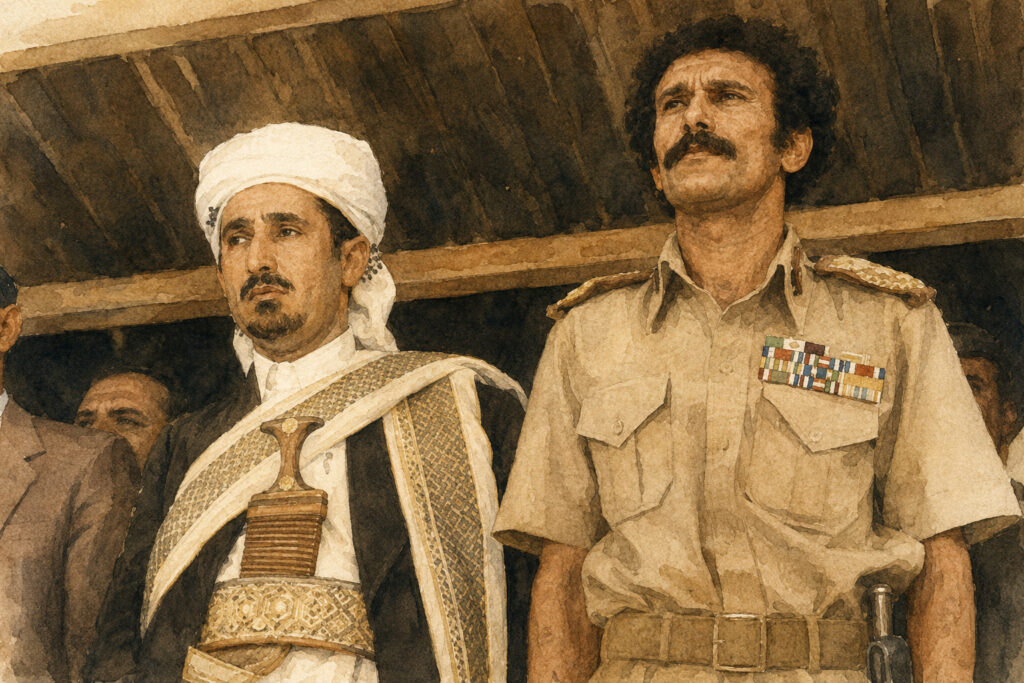
In 1992, clashes with the central government began in the mountains west of Sa’dah, the capital of Yemen’s north-western province. Under the leadership of Zaydi religious leader Hussein al-Houthi, the Houthis developed into an opposition movement that strongly opposed Yemeni President Ali Abdullah Saleh,* accusing him of corruption, tolerating the spread of Salafism and, to put it mildly, being a puppet of the Americans. In the early 2000s, the organisation evolved into an armed group that began fighting against Yemen’s US-backed autocratic government. It was precisely during this struggle against the government that the propaganda narrative still used today took shape, portraying the Houthis as a noble anti-imperialist force courageously fighting corruption and foreign influence.
The killing of Hussein al-Houthi by government forces in 2004,8 marked the beginning of the so-called Houthi wars. Although the parties eventually reached a ceasefire in 2010,9 the outbreak of the Arab Spring provided fresh impetus for a Houthi uprising in 2011, which culminated in President Saleh’s resignation. Since 2011, the Houthis have systematically expanded their control over new territories and gained large numbers of supporters, moving beyond their Zaydi roots and developing into a broader movement opposed to the central government. They also adopted the name Ansarullah (English: Party of God).
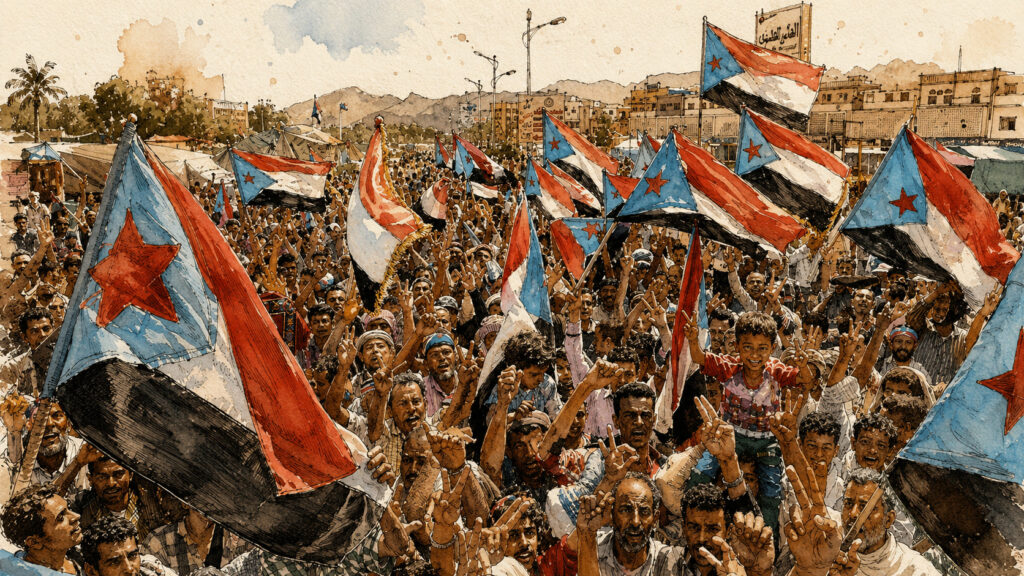
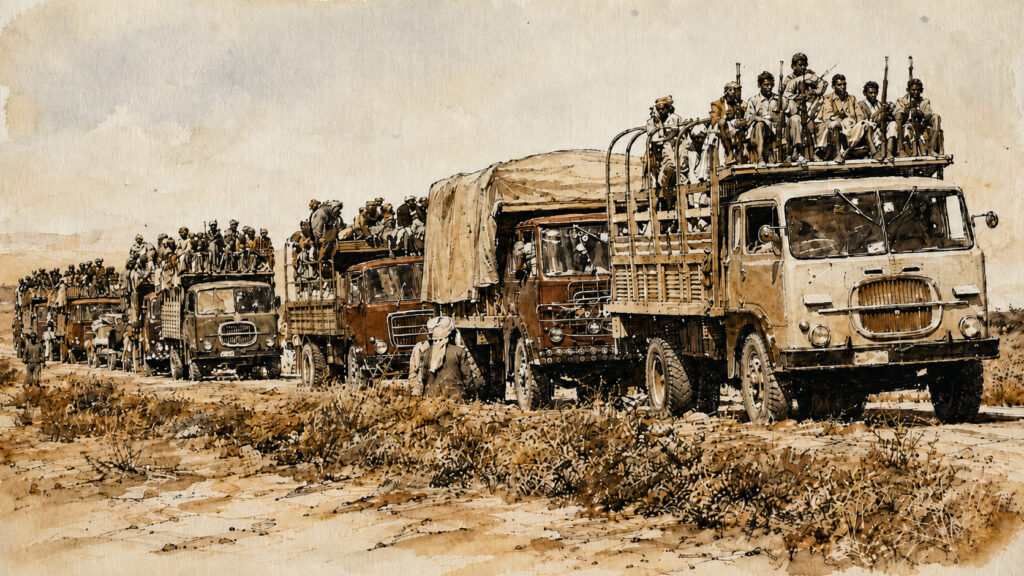
The beginning of Yemen’s third civil war can be dated to 2014, when the Houthis seized control of Sana’a,B Yemen’s largest city and capital, demanding lower fuel prices and a new government. A year later, on March 25, when Saudi Arabia launched Operation Decisive Storm, the conflict escalated into full-scale war. The operation, aimed at defeating the Houthis and restoring the internationally recognised government, is still effectively ongoing, despite its bleak prospects: the Saudi kingdom’s high-tech military has been unable to defeat the Houthis and has repeatedly had to endure humiliating losses, including on its own territory. It is also important to note that at least one third of the former Yemeni army has fought on the Houthi side.
In broader terms, the Houthis have been successful despite the fact that, during the initial phase of the Saudi-led intervention, the coalition captured vital and strategically important areas of Yemen and numerous political and military formations were created and supported to fight the Houthis. Against all odds, by 2016 the Houthis controlled most of western and southern Yemen. Although Yemeni officials, the international community and Sunni states have repeatedly accused Iran and Hezbollah of intervening through the provision of weapons, training and financial support — and such involvement has also been documented — the Iranian camp has denied these claims, while Russia has, unsurprisingly, vetoed related resolutions at the United Nations.11-12 By now, the geopolitically charged front lines have largely stabilised, and the future solution once again appears to lie in the renewed partition of Yemen.
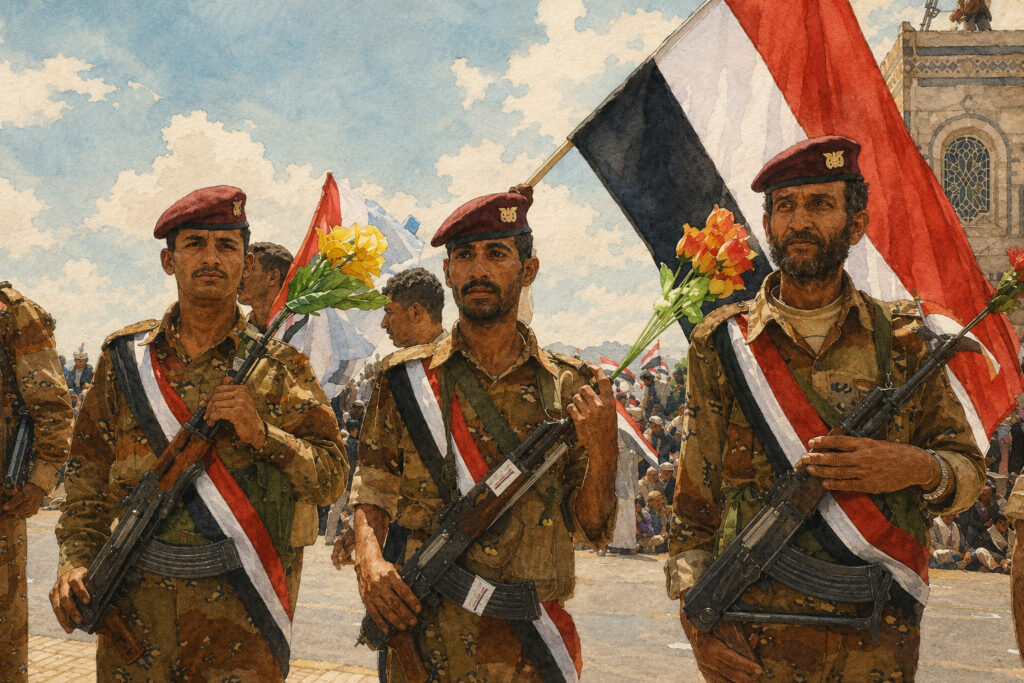
Iranian fingerprints
After the Houthis declared war on Israel in October 2023, a tricolour flag has repeatedly been seen alongside the Yemeni slogan and flag. It consists of three equal horizontal bands — black, white and green from top to bottom — with a red triangle extending from the hoist side of the flag.10 Historically, this flag is associated with the Arab Revolt as a pan-nationalist symbol of Arab unity, and later with the Palestinian government and the Jaysh al-Jihād al-Muqaddas (English: Army of the Holy War), which operated from 1947 to 1949. These branding elements are important because they appeal to the memories, emotions and expectations of Muslims.
The Houthi slogan, “Allāhu ʾakbar, al-mawt li-ʾAmrīkā, al-mawt li-ʾIsrāʾīl, al-laʿnah ʿalā ‘l-Yahūd, an-naṣr lil-ʾIslām” (English: “God is great, death to America, death to Israel, a curse upon the Jews, victory to Islam”), identifies the Houthis as a Yemeni national movement opposed to the oppression of all Yemenis, including Sunni Muslims, by foreign powers.5 Although Houthi spokespeople have sought to soften the meaning of the slogan by explaining that “we do not actually want death for anyone; it is simply directed against the interference of those governments [i.e. the United States and Israel]”,6 Houthi tribal television and radio stations broadcasting in Arabic almost invariably employ religious connotations associated with anti-American and anti-Jewish jihad.7 Unfortunately, such peace-dove rhetoric does not sit comfortably alongside attacks involving drones, ballistic missiles and commercial vessels.
Although the Houthis initially emerged as a moderate theological movement that preached tolerance and took an inclusive approach towards all peoples of Yemen, including the local Jewish community,13 and the same can also be said of Hamas,14 understanding the origins of both requires recognising the role of actors with an interest in conflict who have pushed them towards radicalisation.
Nevertheless, the Houthis should not be underestimated or regarded merely as an Iranian proxy and cannon fodder.15 Much like North Korea, the Houthis have their own established support base, interests and ambitions, regardless of the support sustaining them from the mainland China.
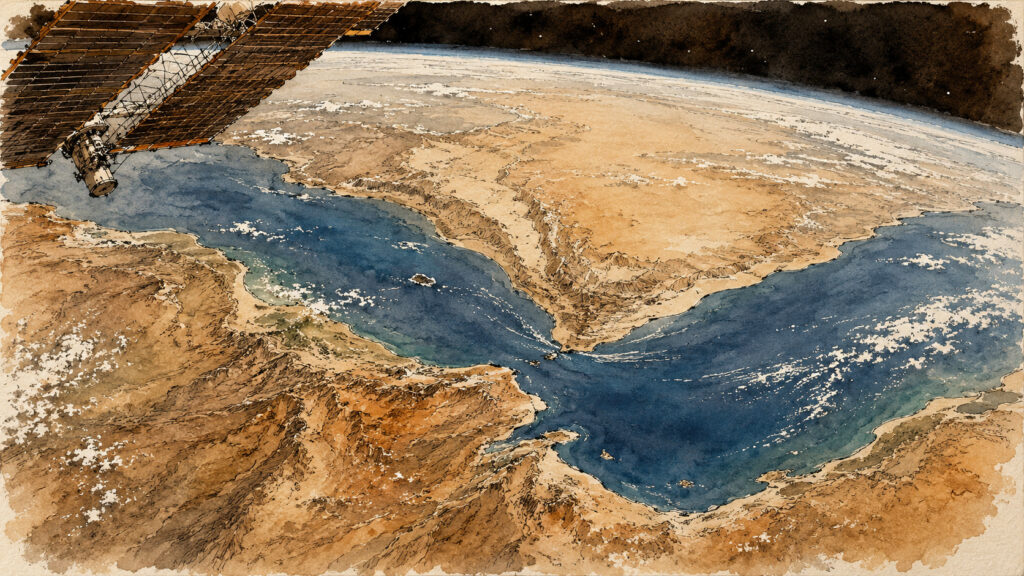
Bab el-Mandab hotspot
Located strategically along the Bab el-Mandab Strait (Arabic: باب المندب), Yemen has long been at the centre of regional geopolitics. Known as the “Gate of Tears”, the strait separates Yemen from DjiboutiC and Asia from Africa, connecting the Red Sea with the Gulf of Aden and the Indian Ocean. The 30-kilometre-long strait is divided into two channels by the island of Barīm (Arabic: بريم): the western channel is 26 km wide and 30 metres deep, while the eastern channel is only 3 km wide but reaches a depth of 310 metres.
This volcanic islandD is also referred to as the Mayyun anomaly,16 where an airbase has been built that no one officially claims as their own, although the trail in the sand appears to lead as far as the United Arab Emirates (UAE). Quite coincidentally, such a no-man’s-land airstrip makes it possible to control one of the world’s most important maritime routes for the transport of energy resources.
This maritime gateway has witnessed numerous wars and conflicts throughout history, with one of the most notable modern examples being the blockade of Iranian oil tankers bound for Israel during the October War of 1973. The importance of Bab el-Mandeb increased sharply after the opening of the Suez Canal in 1869, which led to a growth in the volume of international maritime trade. Following the discovery of oil on the Arabian Peninsula and the expansion of trade originating from East Asia, its significance increased once again.
It is therefore a critically important maritime route, often compared to a global artery because it connects Europe with the Indian Ocean and East Africa. This is precisely where the Houthis’ influence becomes apparent.
Since December 2023, Houthi missile and drone attacks against commercial vessels in the Bab el-Mandeb area have been the reason why the US-led coalition began airstrikes on February 2, 2024 against targets under Houthi control. Unfortunately, this is largely a symbolic response, because the terrain favours the defender and the Houthi state apparatus is relatively primitive but flexible — simple and providing only minimal services to the population.
A fragmented Yemen cannot realistically be conquered, let alone subordinated to a foreign power. It would become another Afghanistan, where victory over insurgents and terrorist groups is like a mirage, and blockade and isolation are effective only if the donors’ arteries are cut off — in other words, if the flow of weapons and money ends. At the end of the day, Allah may be almighty, but prayers in the mosque do not assemble missiles by themselves. Iran has been a key ingredient in this entire mixture consistently since 1979, and unlike wine, which improves with age, this brew is moving in the opposite direction.
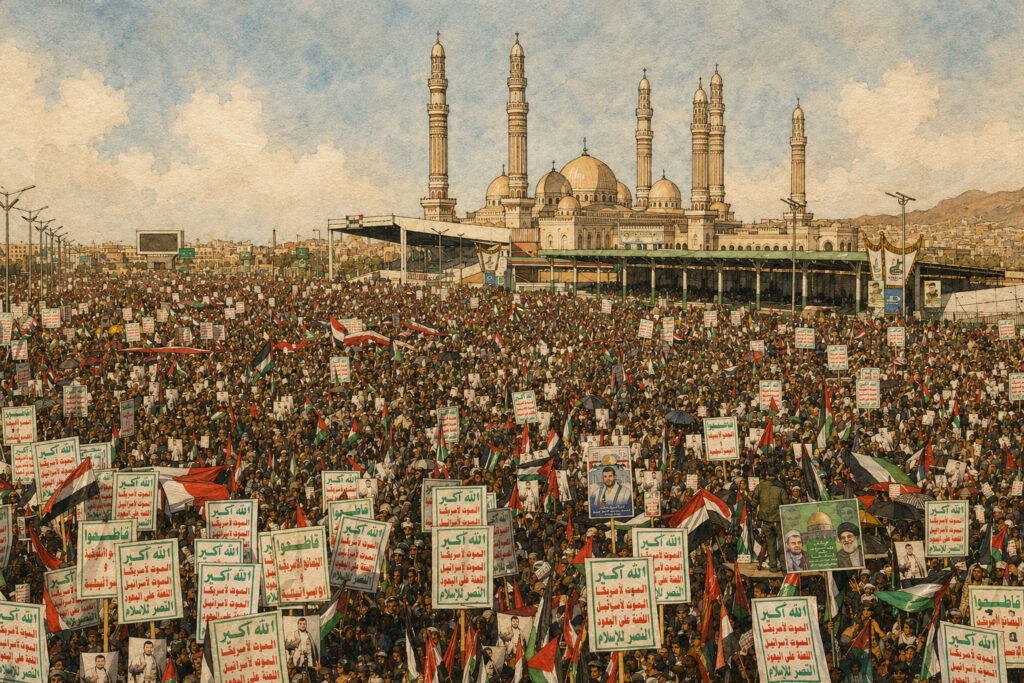
Since the start of the war in Gaza, the Houthis have presented themselves as the only truly Arab organisation defending the faith and willing to confront Jews and Western imperialism. In doing so, they have skilfully exploited the sense of helplessness felt by many Muslims who want to see the killing of Palestinians in Gaza brought to an end but are themselves unable or unwilling to act.
The major Arab states have focused more on diplomacy in their efforts to end the war, avoiding stronger measures, such as the use of oil as a means of pressure, which they once employed against Israel and its allies. This can create the impression that the Houthis are “moral, trustworthy, even genuine heroes of humanity”, even though they have merely seized upon the low-hanging fruit of grief over the Palestinians and anger towards Israel.
It is therefore hardly surprising when Nabil, a construction worker in Agadir, Morocco, remarks during a cigarette break at a building site in front of the Rokna Hotel that at least the Houthis are making an effort, while countries such as Egypt and the United Arab Emirates are doing nothing for Palestine. Yet the reality is not as simple as the Houthis seek to portray it.
The impact of developments in Yemen on Estonia
Events and conflicts taking place relatively far from us, at the southern tip of the Arabian Peninsula, with the struggle against the Houthis at their centre, can also have a significant impact on Estonia’s security. The Houthis’ increasingly radicalised ideology and their links to extremist groups raise the level of the terrorist threat across the region, while disruption to global maritime trade is only one part of the potential arsenal that the Houthis are capable of projecting beyond the Middle East. The spread of cyber threats, which may at some point also originate from Houthi supporters, could damage critical infrastructure and cybersecurity, thereby affecting both Western and Estonian security.
It is worth remembering that only a decade ago Yemen and drones were not keywords one would have associated with disruptions to global supply chains. Houthi control over strategically important sea routes, such as the Bab el-Mandeb Strait, affects international shipping and consequently trade, which in turn can damage Western economies and, through them, Estonia’s economy as well.
In addition, if the conflict expands and neighbouring countries become destabilised, an unfortunate convergence of circumstances could increase migration flows, further straining the already fragile domestic stability of Western societies through the challenges surrounding the integration — or lack of integration — of refugees and immigrants who have already entered the continent. Estonia’s interests are best served by stable Western societies which may well be diverse, but which must remain capable of preserving unity during crises.
Ending the conflicts on the Arabian Peninsula requires strong international cooperation, including within NATO and the European Union, in order to counter shared security threats and protect common values. The war in Yemen involving the Houthis, and the problems arising from it, have the potential to spread in a manner comparable to the coronavirus: the effects of the conflict and the threats associated with it can extend far beyond the region in which they originated and pose a risk to global stability and security. As creeping crises, such threats may often spread slowly but steadily and eventually reach Estonia as well. In this context, the greatest danger may not be the Houthis themselves, but rather the way states perceive threats, which, as in the case of Saudi Arabia, may lead them to underestimate the impact and reach of these threats in a globalised world.
This is human, because political and collective perceptions of threat tend to prioritise problems that are close at hand and to acknowledge less readily the impact of distant regions and events. This is dangerous, because the darker side of globalisation, together with the exceptionally rapid development of technology, brings threats originating in Yemen to our doorstep faster than we might expect. The 21st century differs from previous eras because victory in the battle for minds and in the information space is today comparable to victory on an actual battlefield. The aim of the Houthis and their supporters is to disseminate their messages among Western audiences in the hope that people will spread them as widely as possible.17
This is something for all influencers with large followings to reflect on: before pressing the share button — an act that is rapidly becoming comparable to activating a nuclear weapon in a missile silo — it is worth first considering what consequences it may have for society. Self-discipline, and becoming accustomed to practising it, is undoubtedly far more difficult among the civilian population than in civil defence or military service. Yet the challenges of the 21st century increasingly demand precisely this, especially in the information space.
In order to address crises that are increasingly charged with emotion and ideology, we must first be able to make sense of them. Yemen, Palestine and Islam, for example, should not be treated as one and the same simply because they are all associated with Muslims. On the contrary, these contexts are themselves fragmented and require different approaches and solutions. We need to understand these threats, accept their nature and recognise differences in value systems. At times, difficult choices must be made, such as precision strikes that may also result in casualties and thereby create new potential problems.

Always and everywhere
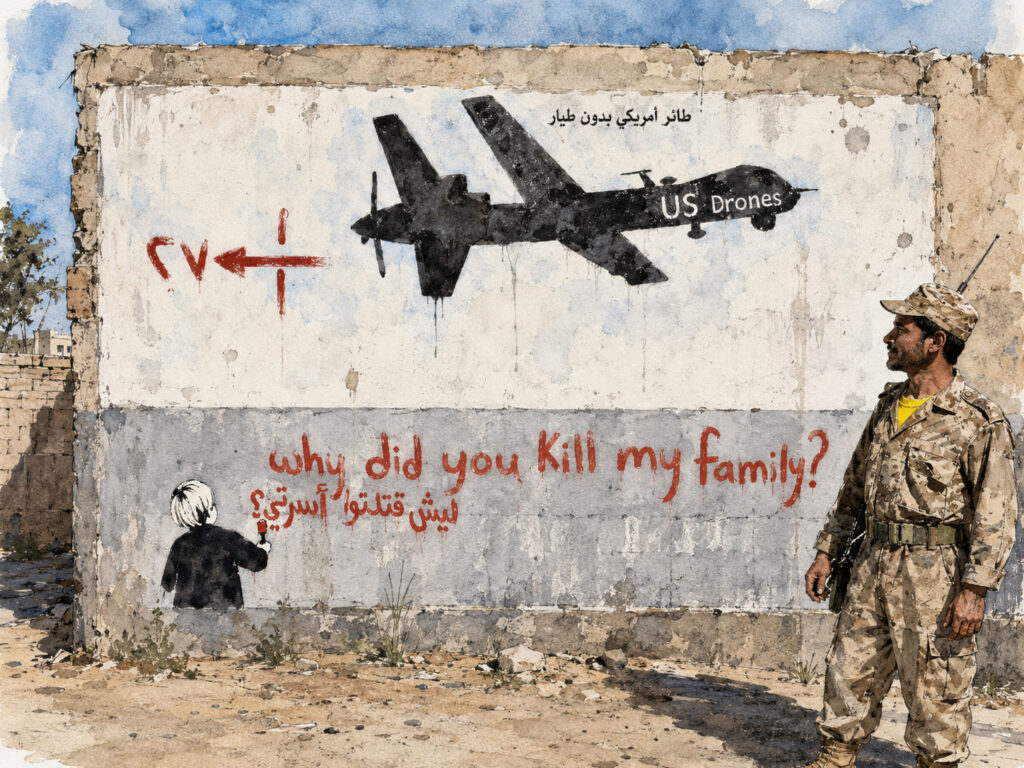
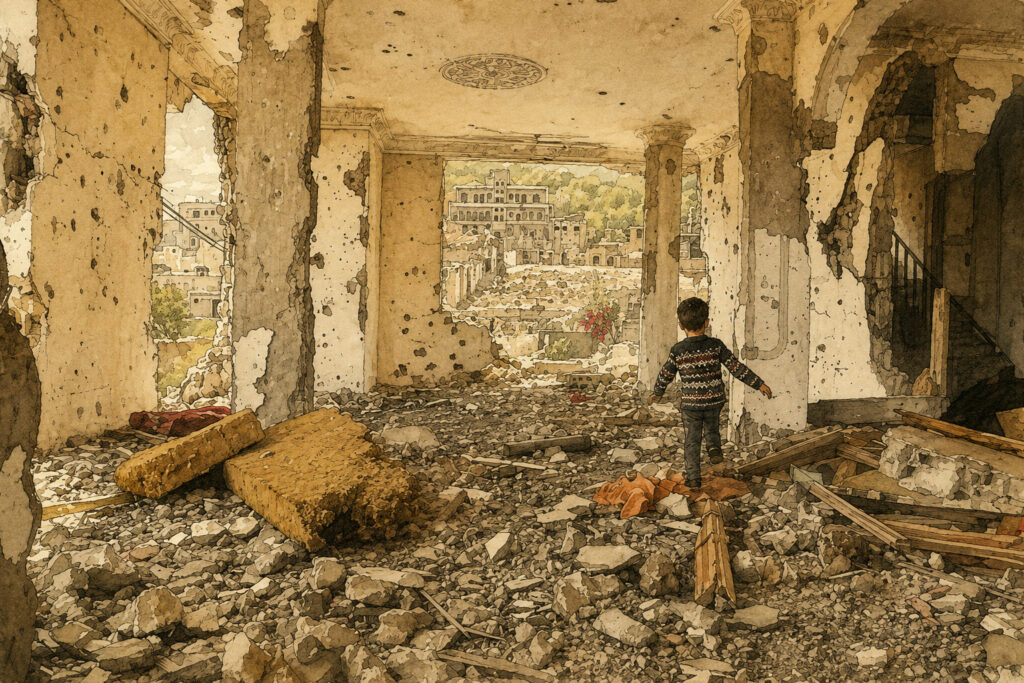
The Houthis’ growing capabilities are also reflected in 25-year-old Fatima, who, like a typical local woman, spends most of her time at home while at the same time representing one of these asymmetric threats. Her life path differs from that of others. In addition to being literate, she is also proficient with computers,** and although she is not yet a professional, she learns quickly. This is her opportunity to take revenge for an American drone strike 12 years ago, in which she was the sole survivor, at the age of 13, of the 14-member al-Haidra family. Fatima is not the only one to have lost loved ones in this way, as Western drones have been striking targets in Yemen since November 5, 2002, something the UN Human Rights Commission has at times reported as a “clear extrajudicial killing”.18 Although the strikes have targeted suspected terrorists, civilians have also been among the victims. This sustains anger and a desire for revenge that can be weaponised.
The spread of cyber threats that can be linked to Houthi supporters may damage critical infrastructure and cybersecurity, which in turn has the potential to affect both Western and Estonian security. Fatima’s Persian-speaking mentor recognises her potential, which is why the assignments, becoming progressively more complex step by step, both motivate Fatima and suggest that the day is not far off when she will be ready for her exam on the cyber front,19 where the local cyber army is looking for people just like her.
Eastern Europe. After dinner at a restaurant on Safia Street, she drinks another cup of tea before midnight in the third-floor kitchen of an unremarkable five-storey building. To herself, she hums a tune that has been stuck in her head since 12 January, when she and hundreds of thousands of others chanted a Houthi war song in support of Palestine in Al-Sabeen Square: “…we do not care, we do not care, turn it into a great world war! My heart longs for a weapon! In the name of God, this life is forbidden to me. In the path of God, bitterness tastes sweet. Death is welcome; it is our desire!”20
Sipping her tea, she moves into the bedroom, where a laptop sits on the table with an exam keyword left for her by her mentor – Elering. It is midnight, and before a cyberattack scenario with serious consequences begins to unfold 5,150 km away on Laki Street, Fatima places her tea glass on the table and says silently to herself, in the Arabic manner – bismillah!***
Remarks
- * A former military officer who had ruled North Yemen since 1978 refused in 1990 to condemn his ally Saddam Hussein’s annexation of Kuwait, significantly cooling relations with neighbouring countries. He later nevertheless supported the US invasion of Iraq.
- ** Only 35% of Yemeni women are literate.
- *** “In the name of God” (Arabic) is the opening phrase of the Qur’an and is commonly used at the beginning of an activity, for example before eating, exchanging currency, studying for an exam, or undertaking other tasks.
Explanations
A Felix (in English: abundant, fertile, happy, but also blessed) refers to one of the better-watered regions of the Arabian Peninsula, which the Romans divided into three parts: Arabia Deserta, Arabia Felix and Arabia Petraea.
B The name of the capital is probably derived from the Sabaic root ṣnʿ, meaning “well fortified”. This also characterises much of Yemen’s landscape, which consists largely of mountains and deserts and offers excellent natural defensive advantages against invaders.
C The People’s Liberation Army Support Base in Djibouti (Chinese: 中国人民解放军驻吉布提保障基地) was both communist China’s first overseas military base and its first military base on the African continent. Located at the Port of Doraleh, it can, when necessary, also service Iranian vessels, including intelligence-gathering ships, operating in the region.
D The transfer on 30 November 1967 of the strategically important island, which had been part of the British Empire’s Colony of Aden since 1857, to the People’s Republic of South Yemen was a painful loss for London.21
Sources
8 Taylor, A. 2015. Who are the Houthis, the group that just toppled Yemen’s government? The Washington Post, 22.01.2015.
16 Gambrell, J. 2021. Mysterious air base being built on volcanic island off Yemen. Associated Press, 25.05.2021.
Jaga postitust: