SCIENCE | Our researchers’ article highlights the potentially deadly risks of using social media during wartime
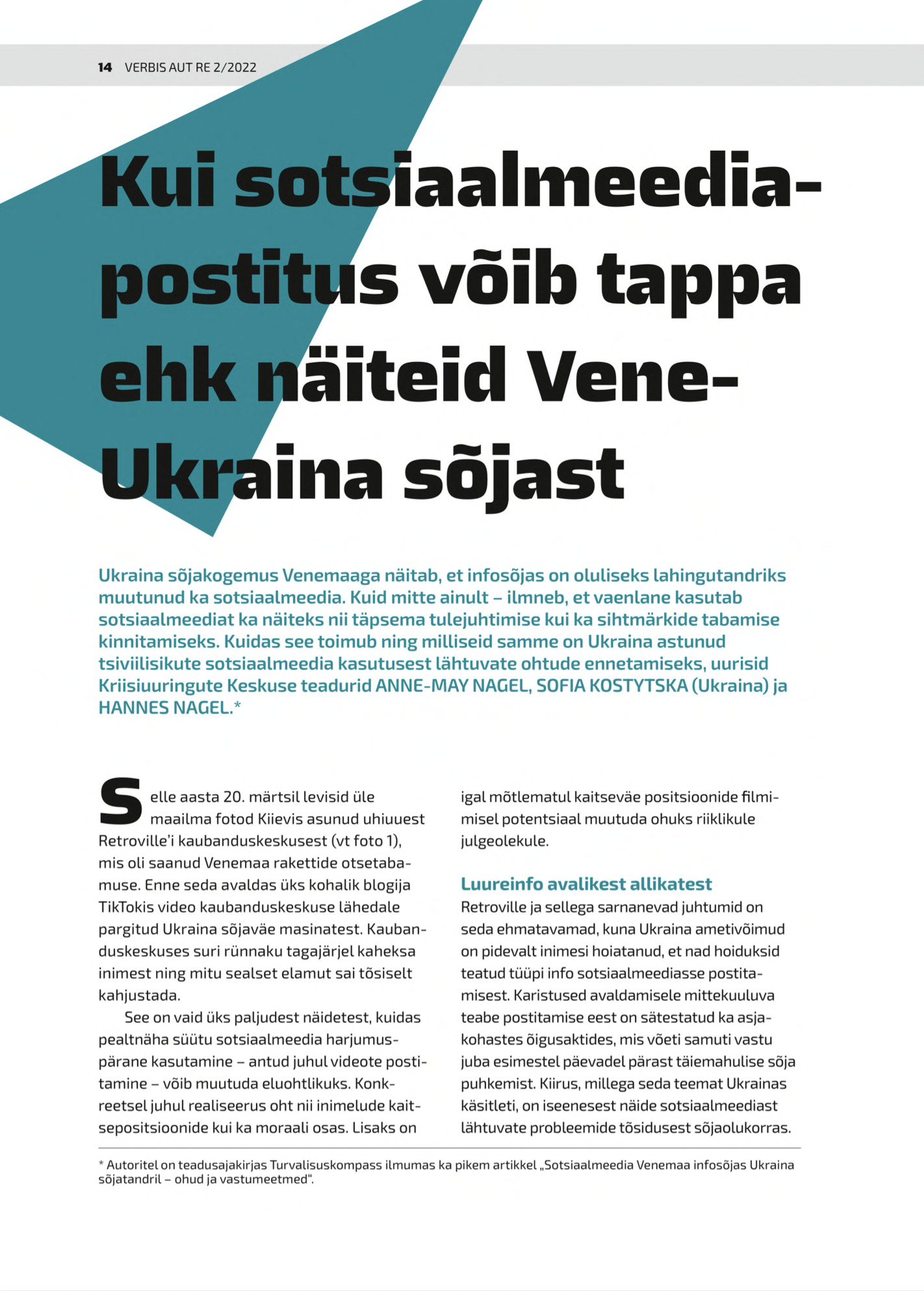
Researchers Anne-May Nagel, Sofiia Kostytska and Hannes Nagel from the Crisis Research Centre recently published a popular science article in Verbis aut Re, a magazine published by the Estonian Academy of Security Sciences. Drawing on examples from Russia’s war against Ukraine, the article examines the security risks associated with social media use, how civilians may inadvertently contribute to enemy intelligence-gathering, and the measures taken by the Ukrainian authorities to mitigate these risks..
Russia’s full-scale invasion of Ukraine in February 2022 demonstrated that social media is not merely a means of communication and information-sharing during wartime, but can also become a source of military intelligence and a tool of influence operations. The widespread use of smartphones enables people to share information about unfolding events almost in real time. However, photographs, videos and location data published online may inadvertently reveal the positions and movements of military units or the locations of critical infrastructure.
The article’s central message is that even a seemingly harmless social media post can pose serious security risks during wartime and put lives at risk. Information gathered from publicly available sources can be used to identify military targets, plan attacks and assess their outcomes. Those sharing such material may not even realise how valuable it could be to an adversary.
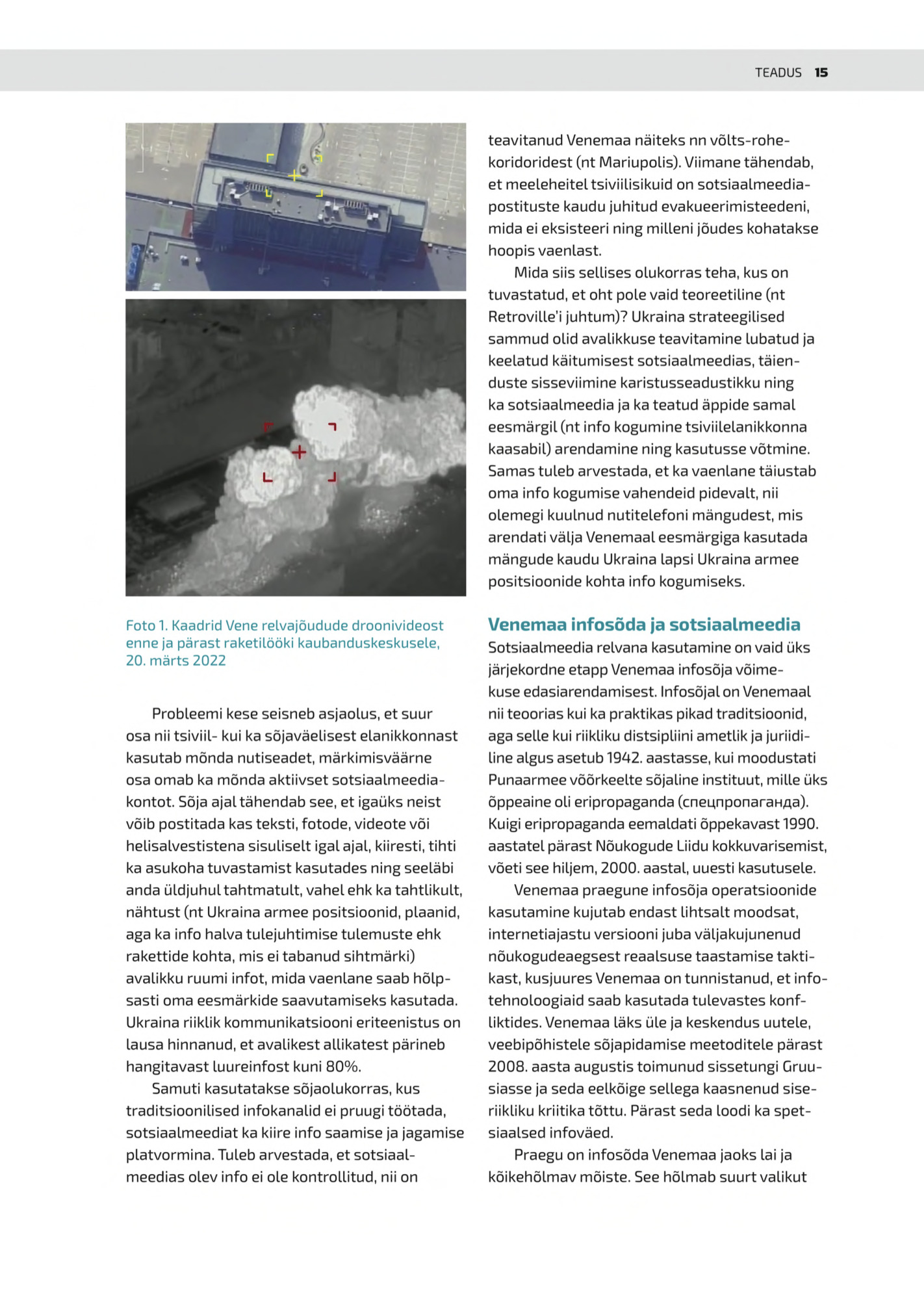
One of the key examples discussed by the authors was the missile strike on Kyiv’s Retroville shopping centre on 20 March 2022, which killed eight people. Before the attack, a local blogger had posted footage on TikTok showing Ukrainian military vehicles near the shopping centre. The incident illustrates the dangers of making militarily sensitive information publicly available, although the sequence of events alone does not establish that the particular post determined the target of the attack.
The authors also highlighted the role of social media in Russian information warfare. Beyond spreading disinformation and propaganda, publicly accessible information can help an adversary gather intelligence and assess the results of military operations. The article pointed out that, during wartime, everyday social media habits can become a security threat to both civilians and the armed forces.
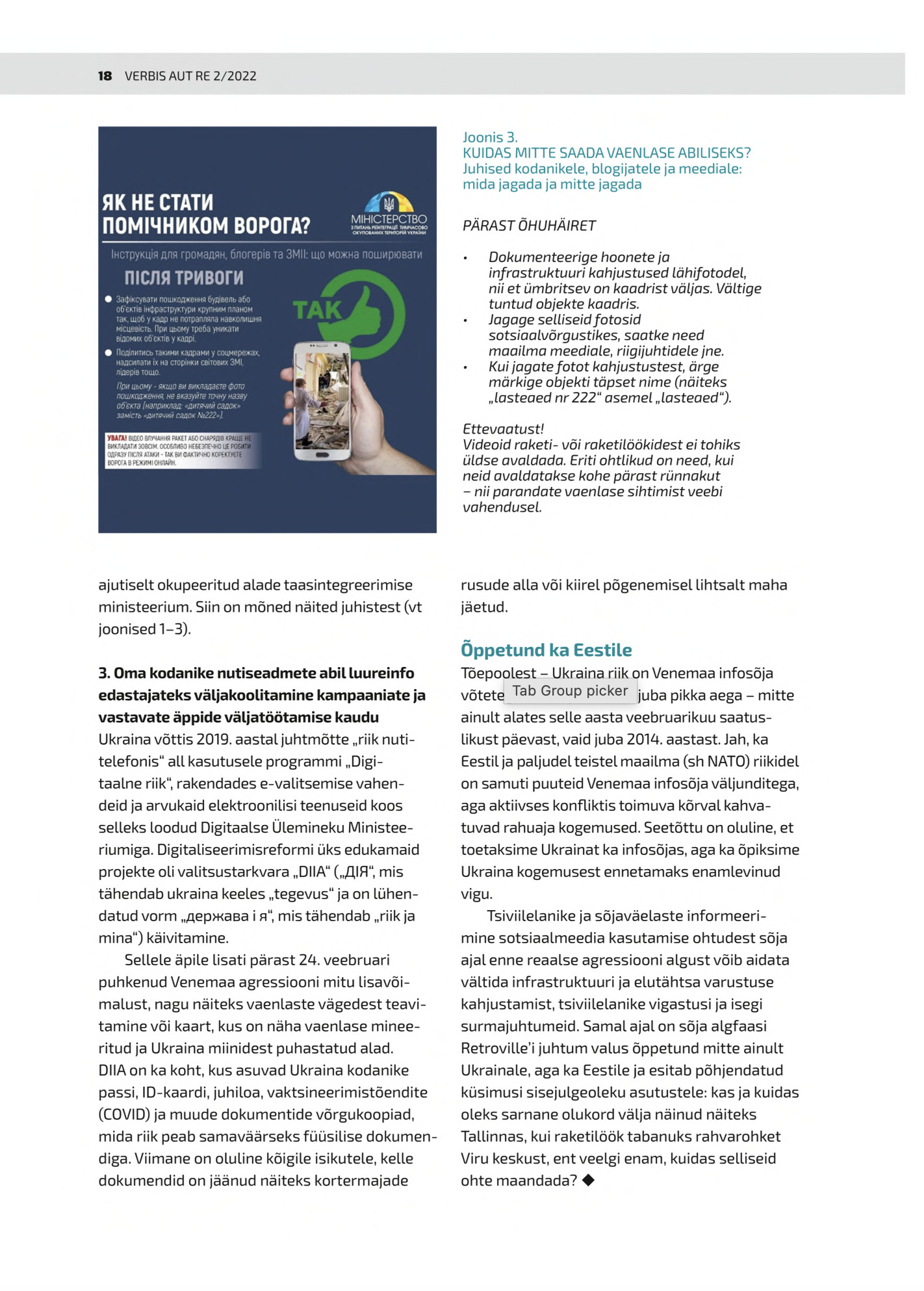
Particular attention was paid to the tension between freedom of expression and the protection of national security.Freedom of expression is a fundamental right in a democratic society, yet during an armed conflict, the publication of certain information may endanger lives and national security. The article examined amendments to Ukraine’s Criminal Code adopted in March 2022, which introduced penalties for the unlawful disclosure of militarily sensitive information. This illustrates how wartime conditions may necessitate stricter rules governing the sharing of information.
Alongside legal measures, the article explored public information campaigns launched by the Ukrainian authorities to help citizens and the media understand what information could safely be shared during wartime. These campaigns explained, for example, why people should not publish footage revealing military movements or air defence operations, and why particular care should be taken when sharing photographs and videos taken after missile strikes. The authors also discussed Ukraine’s digital government initiatives, including the Diia application, which was being developed to enable citizens to exchange information with the state.
For Estonia, the authors emphasised the importance of raising public awareness of the risks associated with sharing information during wartime, even in peacetime. Ukraine’s experience demonstrated that legal restrictions alone are insufficient if people do not understand how their everyday social media activities might affect military security. Clear guidance, public awareness campaigns and digital crisis preparedness therefore need to go hand in hand.
The authors also raised the question of how well Estonia’s population and internal security authorities were prepared for a situation in which information published on social media could be used to support military attacks. Learning from Ukraine’s wartime experience offers an opportunity to better understand these threats and prevent situations in which civilians’ inadvertent actions could contribute to infrastructure damage, injuries or loss of life.
🟠 The full popular science article is available in Estonian in the digital repository and can be accessed here.
🔺The use, distribution, modification or publication of the text and images is permitted only with the prior written agreement of NGO Crisis Research Centre; any unauthorised use is prohibited.
Share: