
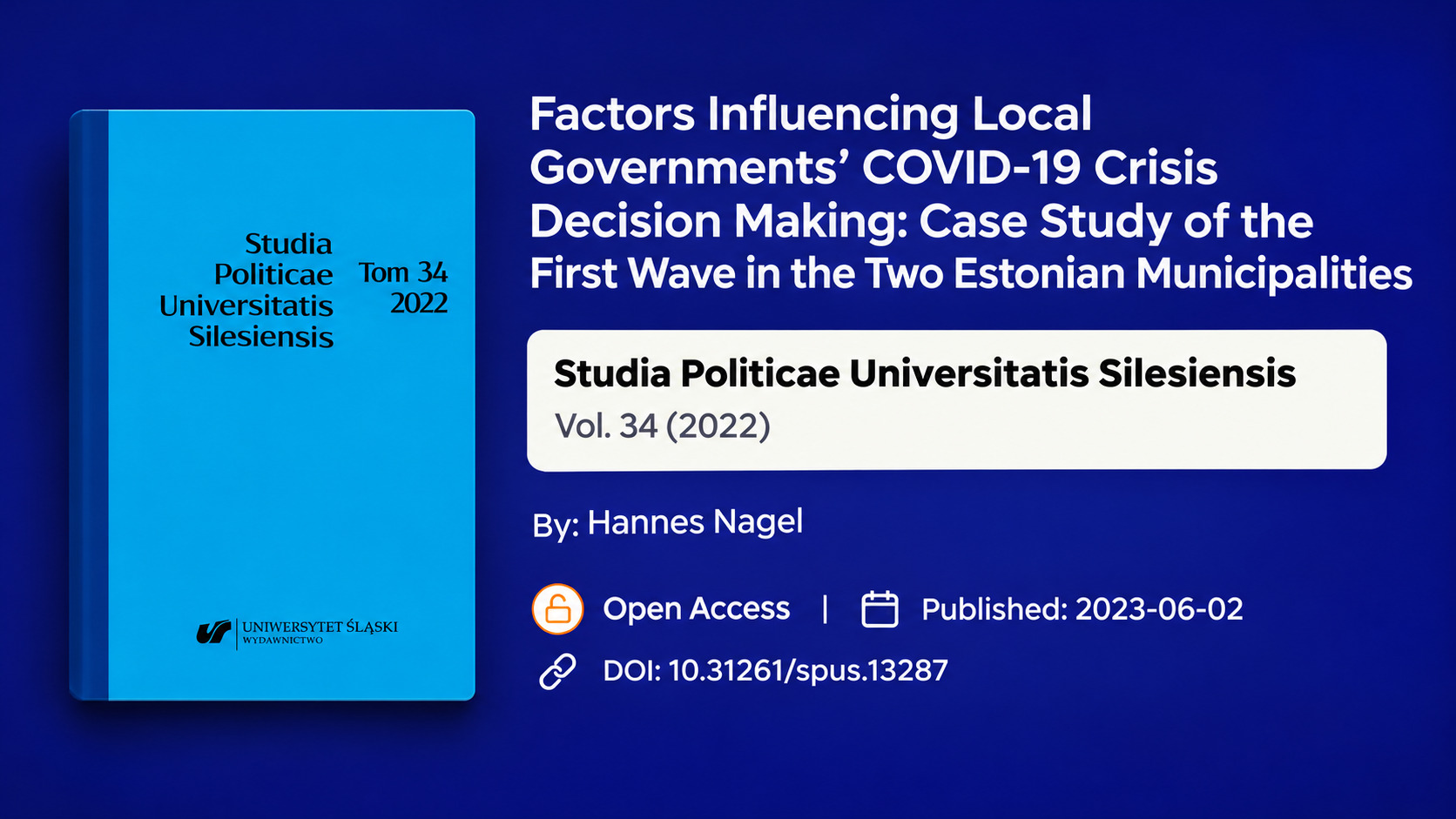
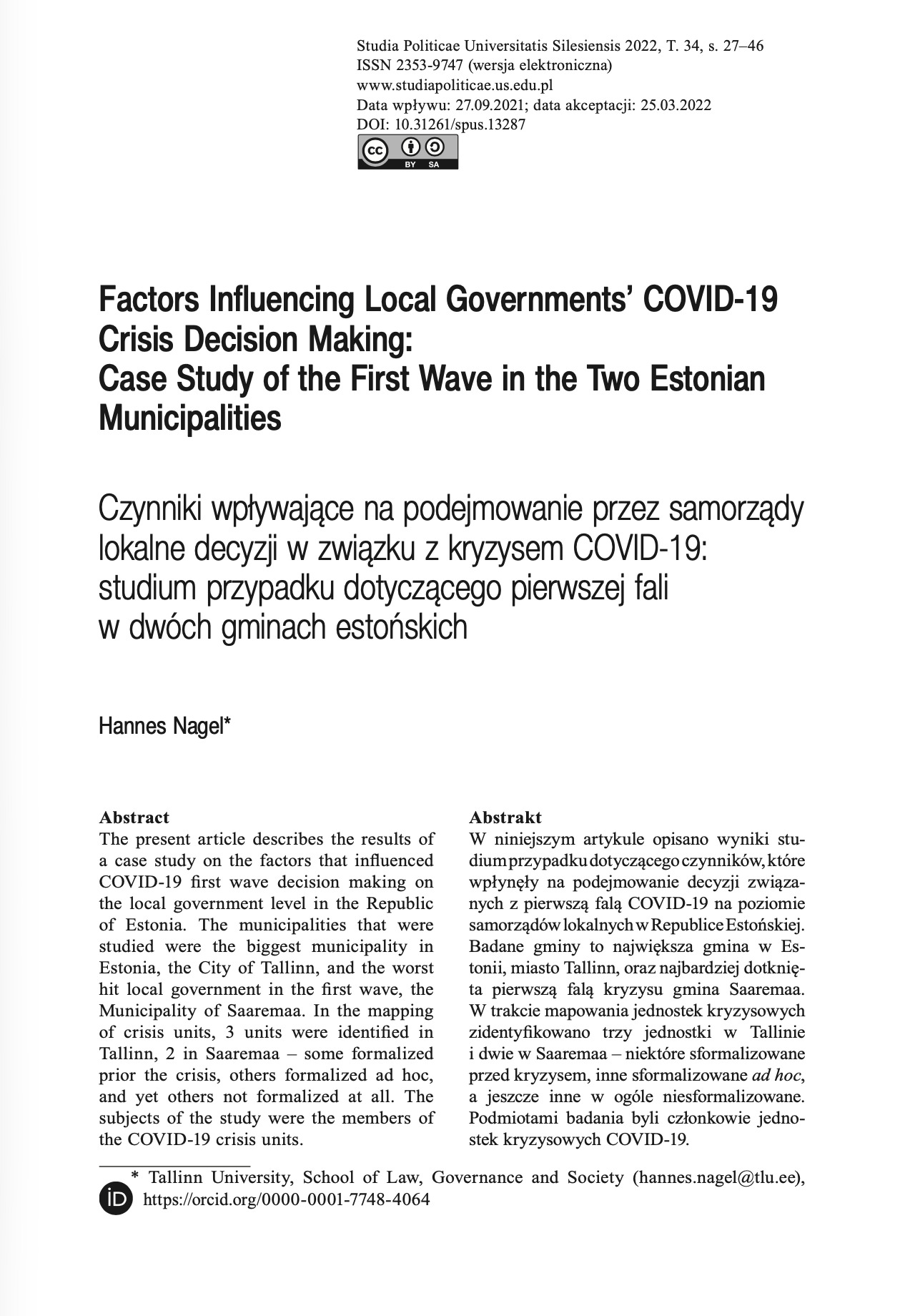
SCIENCE | Crisis Decisions Under Pressure: A Research Article on Tallinn’s and Saaremaa’s Experiences During COVID-19
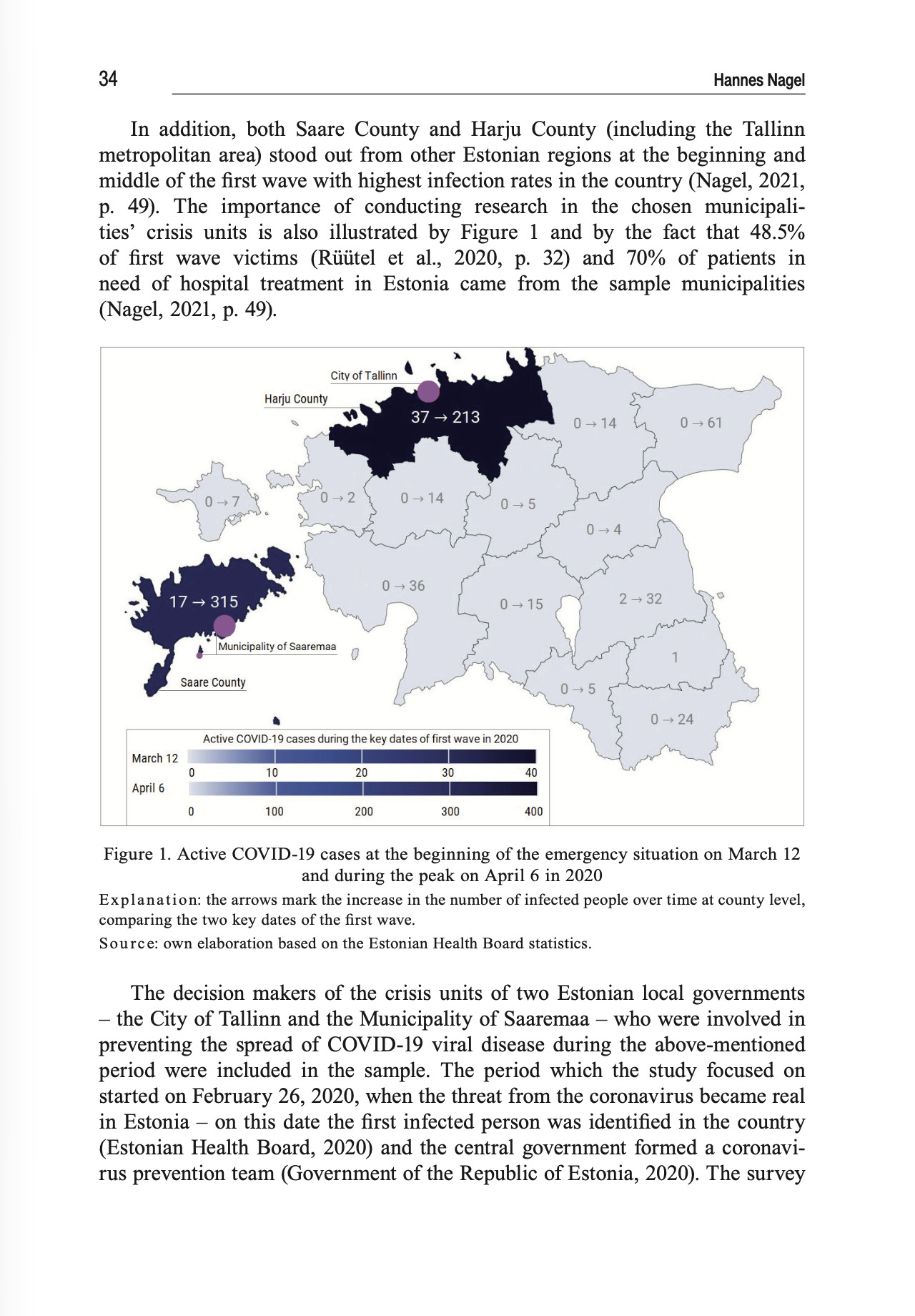
The study investigated the factors influencing decision-makers in local crisis management units at a time when information about the virus and its transmission was limited and decisions had to be made rapidly. The research drew on a survey of 41 members of crisis management units in Tallinn and Saaremaa, alongside 15 in-depth interviews.
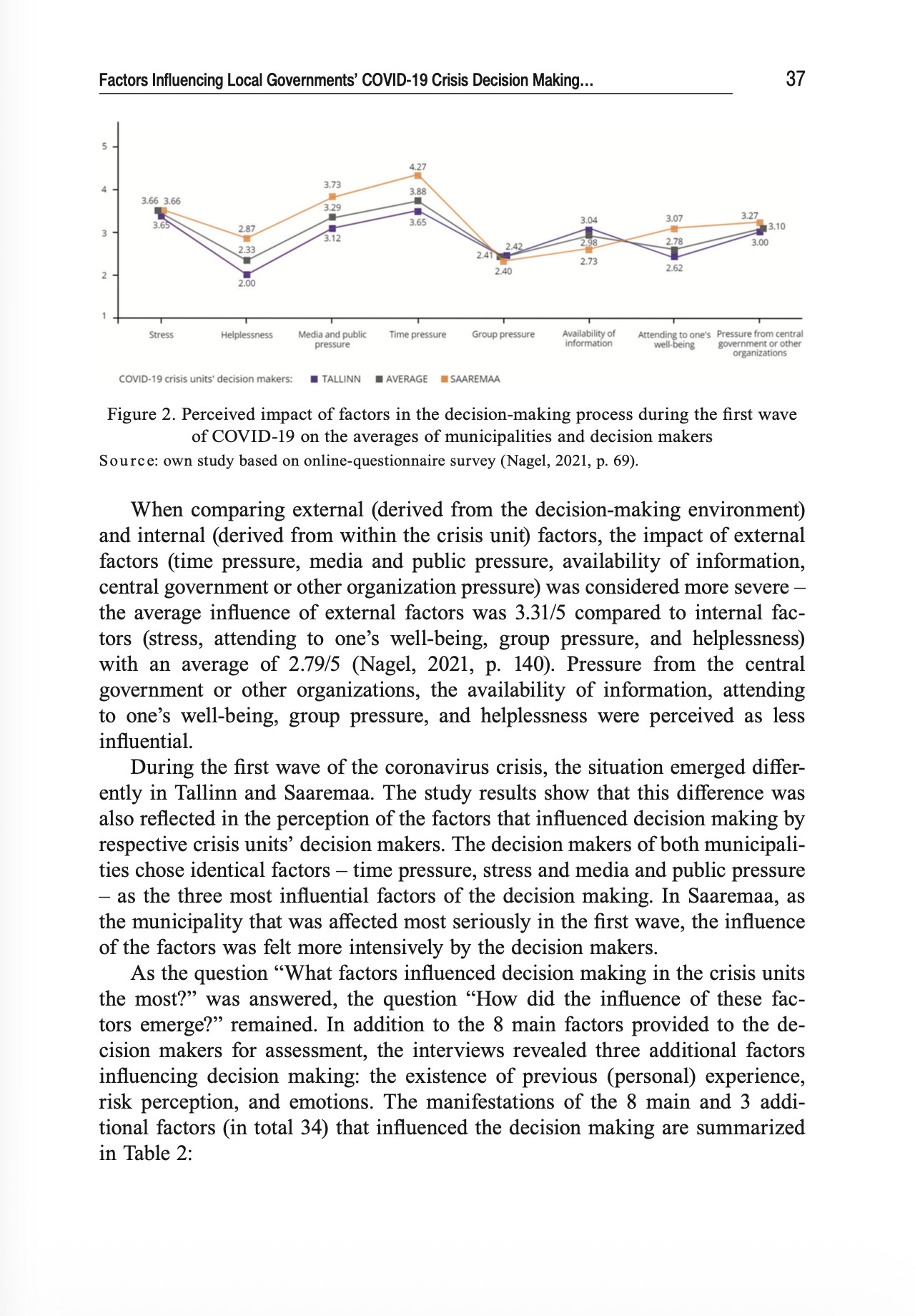
The study identified 34 distinct ways in which various factors manifested themselves in crisis decision-making. Time pressure, stress, and pressure from the media and the public emerged as the most influential factors. The same factors were prominent in both municipalities, although decision-makers in Saaremaa, which was more severely affected during the pandemic’s first wave, reported experiencing several of these pressures more intensely than their counterparts in Tallinn. The findings also highlighted the importance of decision-makers’ previous experience, risk perceptions and emotions.
The interviews revealed difficulties in exchanging information with national authorities, unclear guidance and challenges in co-operation between different levels of government. Decision-makers frequently considered previous crisis exercises insufficiently realistic, pointing to shortcomings in organisational preparedness.
The study’s conclusions emphasise the need to consider not only formal structures and resources when organising crisis management, but also the actual working conditions of decision-makers and the human factors influencing their decisions. This includes reducing excessive time pressure, supporting crisis managers, maintaining proactive crisis communication and improving co-operation across different levels of government.
🟠 Read the full research article here.
🔺The use, distribution, modification or publication of the text and images is permitted only with the prior written agreement of the NGO Crisis Research Centre. Unauthorised use is prohibited.
Jaga postitust: