SCIENCE | Our researchers’ article explored the human dimension of crisis decision-making
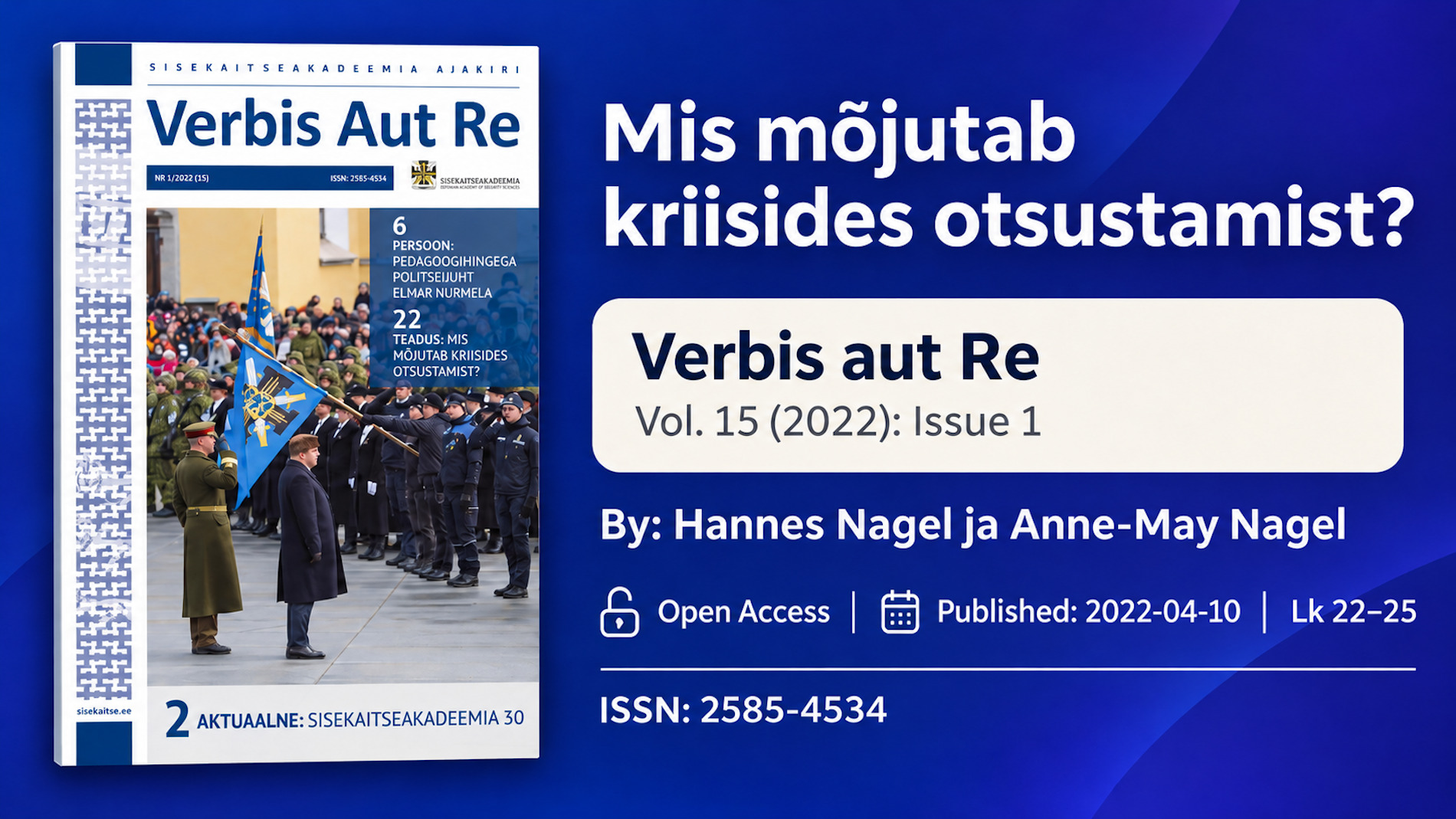
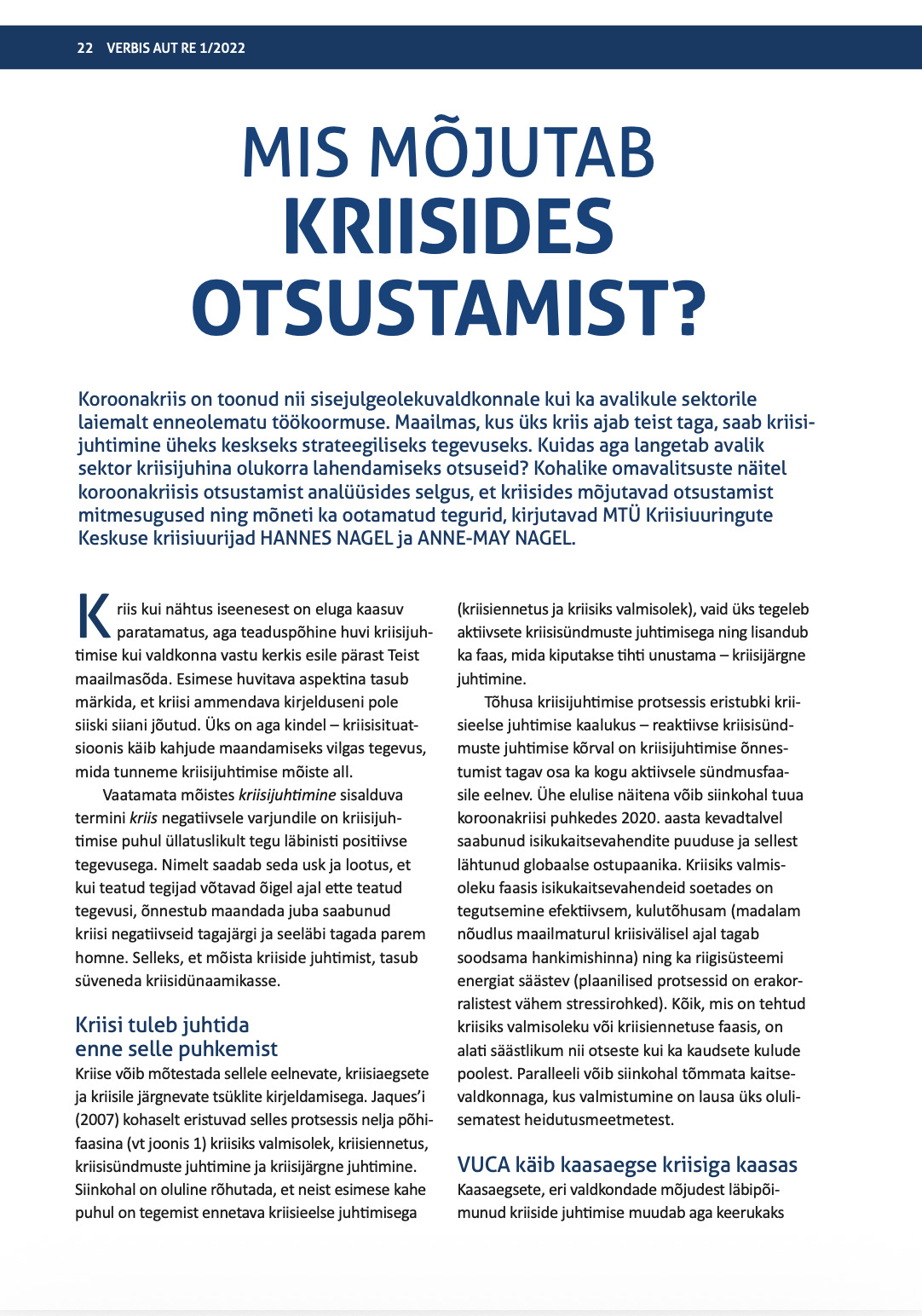
Researchers Hannes Nagel and Anne-May Nagel from the Crisis Research Centre published a popular science article in Verbis aut Re, a magazine published by the Estonian Academy of Security Sciences. Drawing on the first wave of the COVID-19 pandemic, the article examined the factors influencing crisis decision-making in local authorities, including time pressure, stress, pressure from the media and the public, as well as the importance of pre-crisis preparedness and previous experience in crisis management.
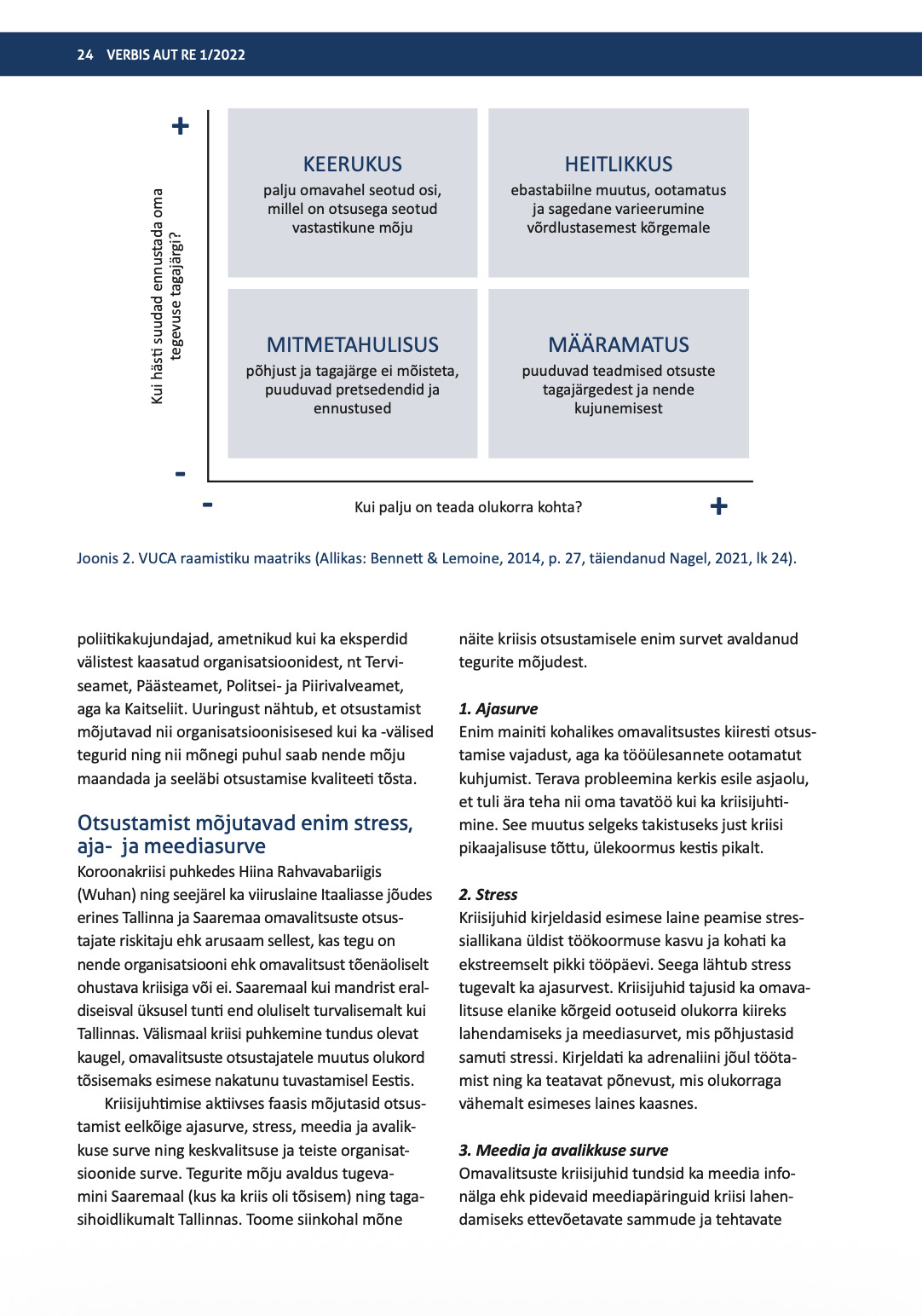
The COVID-19 pandemic placed an unprecedented workload on the public sector, requiring rapid decision-making in circumstances where information was incomplete and the further development of the crisis was difficult to predict. In the article, the authors emphasised that modern crises rarely remain confined to a single sector. Instead, their effects spread across healthcare, the economy, education and everyday life. Such an environment is described by the VUCA framework, which encompasses volatility, uncertainty, complexity and ambiguity.
One of the article’s key conclusions is that crisis decision-making is most strongly influenced by time pressure, stress, and pressure from the media and the public. The authors drew on research conducted by Hannes Nagel at Tallinn University in 2021, which examined decision-making within the crisis management units of the City of Tallinn and Saaremaa Municipality during the first wave of COVID-19, from 26 February to 18 May 2020. The study involved policymakers, public officials and experts from other organisations engaged in crisis management.
The study revealed considerable differences in how decision-makers in the two local authorities perceived risks at the beginning of the crisis. Saaremaa initially felt relatively secure because of its geographical separation from mainland Estonia. However, as the crisis intensified, the island became one of the areas hardest hit during the first wave. The factors influencing decision-making were felt more strongly in Saaremaa than in Tallinn, reflecting the differing severity of the crisis in the two municipalities.
Time pressure arose primarily from the need to make decisions quickly while coping with an unexpected accumulation of responsibilities. Crisis managers had to continue their regular duties alongside crisis management tasks, making prolonged workloads a significant challenge. Stress was heightened by long working days, high public expectations and constant scrutiny. At the same time, decision-makers also described working on adrenaline and experiencing a certain sense of excitement during the initial stages of the crisis.
Challenges in cooperation between different levels of government and information-sharing during the crisis were particularly evident. Crisis managers in Tallinn and Saaremaa pointed to insufficient support from central government, legal uncertainty and conflicting instructions issued by government authorities. In some cases, following the instructions of one ministry would have made it impossible to comply with those of another. To reduce pressure from the media and the public, regular press briefings and other forms of proactive communication were used to ensure a consistent flow of information to residents and journalists.
The authors also emphasised the importance of previous crisis management experience and organisational preparedness. In Saaremaa, the experience of experts from the Estonian Rescue Board proved particularly valuable, including their knowledge of staff rotation and the importance of mandatory rest days during prolonged crises. Involving people with previous crisis management experience helped crisis management units cope more effectively with challenging circumstances. At the same time, the study revealed that earlier crisis exercises had, in some cases, been unrealistic and inadequate.
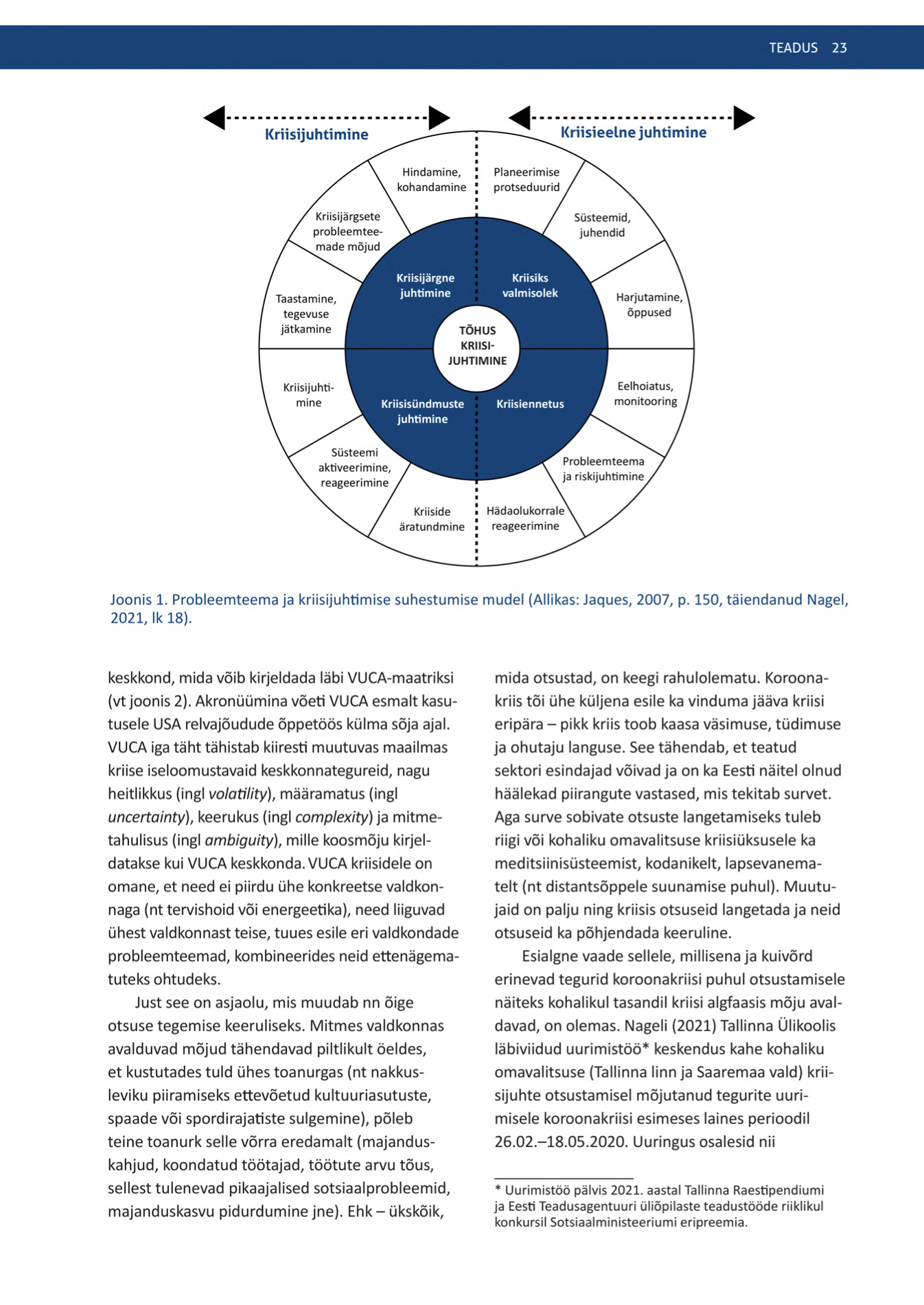
The article highlights that effective crisis management begins well before a crisis occurs. The authors distinguished four main phases of crisis management: crisis preparedness, crisis prevention, crisis response and post-crisis management. For example, the shortage of personal protective equipment at the beginning of the COVID-19 pandemic demonstrated how inadequate preparations before a crisis can subsequently lead to substantial additional costs, increased workloads and greater time pressure.
In concluding the article, the authors stressed the importance of post-crisis analysis and learning. During a crisis, resources for continuously evaluating ongoing activities are often limited. However, systematically examining past experiences makes it possible to identify capability gaps, improve working arrangements and provide better support for those on the front line of crisis management. The experiences of the COVID-19 pandemic and the subsequent refugee crisis demonstrated the importance of understanding crisis management as a continuous process of learning and adaptation.
🟠 The full popular science article is available in Estonian in the digital repository and can be accessed here.
🔺The use, distribution, modification or publication of the text and images is permitted only with the prior written agreement of NGO Crisis Research Centre; any unauthorised use is prohibited.
Share: