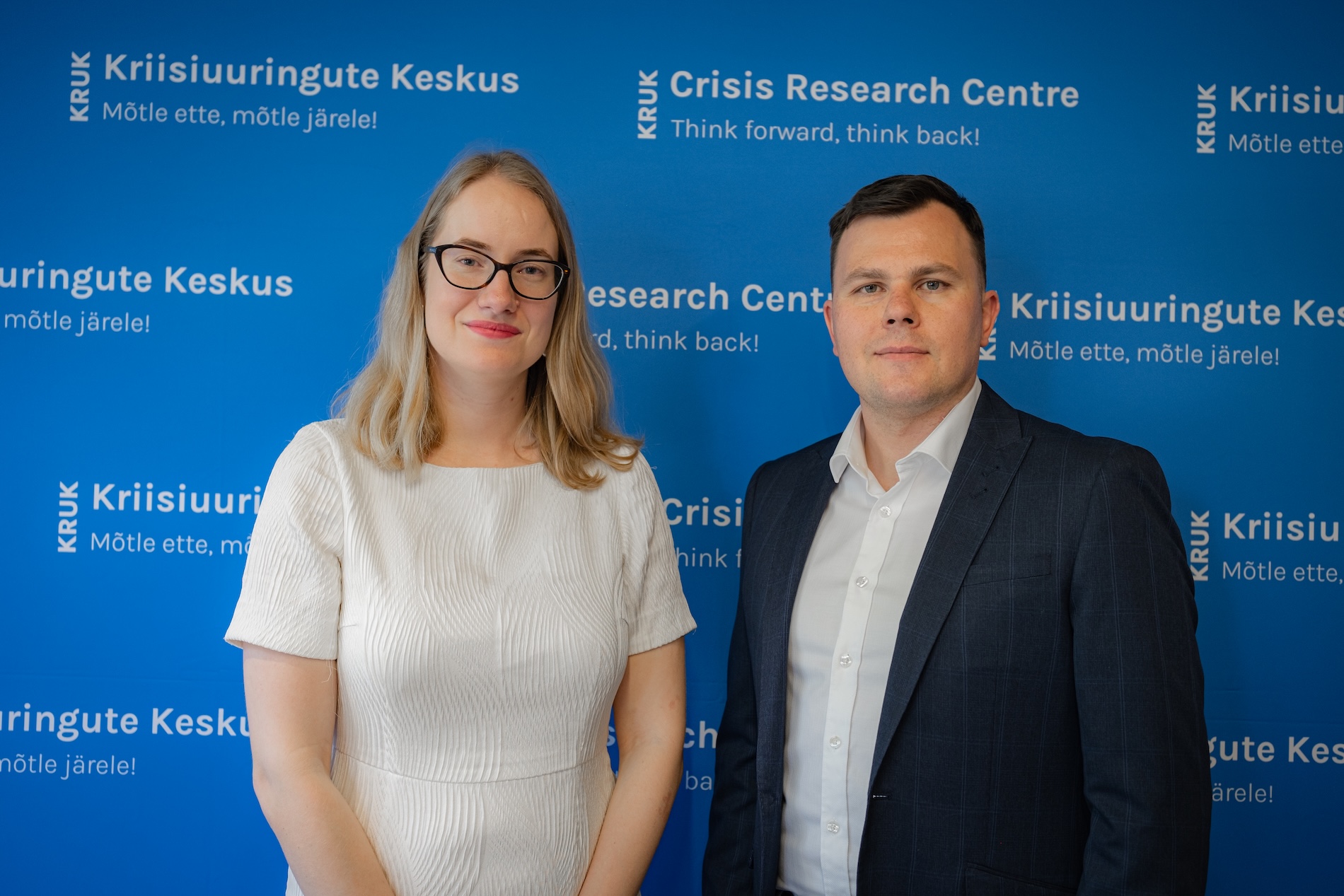
OPINION | Anne-May Nagel and Hannes Nagel: Whose Crisis Is the Higher Education Crisis?
Much has been said about the higher education funding crisis. The fact that it is primarily academic staff who are speaking out and, worse still, that students remain largely silent and employers are equally reluctant to contribute to the debate is precisely why this crisis may not be resolved as hoped. It is therefore worth asking: whose crisis is it? Does it belong to the state as the commissioning body, the student as the customer, or the university as the service provider?
It appears that a strategic mistake has been made in communicating the higher education crisis. Its principal spokespeople are predominantly members of university management teams, whose messages, for some reason, fail to resonate with and mobilise those genuinely affected by the crisis – the average student. Whilst university leadership teams across Estonia are following past practice by issuing joint statements, student-led initiatives attracting attention have focused on other issues rather than the higher education crisis. These include, for example, calls for affordable lunch options near the University of Tartu Library or the Students With Ukraine campaign launched at Tallinn University in support of Ukrainian war refugees.
Both demonstrate that students are active, willing to stand up for worthwhile causes and capable of mobilising when there is sufficient incentive to do so. Where, then, are the student protests against the underfunding of higher education? Or, for that matter, the statements and initiatives of the Federation of Estonian Student Unions, the umbrella organisation representing student unions? After all, what is at stake is the quality of students’ education and their future competitiveness.
Similarly, why are organisations such as the Estonian Chamber of Commerce and Industry and the Estonian Employers’ Confederation remaining silent when the quality of their future workforce will suffer as a result of the underfunding of higher education? Or are they already placing greater hopes on skilled workers from abroad? Given the apparent lack of dissatisfaction or protest from either the direct customer – the student – or the indirect customer – the employer – perhaps there is no perceived need to change anything. The pressure exerted by universities, which the state regards as intermediaries in service provision, is simply insufficient to make society, and consequently policymakers, recognise the seriousness of the situation.
If Estonian society wishes to establish a sustainable higher education funding system capable of meeting contemporary challenges, students must pull the cart together with universities and employers. As long as only one horse is pulling the cart, it will get nowhere. Indeed, it may sink even deeper into the ditch. As ever, the solution lies in cooperation, and the crisis must be recognised and embraced as a shared responsibility.
🟠 The opinion piece was published on the Delfi news portal on 3 July and in the print edition of Eesti Päevaleht on 4 July (101, pp. 2–3).
🔺The use, distribution, modification or publication of text and images is permitted only with the prior written consent of the NGO Crisis Research Centre. Any unauthorised use is strictly prohibited.
Share: