
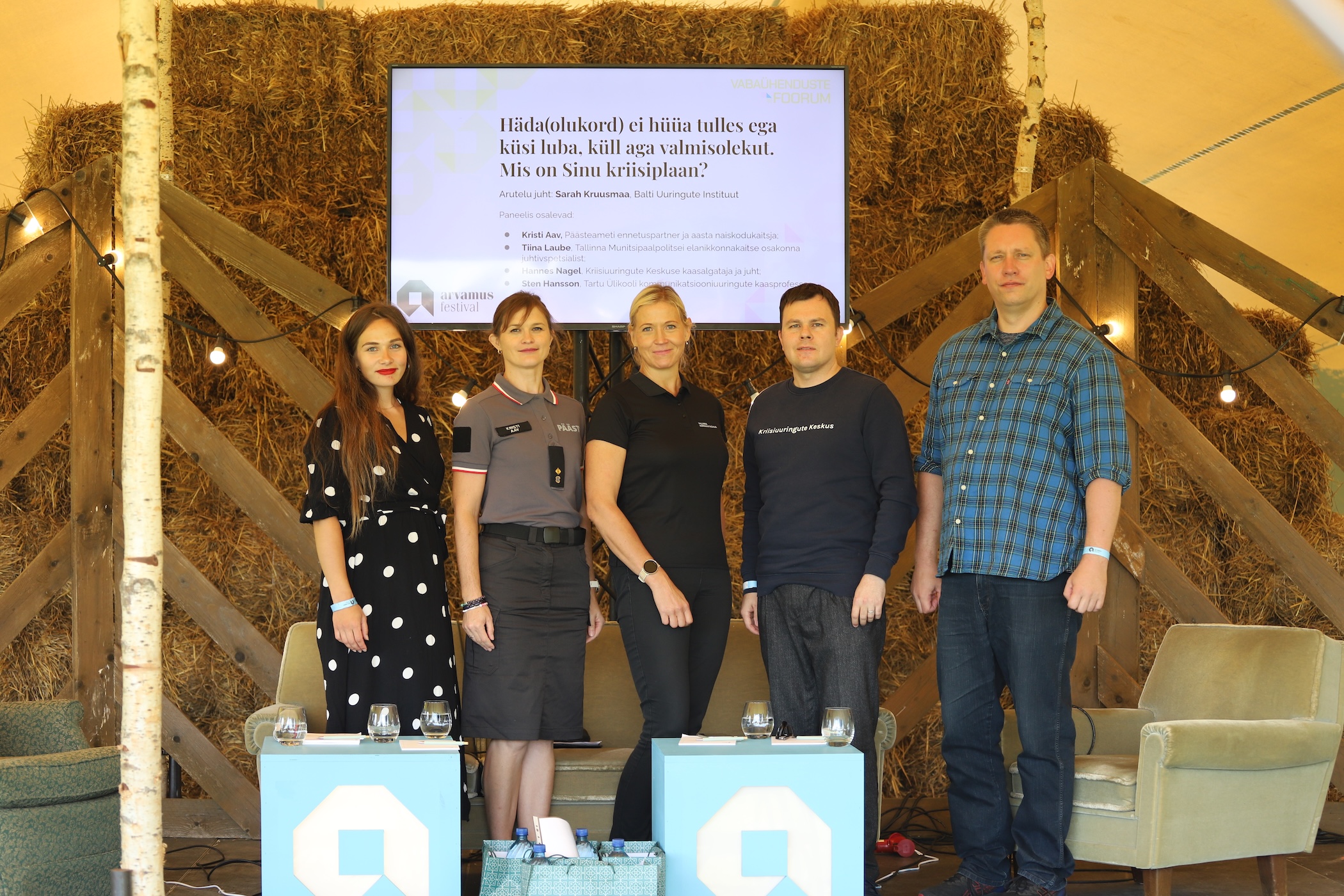
At the Opinion Festival: we explained why crisis preparedness cannot be solely an individual responsibility
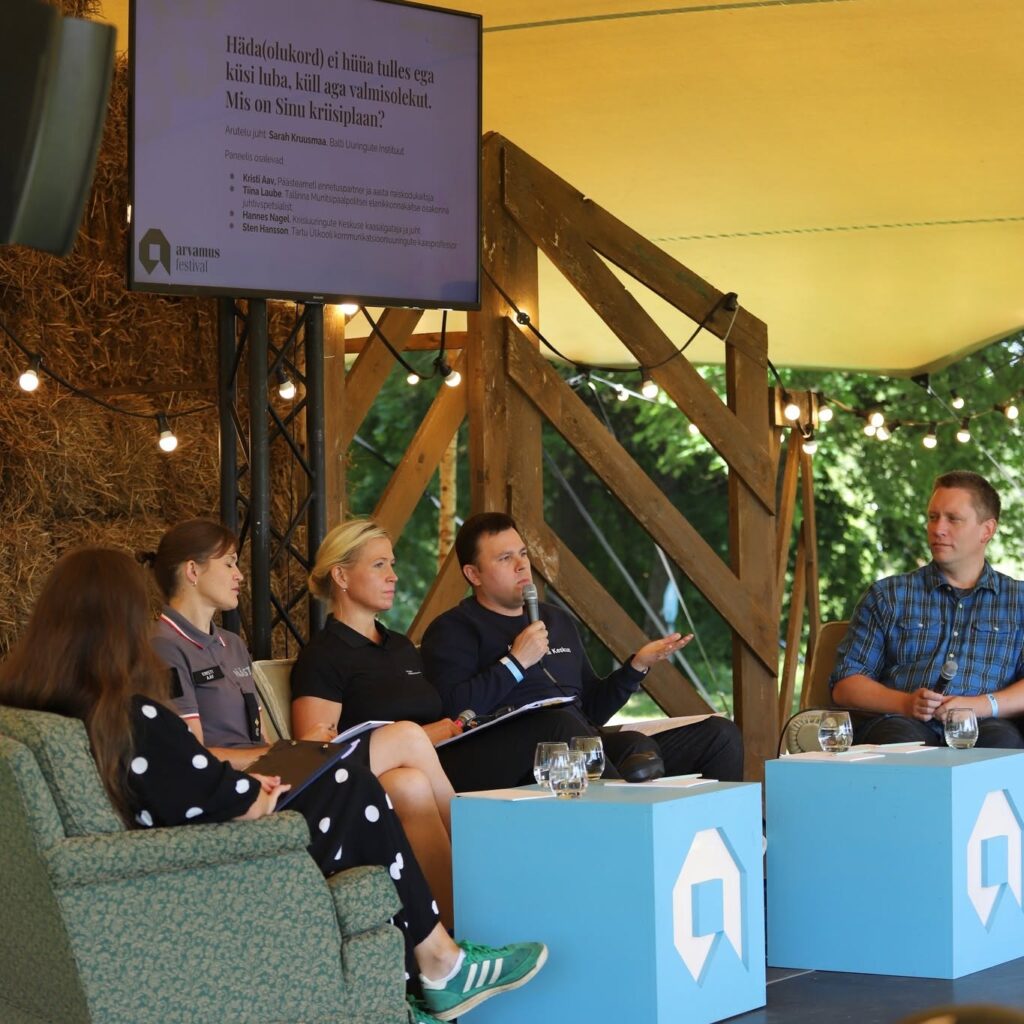
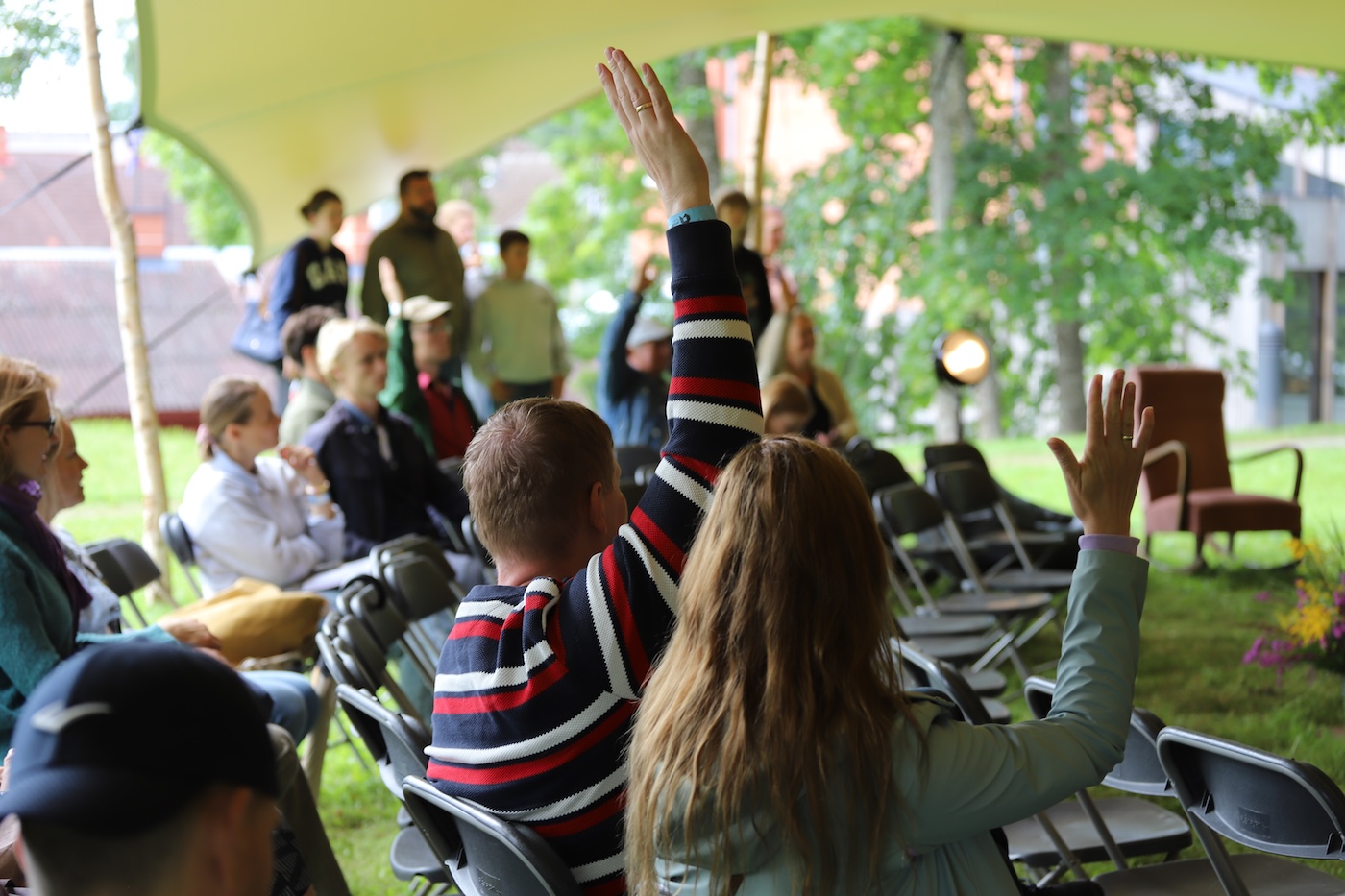
Yesterday, we attended the Opinion Festival in Paide, where, during a panel discussion on crisis preparedness in Estonia, we drew the attention of institutions and residents to the fact that crisis preparedness cannot be the responsibility of individuals alone.
The discussion raised many questions about why people’s level of crisis preparedness remains low. To put this into perspective, fewer than 1% of residents in large apartment buildings have all the necessary emergency supplies, while the figure is 4% in smaller apartment buildings. Yet most people in Estonia live in apartment buildings.
While a lack of knowledge and psychological barriers to thinking about crises are important factors — it can be difficult to consider the possibility of a crisis because it involves imagining a negative scenario — socioeconomic barriers also play a significant role. In practice, this means that, for various reasons, many people simply do not have sufficient resources to invest in crisis preparedness.
This is also reflected in various studies:
- According to a study conducted by the University of Latvia in the Baltic capitals, 25% of Tallinn residents who were not prepared for crises cited a lack of money as a reason.
- In nationwide surveys conducted by the Estonian Rescue Board, 32% of respondents identified insufficient financial resources as a barrier.
- In the 2024 Eurobarometer survey, 37% of respondents in Estonia cited a lack of financial resources or time as one of the reasons for not preparing for crises.
These figures show that a significant proportion of people face real socioeconomic and practical barriers to crisis preparedness.
So what can be done?
The costs of crisis preparedness can be spread over a longer period. But this starts with thinking through what is actually sensible to acquire in the first place. In apartment buildings, however, some measures need to be addressed collectively by the apartment association and are beyond what an individual resident can do alone. Perhaps it is therefore time to talk about crisis preparedness as something we prepare for together, especially at the level of apartment buildings.
We also talked a great deal about community-based preparedness, which can help compensate for the limited resources of individuals. This also means providing substantially more resources to local governments and civil society organisations so that they can support communities and help people prepare together. In apartment buildings, the relevant community is often the apartment association. Relationships there may sometimes be complicated, but a great deal can still be achieved, and Estonia already has a number of good examples in the field of crisis preparedness.
In cities, community-based preparedness is also supported by community gardens, repair workshops, libraries, neighbourhood associations and other places where people can come together free of charge or at very low cost, cooperate and build trust with their fellow residents. This provides a strong foundation on which crisis preparedness can be built.
These are just some of the topics we discussed during the panel. We thank the organisers of the discussion, our fellow panellists and the visitors of the Opinion Festival for the space for discussion and exchange of ideas that we created together.
Photos: Opinion Festival 2026 (Virge Ratasepp/Institute of Baltic Studies, 2026).
Jaga postitust: