
KRAKO project brings crisis preparedness knowledge to Tallinn communities
The Crisis Research Centre will launch the KRAKO project on August 1, 2026 focusing on strengthening community crisis preparedness and empowering local leaders in Tallinn.
The Crisis Research Centre is launching the KRAKO project (Knowledge and Resilience Alliance of Key Organisers) in Tallinn to support people’s ability to cope better in emergencies and crises, and to help carry crisis preparedness knowledge forward at the local level. The project is part of the Crisis Research Centre’s wider 2026 programme, which focuses on empowering community crisis preparedness through practical discussions, learning activities and local-level cooperation.
KRAKO does not approach crisis preparedness only as a matter of supplies, guidelines or institutional responsibility. Instead, it treats preparedness as part of a broader question: how communities can better understand their strengths, vulnerabilities and opportunities for cooperation. The project’s central starting point is that official plans alone are not enough in crises — people also need knowledge, skills, contacts and trust to rely on in difficult situations.
“Crisis preparedness often starts with very simple things: whether people know what to do in the first hours, whether they know other active people in their community, and whether they are able to communicate information calmly. KRAKO helps strengthen exactly this local level, where official preparedness and people’s everyday capacity to act come together,” said Hannes Nagel, Head of the Crisis Research Centre.

KRAKO is aimed at residents of the Haabersti, Mustamäe and Nõmme districts in Tallinn and will run from August 1 to December 31, 2026.
The project is co-funded by the City of Tallinn and the Tallinn Municipal Police, together with the NGO Crisis Research Centre.
As part of the project, community-based crisis preparedness activities will be carried out in Tallinn for adult residents and local leaders. The aim is to train at least 80 people who want to contribute to the safety of their community, share crisis preparedness knowledge and strengthen neighbourhood cooperation. The project builds on the Crisis Research Centre’s previous practical experience and learning materials, helping to broaden the foundation of community-based crisis preparedness in Tallinn.
More broadly, KRAKO is also linked to the impacts of climate change, extreme weather, disruptions to vital services and other societal crises. These developments have made it increasingly clear that crisis preparedness should be understood not only through national plans, but also through people’s everyday environments, community ties and local capacity for cooperation “Community-based crisis preparedness does not mean shifting responsibility onto people. On the contrary, it means giving people better opportunities to understand their role, notice risks and cooperate both with each other and with local institutions. A well-functioning community does not replace public-sector crisis management, but in a crisis it can provide very important support to it,” Nagel added.
Through KRAKO, the Crisis Research Centre will continue working to make crisis preparedness understandable, practical and connected to local life. The project supports community awareness, strengthens the role of local leaders and helps make preparedness part of everyday cooperation, rather than only an exceptional task when a crisis occurs.
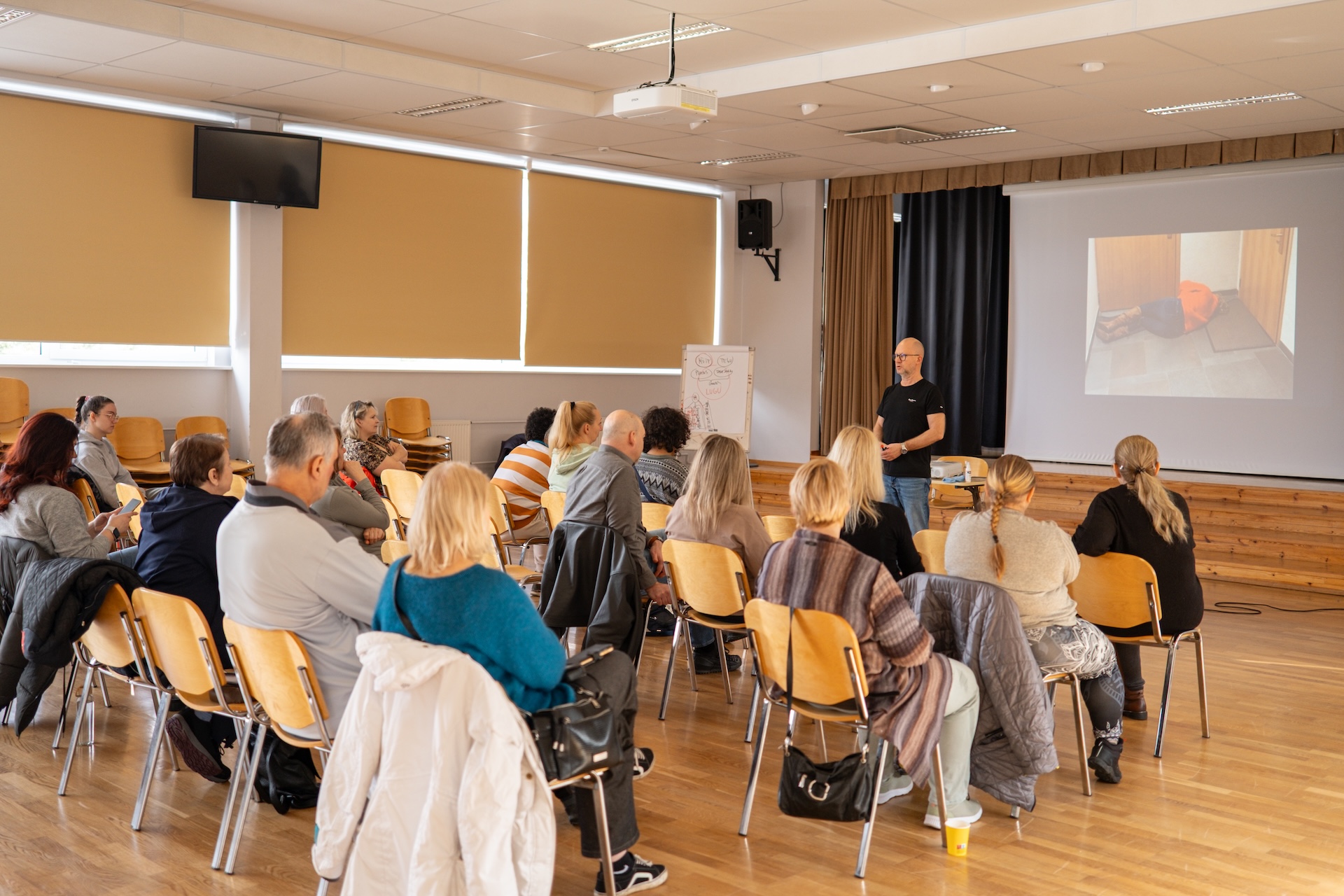
Photo: community crisis preparedness training and the KRAKO project logo (KRUK, 2026).
Jaga postitust: