
We highlighted on ERR that the pace of cities’ crisis preparedness needs to accelerate
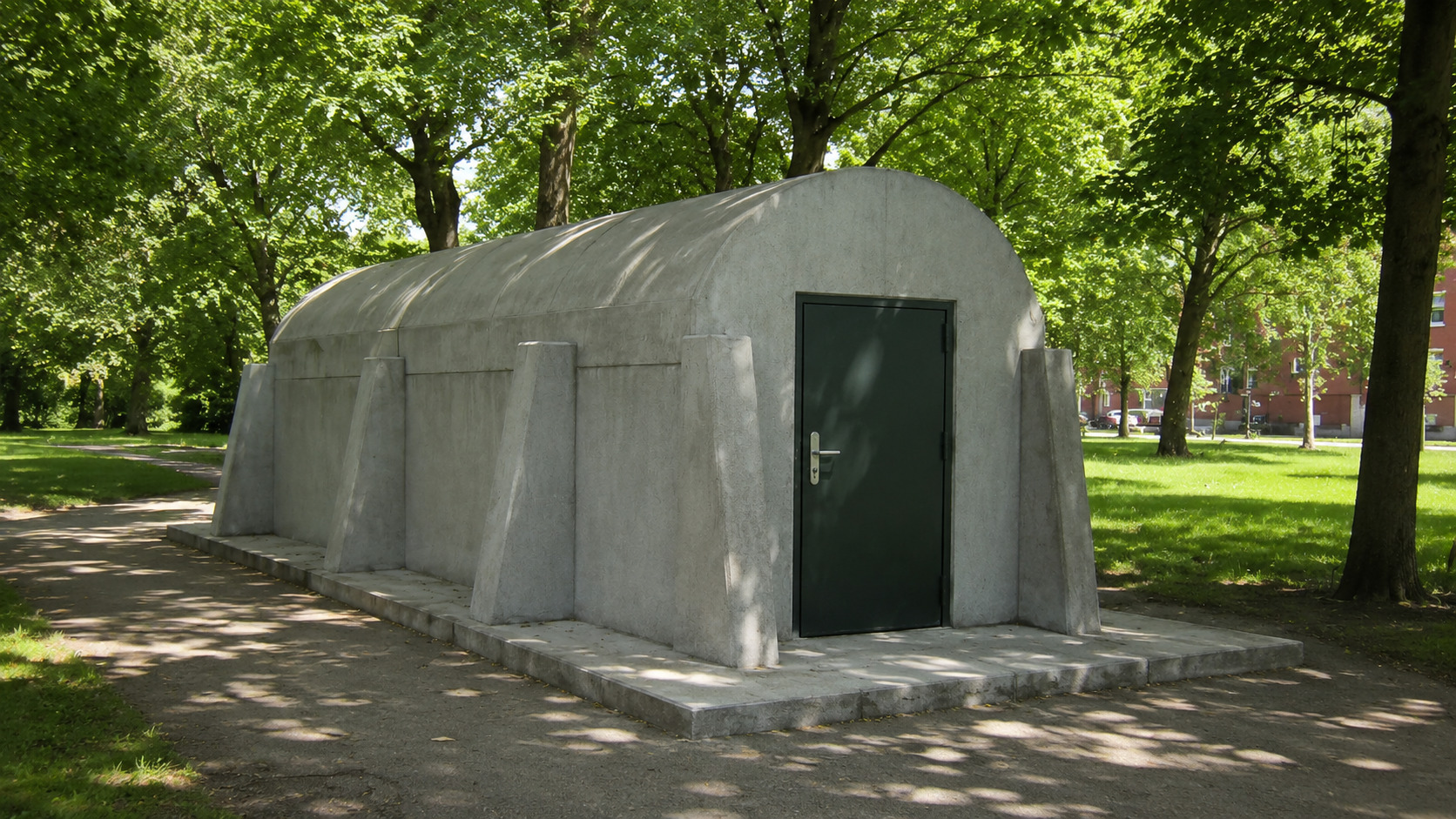
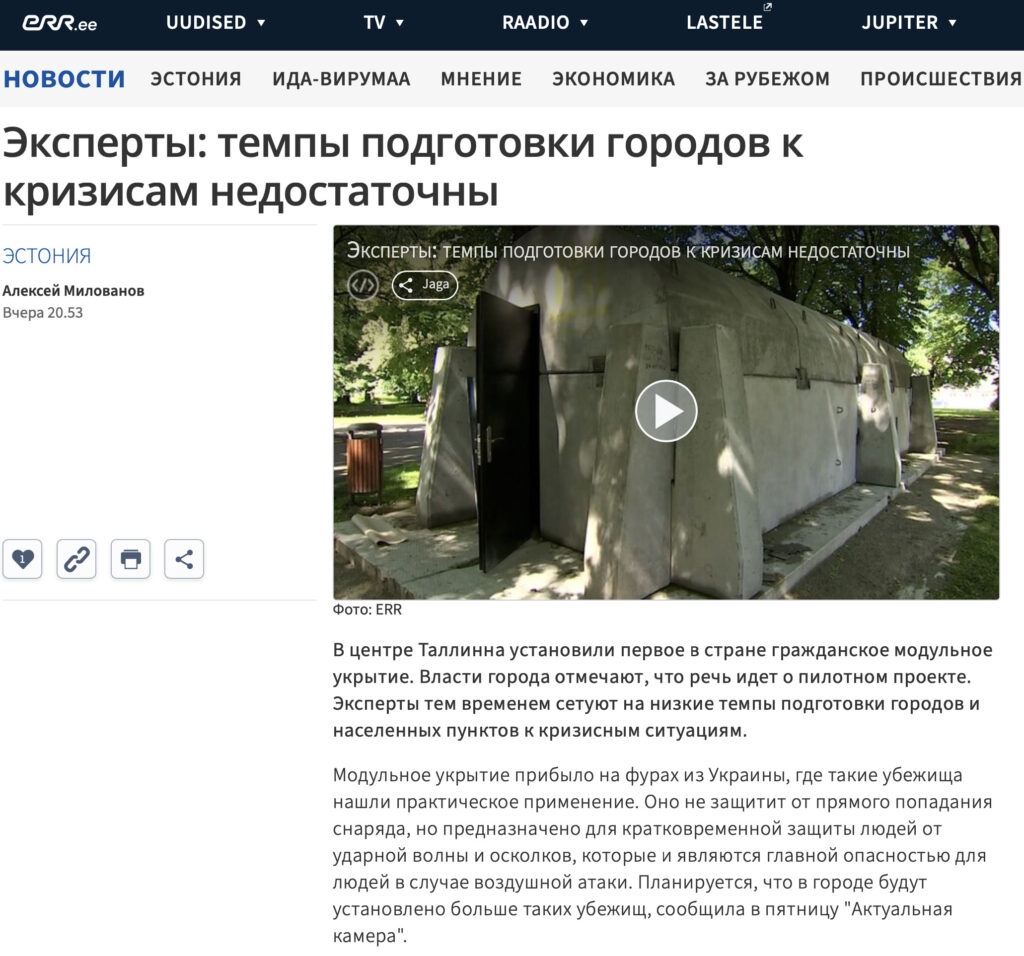
On June 12, ERR’s Russian-language news portal covered Tallinn’s first public modular shelter and the preparedness of Estonian cities and towns for crisis situations. The topic was also commented on by Hannes Nagel, Head of the Crisis Research Centre, who noted that although positive steps have been taken in developing sheltering capacity, the current pace remains insufficient.
We highlighted on ERR that the situation has improved following the adoption of legislation setting requirements for shelters and public sheltering spaces in new buildings. At the same time, Estonia’s existing sheltering infrastructure remains insufficient. The issue concerns not only Tallinn, but also other Estonian cities and regions, where people’s actual access to shelter may depend heavily on the type of building, the period in which it was built, and the local spatial context.
For example, there are areas in Tallinn where the standard designs of high-rise buildings do not include basement floors. In such buildings, it is not possible to create shelters in the usual way or to adapt existing basement spaces for this purpose. This means that, due to the building type alone, part of the population may be left without a realistic nearby sheltering option in a crisis situation.
Tallinn’s initiative to establish modular shelters is an important and necessary step. However, individual pilot solutions cannot replace the systematic and broader development of sheltering infrastructure. More public sheltering spaces are needed, and their development should not remain only a question for the capital. Similar solutions are also needed in other Estonian cities and densely populated areas.
We also emphasised the issue of funding. If an apartment association wants to adapt a basement or a lower floor into a safer sheltering space that better meets requirements, this often requires significant investment. Many apartment associations do not have such resources. Therefore, isolated small-scale support measures are not enough. What is needed is a clear funding mechanism from the state and local governments that would help apartment associations and communities genuinely improve their sheltering capacity.
In the view of the Crisis Research Centre, civil protection must be treated as a permanent public responsibility, not as a project-based or temporary activity. Developing sheltering capacity, strengthening local-level crisis preparedness, and supporting communities require sustained political attention, sufficient funding, and a clear division of responsibilities between the state, local governments, and building owners.
🟠 Read and watch the ERR story here.
Jaga postitust: