
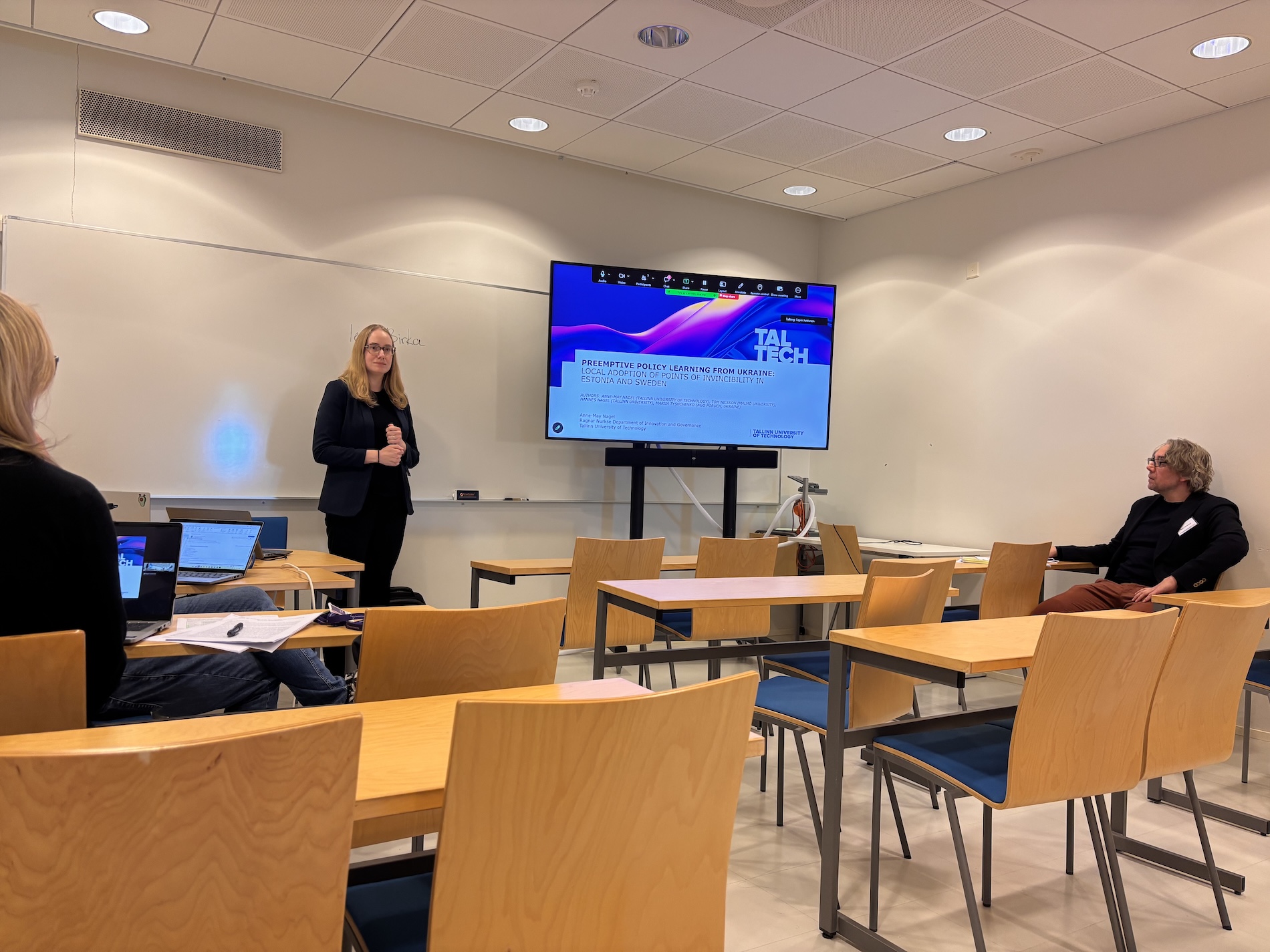
Presentation in Finland: resilience hubs are more than places with generators
“The value of this panel was in bringing together crisis researchers from the Baltic Sea region, allowing us to focus on some of the most important issues facing our region: societal resilience to Russian hybrid warfare, crisis preparedness, and, importantly, the climate crisis, including the need to ensure water security in our societies,” noted Nagel, who is also a Doctoral Researcher at Tallinn University of Technology, TalTech.
Her presentation examined how learning from Ukraine has influenced crisis preparedness efforts in Estonian and Swedish municipalities, based on the adoption and development of resilience hubs inspired by Ukraine’s Points of Invincibility. “Efforts to learn from Ukraine are visible in many Baltic Sea countries, both at the national and local levels. Yet this is not an easy task. While technical solutions, such as procuring generators for resilience hubs, are relatively straightforward, ensuring long-term staffing for these places and involving communities or the private sector remain difficult challenges to solve during the preparedness phase,” Nagel noted.
In discussions with the region’s crisis management and security scholars, the urgent need to raise preparedness levels in the Baltic Sea region was emphasised. At the same time, participants highlighted the importance of addressing both technical needs and the realities of limited human resources. In addition, the discussions underlined the need to plan and prepare by taking into account the resources available within communities. This also requires legal clarity: to what extent, and in what ways, can community members be effectively included in crisis preparedness and response activities?
Foto: Crisis Research Centre presentation in Tampere (KRUK, 2026).
Jaga postitust: