
Relocating the Estonian Ministry of the Interior to North Tallinn would place crisis managers in a dead end
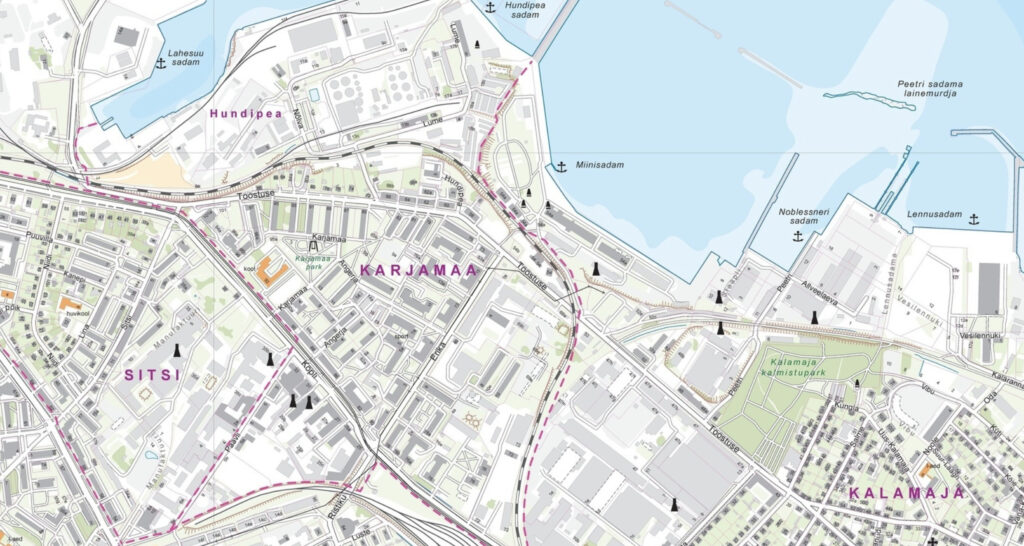
The government’s plan to move the Estonian Ministry of the Interior to the Kopli peninsula in North Tallinn would mean placing internal security leadership in a geographically constrained area, where access depends on a small number of easily blockable routes and where strategically important infrastructure is located in the immediate vicinity.
This is not an ordinary administrative relocation, but a decision with direct implications for civil protection and the state’s crisis management capacity. If such a move is treated purely as a real estate matter, rather than assessed through security considerations, the priorities are fundamentally misplaced. The Estonian Ministry of the Interior oversees the police, rescue services and crisis response system. Civil protection is not only about instructions and public communication; it also means ensuring that leadership of the state’s most critical internal security functions can physically operate during an emergency. The location of the ministry, as a key internal security crisis manager, must guarantee uninterrupted access, evacuation options and operational response.
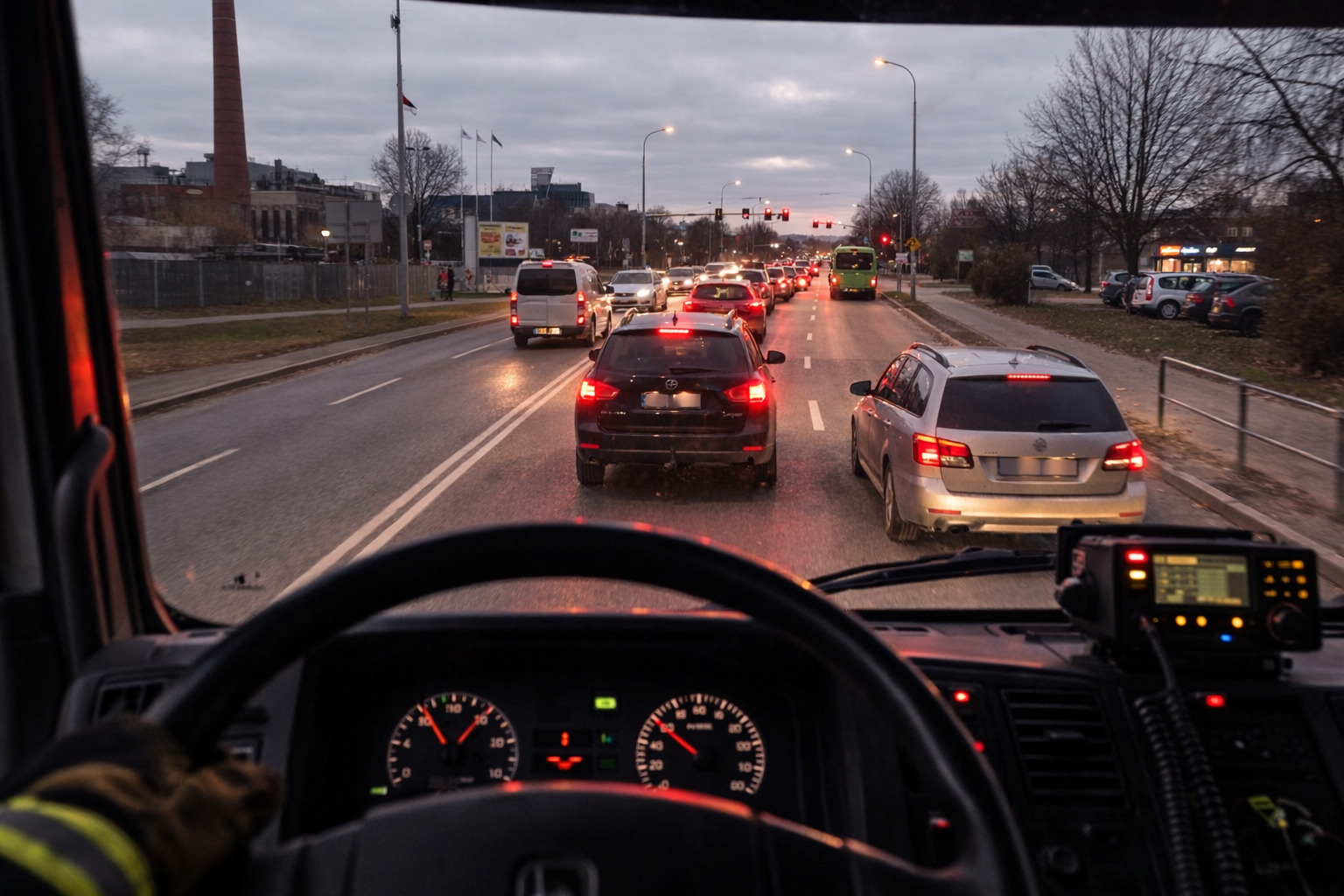
The selected area, the Kopli peninsula, is a location with restricted access. Traffic congestion in the area is not decreasing; with new developments, it is growing rapidly. There are only a few routes for entering and leaving the peninsula, and their capacity is already under pressure. By car, access is effectively limited to Sõle Street and Kalaranna Street. Even a minor traffic accident on one of the main connections can halt movement and prevent rescue and police units from arriving or leaving quickly. If an ordinary rush-hour accident can paralyse traffic, the impact in a crisis — for example during a large-scale evacuation or simultaneous incidents — would be far greater.
Civil protection leadership cannot rely on infrastructure whose functioning depends on a few easily blocked nodes, especially when new developments are planned and traffic pressure is set to increase further. Nor should it be forgotten that the Kopli peninsula is home to the Mine Harbour, which has strategic significance. The proximity of military infrastructure as a strategic target increases the area’s vulnerability in crisis scenarios. A basic principle of national defence is to disperse critical functions, not concentrate them in an area whose strategic importance makes it a higher-risk zone.
The government’s lack of crisis awareness, and its failure to set a credible example in civil protection, is also illustrated by the fact that the Ministry of the Interior closed the Kopli rescue unit only in 2024 — a unit that would have been able to respond first on site in a crisis. Outside the capital, however, the new norm has become the construction of joint internal security buildings, where the police, rescue services and possibly other functions are placed under one roof. This is a classic case of putting all eggs in one basket to save on real estate costs, but in a crisis the price may be severe.
If local rescue capacity has been reduced through the closure of the rescue station, while at the same time plans are being made to concentrate internal security leadership in the same area, a clear contradiction emerges. Civil protection requires that first-response capabilities remain present in risk-prone areas rather than being withdrawn from them. Modern national defence and crisis management are built on the principles of dispersion and redundancy. Command and control functions should not depend on a single geographical location with limited accessibility.
The war in Ukraine has transformed the security environment across Europe and demonstrated how quickly not only military facilities but also civilian infrastructure can become targets. Concentrating key structures in one location therefore increases systemic vulnerability. If a single building or area becomes inaccessible, it is not merely one service that is affected but the functioning of the entire system. An additional risk stems from the broader logic of consolidating leadership functions. The most visible example is the joint government office building on Suur-Ameerika Street, where a large number of critical decision-making functions are housed within twin glass towers — once again placing all eggs in one basket. The guiding principle of security planning should be the dispersion of risk, not its geographical concentration.
It is also worth considering whether institutions responsible for internal security and national defence should be exempt from the maximum office-space requirement of 12 square metres per employee. In these sectors, location decisions should be guided by considerations other than cost-efficiency alone. If the relocation of the Ministry of the Interior is considered essential, both the State Real Estate Ltd. (RKAS) and the government should carefully assess whether there are sufficient strategic arguments supporting the chosen location. In reality, office premises in central Tallinn are continuously becoming available and often remain unused. They may not be newly renovated, but at least they are not situated at the end of a geographical bottleneck.
Ultimately, the effectiveness of civil protection is measured in very practical terms: whether assistance can reach people during a crisis and whether government leadership can continue to function when it matters most. If these questions were not among the primary considerations in selecting the location, then this is not a decision grounded in national security logic, but rather an administrative relocation whose vulnerabilities may only become apparent in the midst of a crisis — precisely when it is too late to address them.
× Hannes Nagel and Manuela Pihlap’s opinion article was first published on February 17, 2026 in Delfi’s opinion section. Fotod: liikluspilt ja kaart (GhatGPT, 2026).
Jaga postitust: