OPINION | Hannes Nagel: The Crisis Management System Needs Rethinking
Coping with crises occupies a central place in the coalition agreement of the recently appointed Government of the Republic. We have reached a point where crisis has become the new normal, and no one even dares to predict a return to what might be considered normal circumstances. Although the new government’s term of office, lasting just over six months, may seem remarkably short under ordinary circumstances, the coming autumn and winter present a considerable challenge. The emerging fifth wave of the coronavirus crisis, the energy crisis, security threats and the climate crisis will converge over the coming months into a tidal wave of crises. The coalition agreement also refers to ‘increasing the flexibility of the public sector to cope with crises’ and developing a modern ‘crisis management plan’. These are arguably the two most important provisions of the coalition agreement and should be translated into substantive action as a matter of priority.
If we want more effective crisis management, substantive change is needed. The principles of crisis management must be revised throughout the system, accompanied by the establishment of a new centralised institutional structure and governance system capable of putting them into practice. This could, for example, take the form of a cross-ministerial institution with a status comparable to that of the Auditor General (i.e. independent of day-to-day politics), responsible for national crisis preparedness, crisis response and post-crisis management, including learning from crises. Crisis management is a sufficiently specialised professional field, with certain core competencies that should be concentrated within a central institution capable of operating regardless of whether the country faces a pandemic, a pollution incident or a refugee crisis – in other words, crises that do not (yet) involve a military element.
Effective crisis management, even in a small country, requires a separate, independent institution with its own leadership and budget, as well as the capacity to direct the state’s limited resources where they are needed once a threat has been identified. When juggling multiple crises, it is neither effective nor cost-efficient to disperse crisis management expertise across individual government agencies, each managing the situation according to its own judgement. The worst thing that could happen now, on top of the crises we are already facing, is the emergence of another crisis that we are no longer capable of managing. Decisions upon which the health, livelihoods, lives and future of our people depend must clearly be insulated from day-to-day politics and political wrangling. The new coalition agreement offers hope that the field of crisis management will be reviewed and reorganised. The time remaining until March is sufficient to initiate this process.
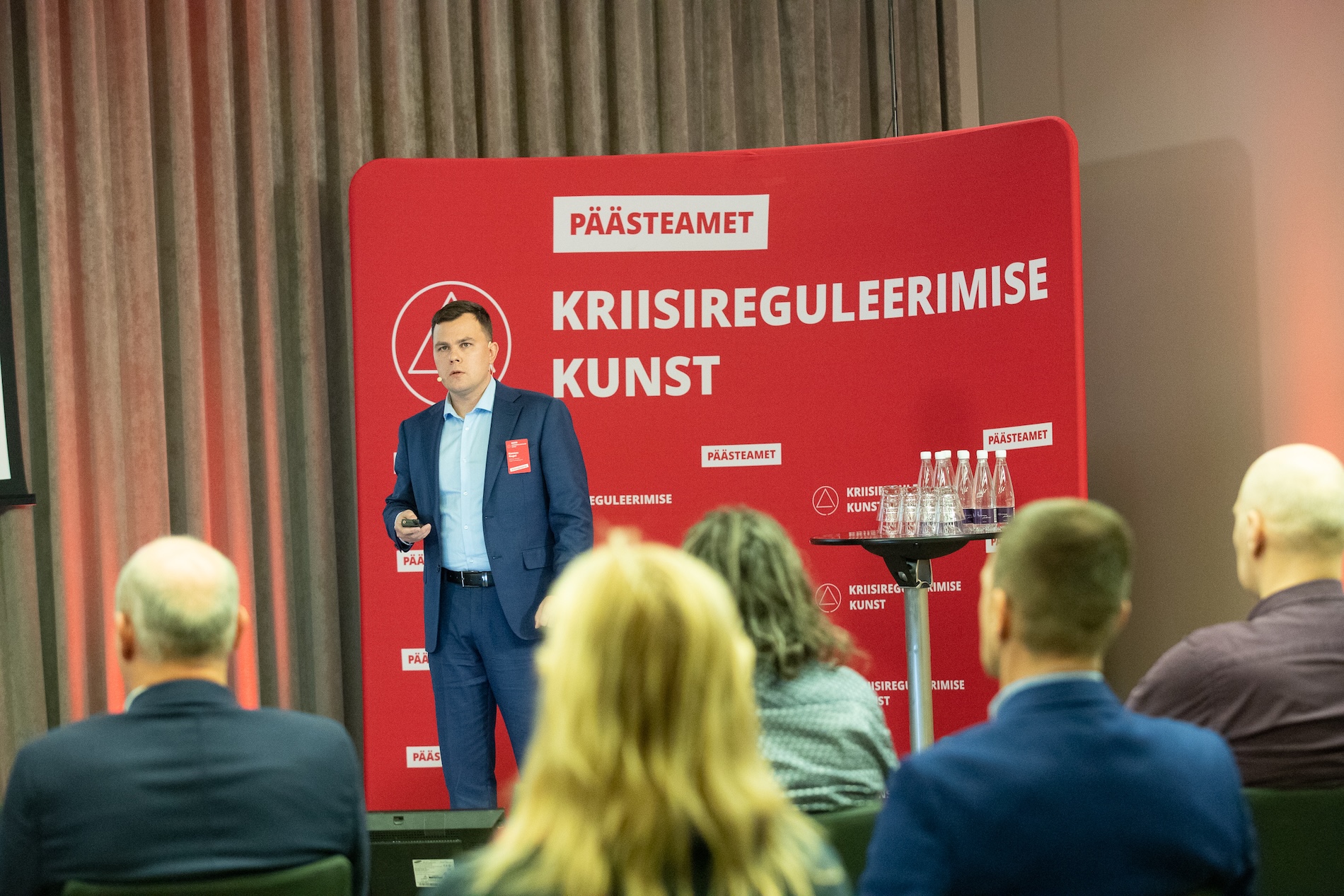
🟠 The opinion piece was published on the Õhtuleht news portal and in its print edition (172, p. 8) on 27 July. Photo: crisis management training (Crisis Research Centre, 2022).
🔺The use, distribution, modification or publication of text and images is permitted only with the prior written consent of the NGO Crisis Research Centre. Any unauthorised use is strictly prohibited.
Jaga postitust: