OPINION | Anne-May Nagel: Social Media as a Curated Exhibition of Life
Social media may appear to be a source of entertainment and a convenient way to stay in touch with friends and acquaintances and keep up with current events. As an added bonus, it offers an opportunity to glimpse into the lives of strangers. Yet these portrayals of real life are far from authentic. The explosive growth of social media use has been accompanied by research into its adverse effects on users. One area of research concerns the impact of social media use on mental health, including self-confidence.
Research has found that social media use, including following other people online, can undermine self-confidence among young people, particularly girls.1 Furthermore, 88% of social media users compare themselves with the content they encounter online, and the more time users spend on social media, the lower their self-confidence tends to be.2
What Is Really Happening on Social Media?
Social media accounts can broadly be divided into two categories: those who use these platforms simply as a pastime and those who derive financial or material benefits from their online presence and content creation. Consequently, interspersed among posts by ordinary users are countless sponsored posts by content creators. This means that someone, usually the company behind the advertised product or service, has compensated the creator for publishing the post, whether through direct payment or the provision of complimentary products or services.
The content creation industry involves substantial sums of money. In accordance with good practice and professional ethics, content creators should disclose sponsored posts so that readers and viewers are aware that the creator has received some form of benefit in return for publishing the content. For the sake of our mental health, we would do well to maintain a degree of distance from the information we encounter on social media. Much like visiting an exhibition at a museum, we should recognise that what we see represents a selection of moments and objects drawn from countless possibilities.
A social media exhibition does not allow us to experience a person’s entire story. Consuming social media content without a critical filter can therefore often leave a bitter aftertaste. Following content creators can undermine anyone’s self-confidence, whether in relation to their appearance, intelligence or, for instance, the intricate art of parenting. Somewhere at the back of our minds, a lingering question emerges: why is my life not like that? Perhaps one way to protect our emotional well-being and navigate social media safely is to recognise that the seemingly perfect lives displayed online, which cause self-esteem issues and anxiety for many, are simply carefully curated exhibitions created by individuals.
When visiting social media, approach it as you would a museum. Maintain a degree of distance and recognise that the photographs, images and objects on display, much like those in a museum exhibition, are primarily intended for interpretation rather than constant comparison at the expense of one’s self-esteem. It is worth acknowledging, however, that alongside these opportunities for comparison, social media also offers useful content. Advice ranges from how to remain calm in challenging situations and how to choose the right tyres to how to cook pasta properly. There is something for everyone.
How Can We Determine Which Content Is Useful and Which Advice Is Worth Following?
Even when consuming seemingly useful content, it is important to establish who is behind the profile sharing the information and what expertise they possess. When it comes to more serious matters, such as recommendations concerning health, exercise or nutrition, their educational background should also be considered. Read the account biography and review previous posts. If necessary, use the internet to establish precisely who the individual or company is and critically assess the source. A healthy degree of scepticism should therefore be exercised towards advice obtained through social media or images encountered on Instagram, at least until the credibility of the source has been established.
Even when credibility is not particularly relevant, and the content is simply a friend or stranger sharing moments from their life, remember that you are visiting a carefully curated virtual exhibition, one that is increasingly strategically planned. Bear this in mind when browsing the accounts of friends, acquaintances, strangers, businesses and content creators alike. And please pass this message on to your children, pupils, friends and young people who spend considerable amounts of time on various platforms: social media is merely a curated exhibition. It is a far cry from real life, with all its beauty, charm and pain.
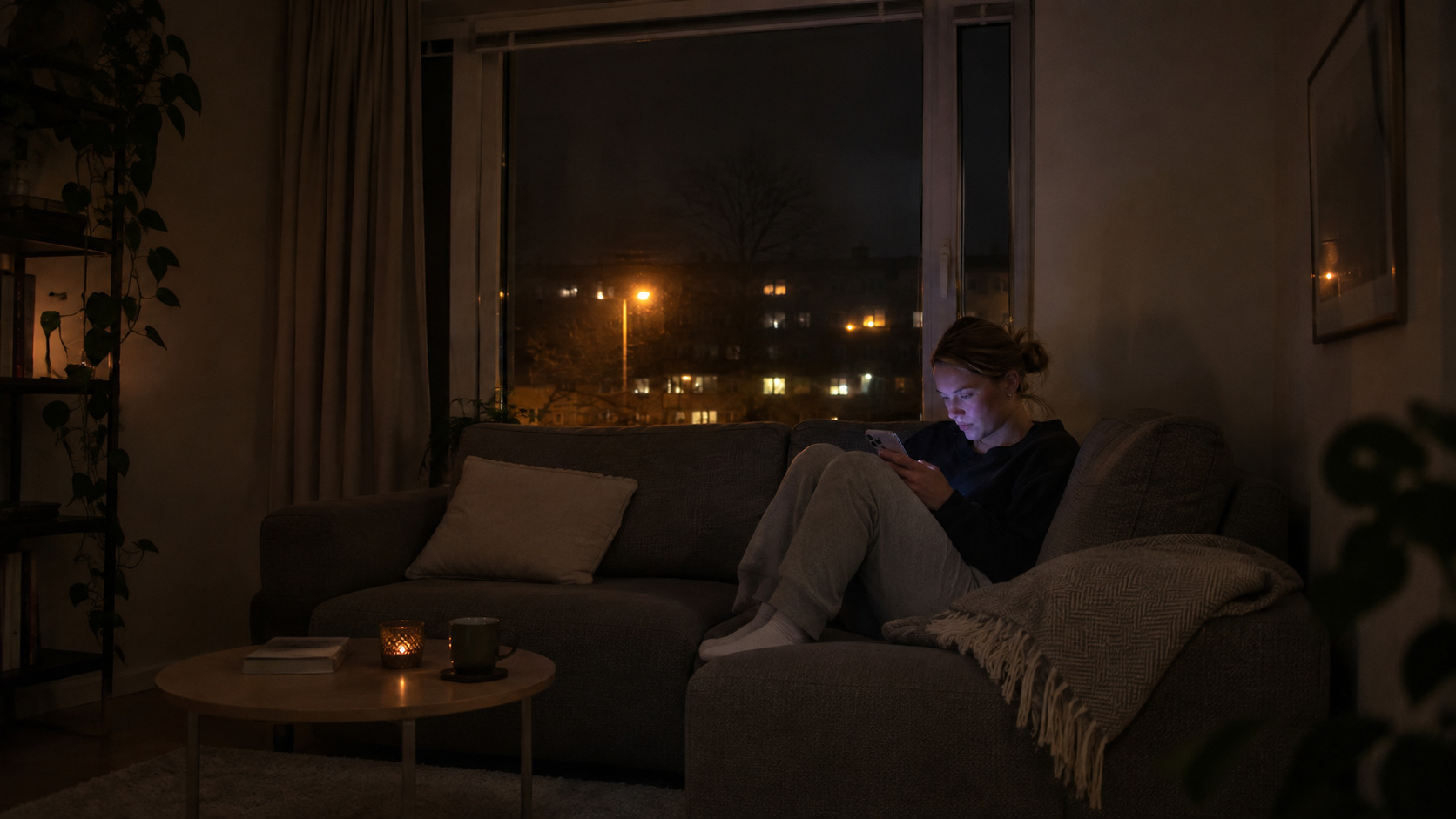
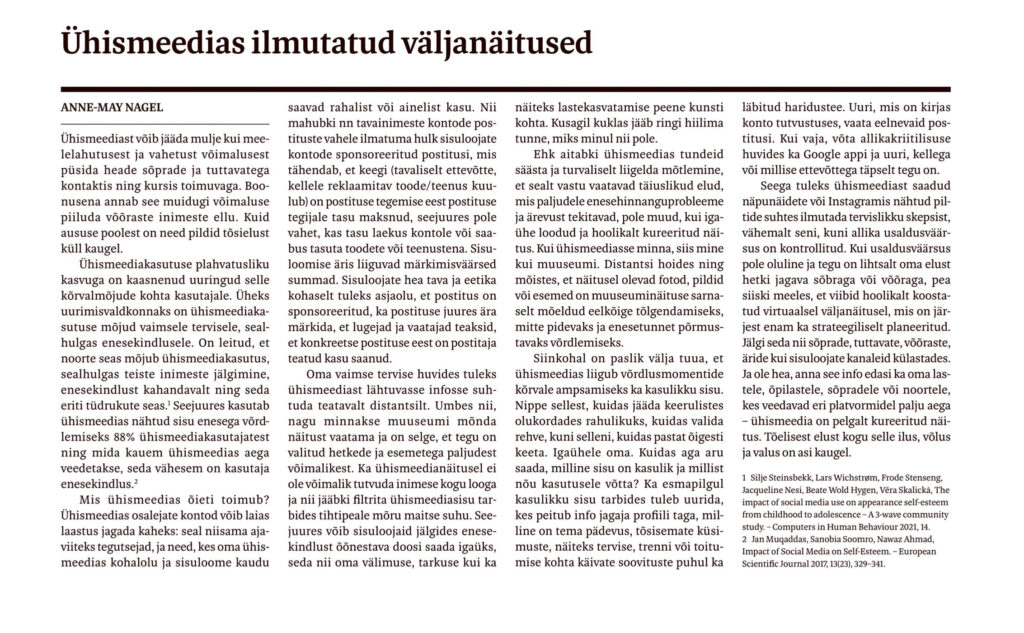
🟠 The opinion piece was published in the cultural newspaper Sirp on 4 November (No. 44/3916, p. 25). Photos: woman using social media and the published article (Crisis Research Centre, 2022).
🔺The use, distribution, modification or publication of text, video and images is permitted only with the prior written consent of the NGO Crisis Research Centre. Any unauthorised use is strictly prohibited.
Allikad
2 Muqaddas, J., Soomro, S. & Ahmad, N. 2017. Impact of Social Media on Self-Esteem. European Scientific Journal, 13(23), pp. 329–341.
Jaga postitust: