KRAKO | The 5 Questions We Hear Most Often in Mustamäe
Our KRAKO project manager, Hannes, answers these five questions. His answers help to explain the programme and show how the community crisis preparedness methodology developed by the Crisis Research Centre over the past three years brings together practical knowledge, the ability to cooperate, local experience and the city’s wider system.
What makes Mustamäe particularly interesting for the KRAKO programme?
“Mustamäe is a highly diverse urban environment, and for us that is first and foremost an opportunity. It is home to long-term residents, people of different ages and large apartment associations, while at the same time TalTech brings a very large and international community into the area. TalTech is not a separate neighbourhood, but its presence gives Mustamäe a dimension that is not found in quite the same way in every district of Tallinn.
For the Crisis Research Centre, this means that building local cooperation requires us to think more broadly than usual. People have different knowledge, experiences, linguistic backgrounds and connections to the area. This is not a problem that needs to be smoothed out, but rather a form of potential that can be put to good use through well-organised cooperation.
The more diverse the range of people’s experiences and skills, the greater the likelihood that an area already contains capabilities that simply remain invisible in everyday life. One of KRAKO’s tasks is to help connect these people and create a situation in which they begin to see both their own potential contribution and that of others as part of a wider whole.”
How is KRAKO more than just a training programme?
“Our aim has never been simply to give people a package of information and end the day there. The Crisis Research Centre has been developing this approach for three years, and each successive programme has helped us refine the methodology further.
Knowledge is, of course, important in KRAKO, but equally important is what people do with that knowledge afterwards. We work with situations in which not every answer is provided in advance and where people need to assess information, identify the resources already available, make choices and discuss possible solutions with others.
This kind of thinking is useful both in dealing with everyday problems and in more serious disruptions. We want people to leave the training not only with some new knowledge, but with a broader way of thinking about complex situations.
What can I do myself? When does it make sense to involve other people? Who around me might have useful skills? What information are we still missing? These are very practical questions, but they also help develop a habit of looking at one’s community and city from a slightly different perspective.”
Why is it so important in KRAKO that participants start communicating with one another during the training itself?
“Because effective cooperation depends on people having established at least an initial connection and shared experience. We do not expect a fully functioning network to emerge from a single training day, but we can very deliberately create the right conditions for one to develop.
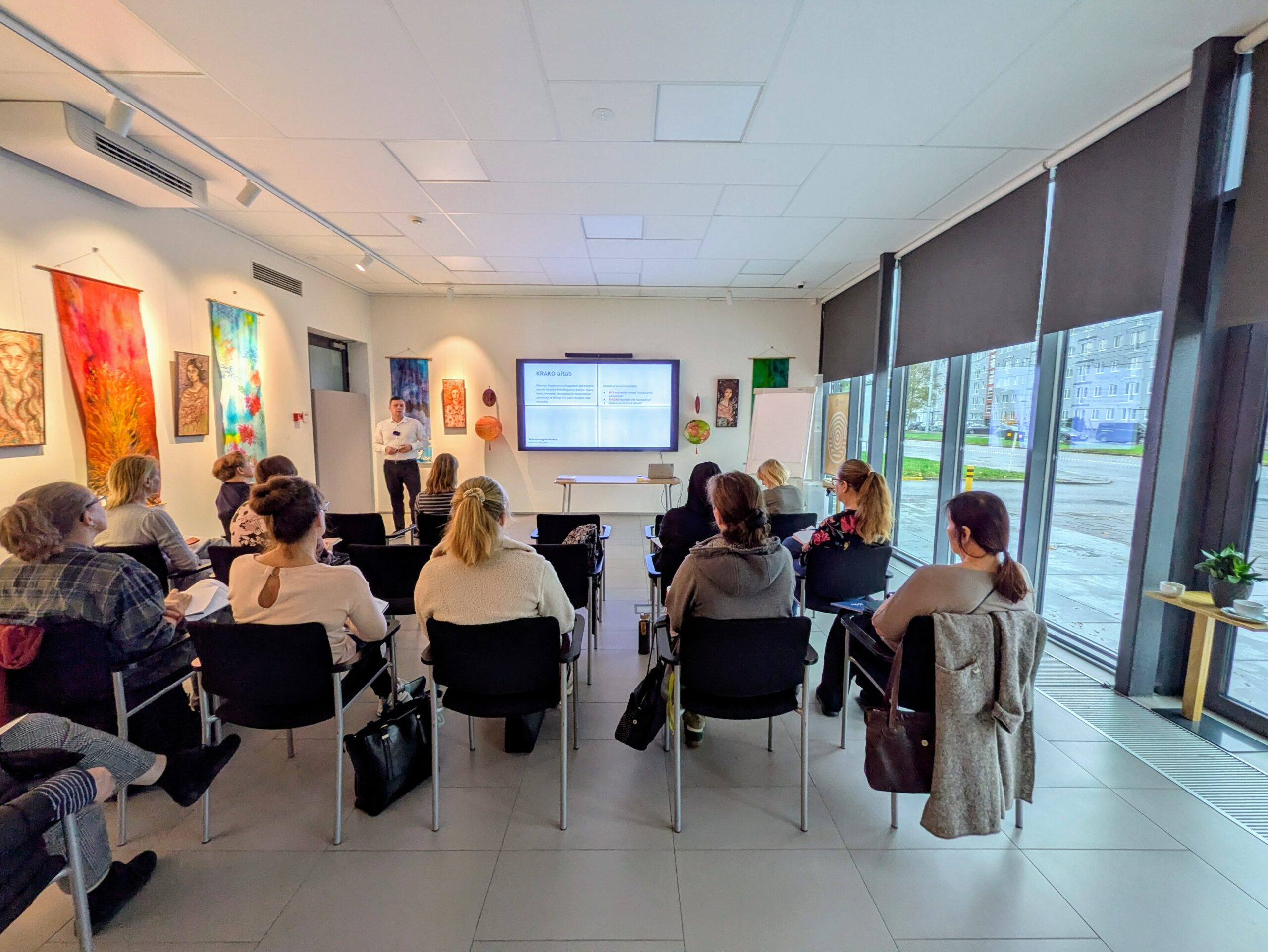
That is why KRAKO is designed so that participants are not simply listeners. They discuss, compare perspectives and learn to recognise the different skills that others bring to the group. One person may have an excellent understanding of the local area, another experience in organising people and activities, a third technical knowledge, and a fourth a natural ability to connect with others quickly. It is only through interaction that this wider picture begins to emerge.
Our experience shows very clearly that a sense of being part of a group does not come from a slogan; it comes from working together. If people have already thought through or solved something together before moving on to further cooperation, they have a much stronger starting point for whatever comes next.”
What role does the City of Tallinn play in this process?
“Tallinn is not simply a funder of KRAKO or a party to whom something is handed over at the end of the project. The city is the other side of the partnership throughout the process. On the one hand, participants gain a better understanding of how the city’s system works, what roles different actors have, and how their own contribution might fit into that system in the future. On the other hand, the city has the opportunity to get to know these people from the outset: to understand what knowledge and experience they have, what needs they themselves identify in their area, and how they would like to contribute.
This two-way learning is an important part of the Crisis Research Centre’s methodology. Sustainable cooperation does not emerge when one side simply issues instructions and the other follows them. A much stronger foundation is created when both sides understand who they are working with and what each can contribute.
Within KRAKO, our task is to bring these people together, give them a common starting point and create that first shared experience of cooperation. Although the future development of the network and its integration into Tallinn’s wider system will be the city’s responsibility, we are very pleased to be able to make the first substantive contribution to that process in Mustamäe.”
What would you like Mustamäe participants to take away from the training?
“The most important thing is that what remains afterwards is not simply an individual training experience. We want participants to have established connections with other people, developed a better understanding of their own strengths, and gained a sense of how they might actually achieve something together.
KRAKO’s strength lies in the fact that gaining knowledge, practising cooperation and building connections between people all take place within the same process. These are not separate activities; they reinforce one another. This is precisely the approach that we at the Crisis Research Centre have been developing consistently and refining through practice over the past three years.
Our role is to give the network as strong a start as possible. From there, it is important that Tallinn and the Tallinn Municipal Police Department are able to continue working with these people within the city’s own system, and that the relationships and cooperation created through KRAKO do not end with the final training day.
If the city has people who know their local area, know one another and already share a common experience, future cooperation begins from a much stronger position.”
The KRAKO project is implemented by the Crisis Research Centre. The project is co-funded by the City of Tallinn, the Tallinn Municipal Police Department and the Crisis Research Centre.
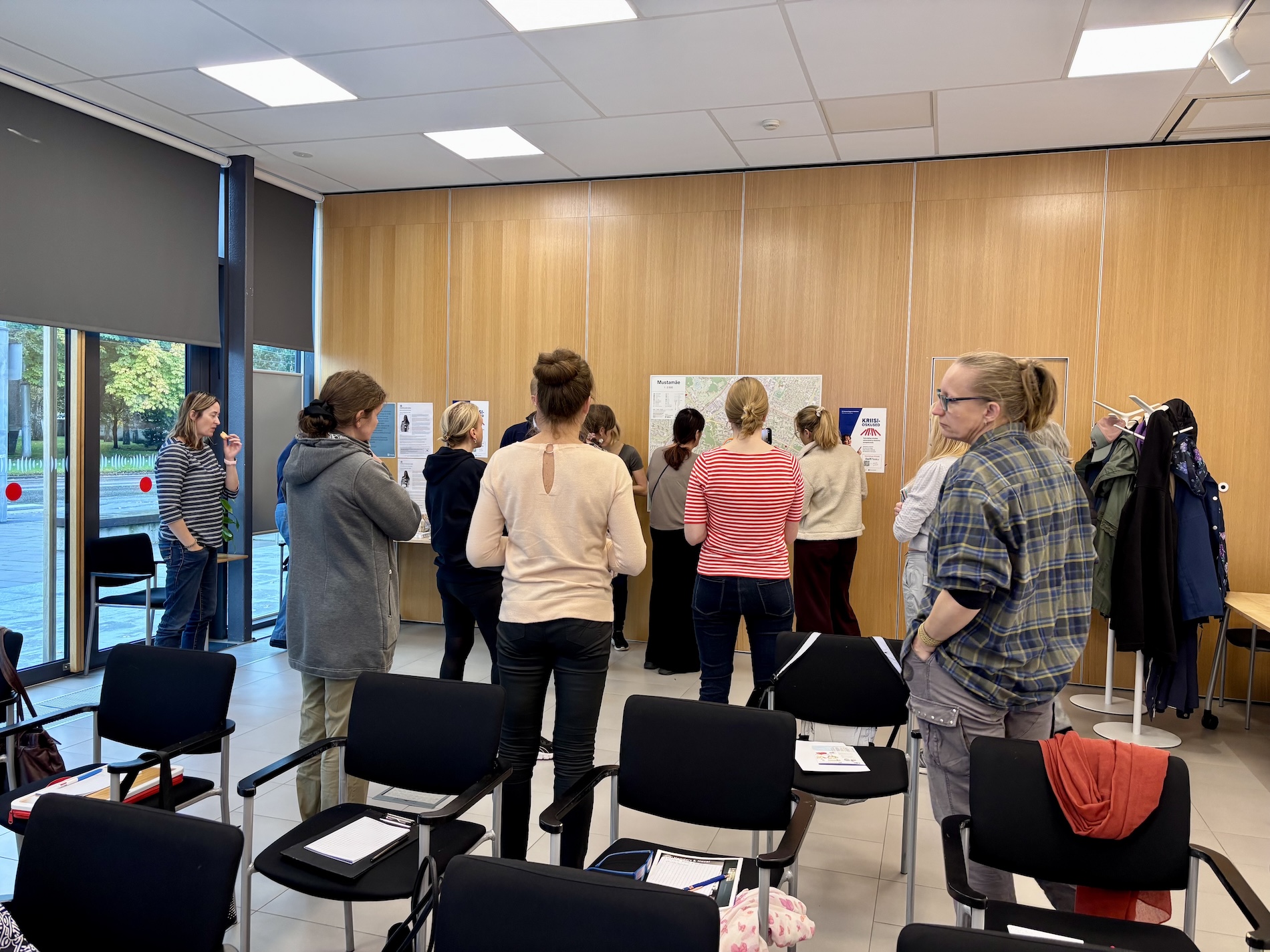
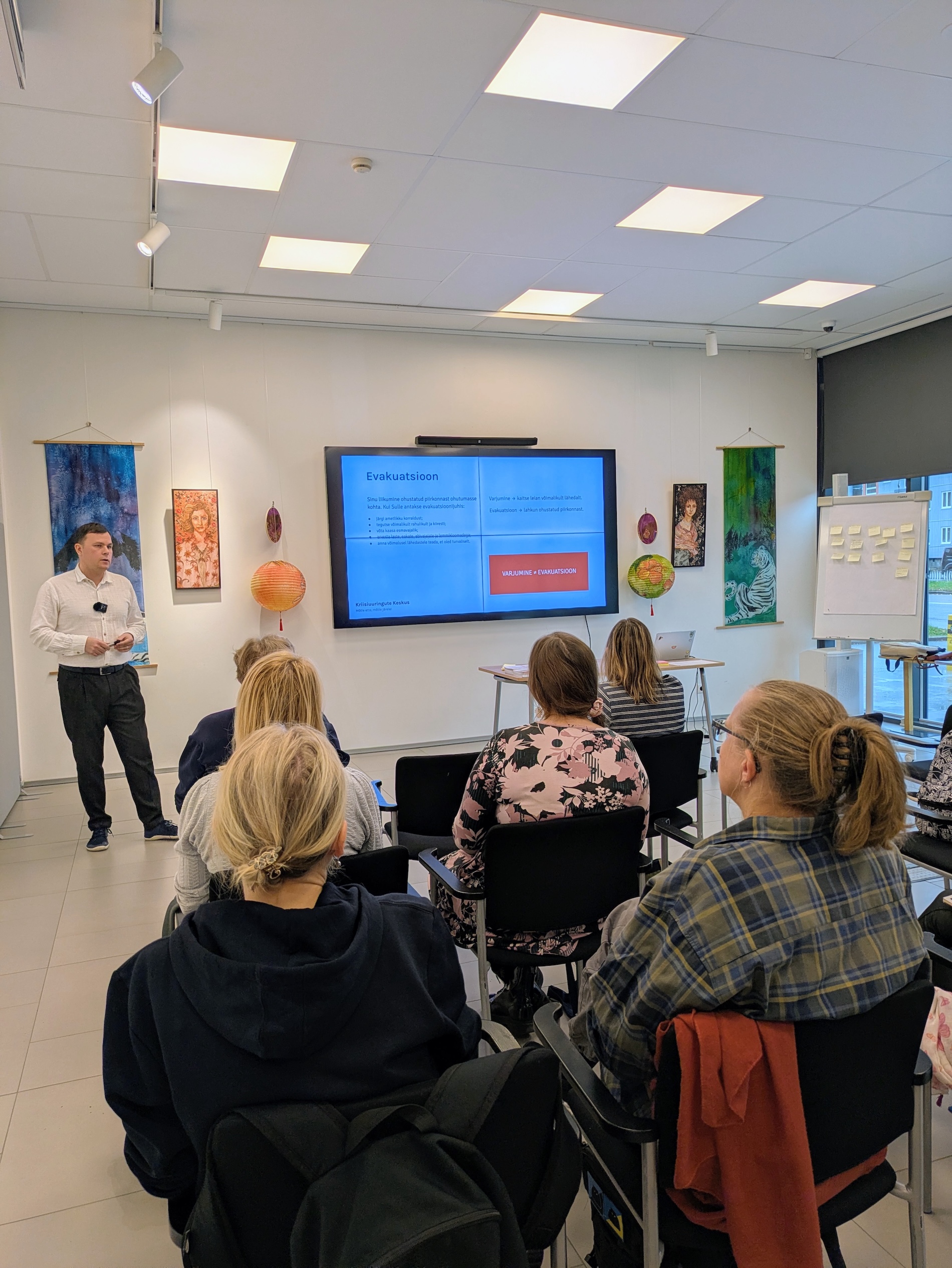
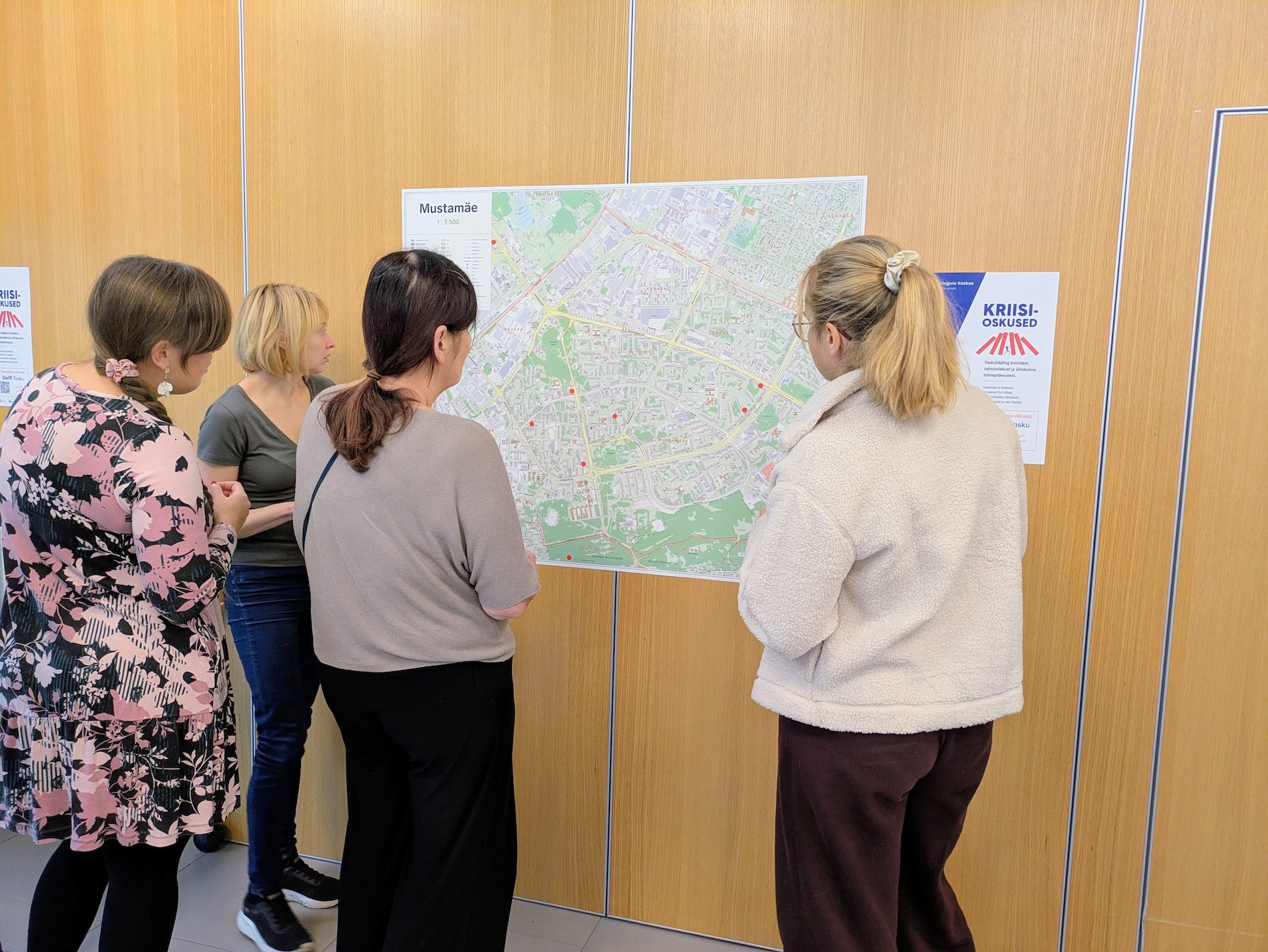
Photos and video: Mustamäe training session on 10 October (Crisis Research Centre, 2026).
🔺The use, distribution, modification or publication of the text, videos and images is permitted only with the prior written consent of the NGO Crisis Research Centre. Unauthorised use is prohibited.
Jaga postitust: