
CRISIS LENS | The Battle for the Black Sea – How Can an Invasion of Taiwan Be Prevented?
Despite the sinking of the guided-missile cruiser Moskva, the threats facing Ukraine from the sea have not disappeared. Increasing attention is being drawn to the naval war in the Black Sea, where opposing fleets do not encounter one another, yet the consequences are felt across the globe. This is of both strategic and global significance, and it is important to recognise the wider implications that are gradually shifting the geopolitical balance of power back towards the West. What is driving this development?
A naval blockade is legally defined as an operation conducted by a belligerent state with the aim of preventing all vessels, whether enemy or neutral, from entering or leaving designated ports or coastal areas belonging to, occupied by or under the control of an enemy belligerent state.1,2 Historically, however, blockades more closely resembled sieges from the sea, forming part of the siege of a land-based fortress, and did not, for example, extend to unfortified ports or entire coastlines.3 Differences of opinion primarily concerned what constituted effectiveness and whether blockading vessels could operate at a distance from the coastline in question.4 Consequently, the term ‘blockade’ is sometimes incorrectly used in connection with measures such as embargoes, which differ from blockades in certain respects, not least because they include restrictions on what may cross land borders.5 Both blockades and embargoes play a significant role in the ongoing Second Russo-Ukrainian War.
The Potemkin Fleet
Since the reign of Peter the Great, the navy has enjoyed a privileged position in Russia, being, according to Emperor Alexander III, one of Russia’s only two allies – its army and its navy. Its importance has also been repeatedly emphasised by Vladimir Putin, who in January 2020 described it as the most important, if not the key, component of national defence and security, stressing the need to preserve and strengthen it in the twenty-first century.6 All this is intended to secure Russia’s status as a leading maritime power. Particular attention has been devoted to strengthening the Black Sea Fleet. The fleet was established on 13 May 1783 on the orders of Prince Grigory Potemkin, who, four years later, allegedly had mock villages erected during Empress Catherine II’s tour of NovorossiyaA to present the ruler with an embellished impression of impoverished rural areas. Although this account is more myth than historical fact,7 the phenomenon known as the Potemkin village (Russian: потёмкинская деревня) has proved remarkably enduring and shows no signs of fading in the twenty-first century. Nor has the very same fleet escaped this phenomenon, with its conduct in the war against Ukraine attracting attention worldwide.
The dissolution of the Soviet Union and the Warsaw Pact, the loss of naval bases on the Crimean Peninsula and in Sevastopol, the division of the fleet stationed there between Russia and Ukraine, and the subsequent drastic reduction in military funding considerably weakened Russia’s strategic position in the Black Sea. Over the past two decades, however, substantial resources have been allocated to restoring that position. Alongside the acquisition of new submarines, landing craft, cruise missile-equipped corvettes, the establishment of the 22nd Army Corps and the addition of other military equipment and formations, Russia has undertaken smaller provocations and military actions, repeatedly testing the West’s responses. For instance, the repeated closure of the Sea of Azov and the waters surrounding the annexed Crimean Peninsula to international shipping violates the 2003 Russo-Ukrainian agreement, not to mention the United Nations Convention on the Law of the Sea. Although the seizure of Ukrainian warships in 2019 provoked considerable international outrage and the vessels were subsequently returned, Russia had achieved its objective of sending a message.
These and several other aggressive actions by Russia, together with its earlier military successes in Georgia (2008) and Ukraine (2014–2015), which elicited relatively muted responses from the West, have shaped the Kremlin’s interpretation of the situation. Not only the Sea of Azov but the entire Black Sea is regarded as Russia’s own inland sea, where its mighty and awe-inspiring fleet alone is free to act as it pleases. When this is reinforced by systematic propaganda portraying Russia once again as a superpower with a continually modernising and expanding arsenal, the belief that it is one of the world’s leading maritime powers may gradually become dominant within a closed system.
It must be acknowledged that the Black Sea Fleet has indeed acquired numerous more modern vessels. In practice, however, this does not mean that their procurement, maintenance and modernisation have been free from Prince Potemkin’s mentality. Nevertheless, Russia’s position was further strengthened by the annexation of Crimea in 2014, which had devastating consequences for the Ukrainian Navy – it lost more than 70% of its warships, naval personnel and ship repair capacity, along with its principal naval base in Sevastopol.8 Although Ukraine sought to rebuild its navy and coastal defences in the intervening years, the results remained relatively modest. It was under these circumstances that the Ukrainian Navy entered the Second Russo-Ukrainian War.
The Blockade Must Be Broken
It must be acknowledged that Russia’s invasion of Ukraine has been more successful at sea, paralysing maritime trade and commercial shipping to Black Sea and Sea of Azov ports that are vital not only to Ukraine but also to the wider world, whilst establishing an effective blockade in the northern third of the Black Sea. In doing so, Russia has rendered maritime routes unsafe and begun stealing grain9 in an attempt to artificially drive up global food prices, create panic over food supplies and thereby blackmail the international community with the threat of famine.10 This, in turn, drives up energy and logistics costs, further fuelling inflation. Businesspeople driven by greed undoubtedly play their part, too, as the circumstances offer an ideal opportunity to ‘adjust’ prices.
It is precisely in this resulting vicious circle, where solutions require a shift in values, that Russia sees its greatest opportunity for victory, although in doing so it is also provoking resentment among countries that have thus far remained neutral. The consequences of such food terrorism are far-reaching – it is strangling Ukraine’s economy, which before the war was the world’s fourth-largest exporter of maize and fifth-largest exporter of wheat, the vast majority of which was shipped through Black Sea ports. Meanwhile, calls to open maritime routes for vessels stranded in ports fall on deaf ears, as the Kremlin seeks to extend the war and its consequences much further afield – into people’s homes and kitchens11 – in order to undermine Western support for Ukraine. Breaking this naval blockade has therefore become a matter of global interest and, for a number of countries, an existential concern.
It would, however, be a considerable exaggeration to suggest that the naval blockade and the war at sea have proceeded according to plan for the Black Sea Fleet. Far from it. The naval blockade can therefore be regarded as an established reality primarily in the waters of the Black Sea east of Crimea and in the Sea of Azov, the latter having effectively been turned into a Russian inland sea. Admittedly, dozens of commercial vessels remain trapped in southern Ukrainian ports, whilst shipping avoids the coastline because of the war. Nor are aid shipments arriving by sea. Yet this is precisely the region where Ukraine has periodically dealt painful blows to Russian forces. For instance, by the 64th day of the war, an air strike had been carried out on Zmiinyi (Snake Island), which had gained international fame during the opening days of the war, destroying virtually all remaining intact facilities, ranging from enemy air defence systems to communications centres and administrative buildings.12 All this was accomplished by the Ukrainian Air Force, which, according to repeated Russian claims, had already been ‘completely destroyed’ and which subsequently shared footage on social media of the fireworks it had arranged on the island.
What Will Become of Snake Island?
Unless the Russians wish to create another Chornobaivka – a location where troops sent to replenish losses routinely come under fire13 – the fate of an island in the central Adriatic during the First World War may well be repeated. After the Italians occupied the strategically important island of Pelagosa on 11 July 1915,14 Austro-Hungarian forces subjected it to almost a month of bombardment, whilst the Italians stubbornly continued to resupply the garrison, losing, among other things, the armoured cruiser Giuseppe Garibaldi in a battle near the island. Yet by 18 August, both sides had lost interest in the island, which remained a no man’s land until the end of the war.15 Like Pelagosa, Zmiinyi is a relatively small island, yet one of considerable strategic importance. Its location allows for control over the surrounding waters and airspace of the Black Sea near Odesa, whilst also carrying wider security implications for NATO member states in the region.
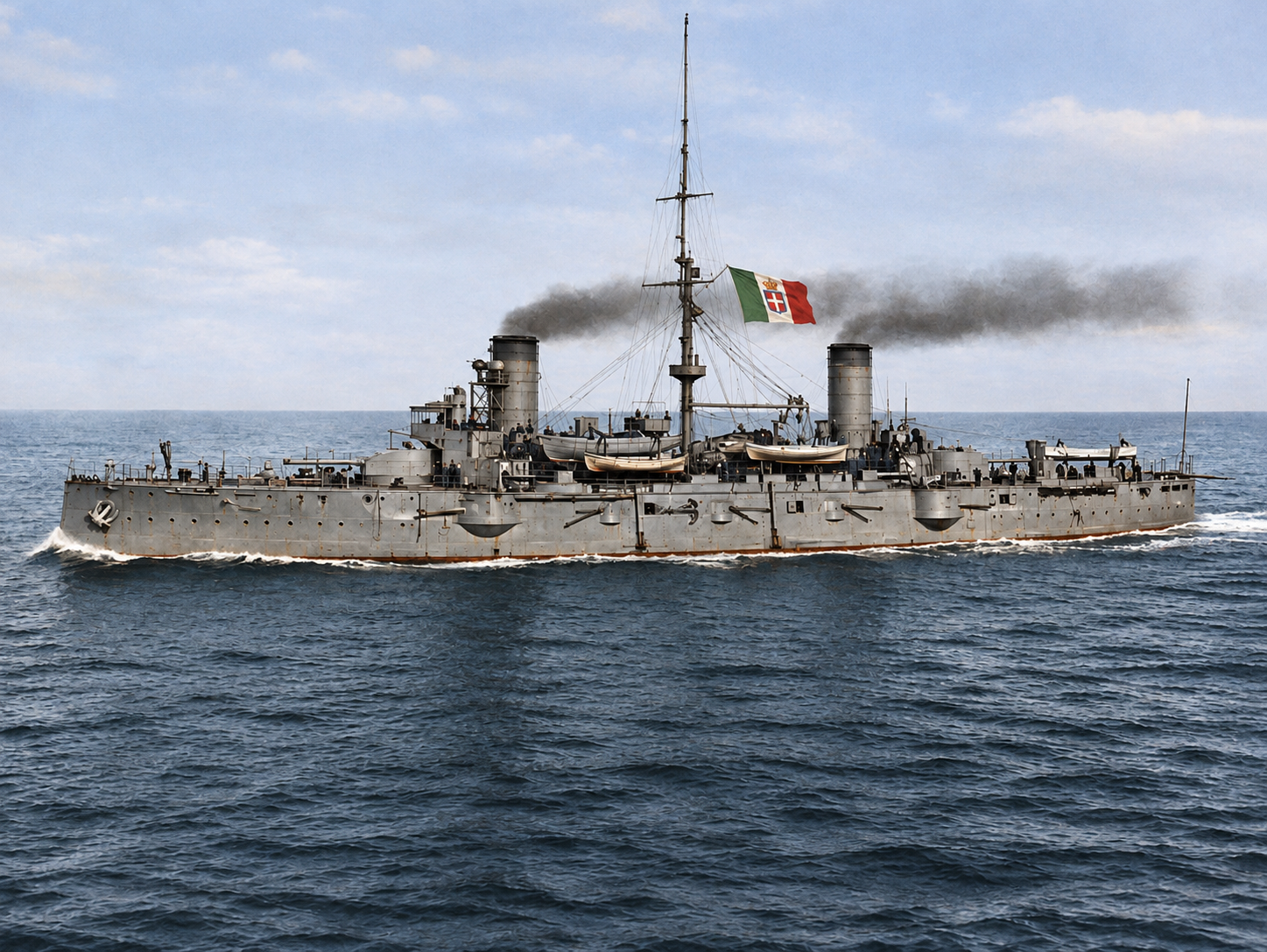
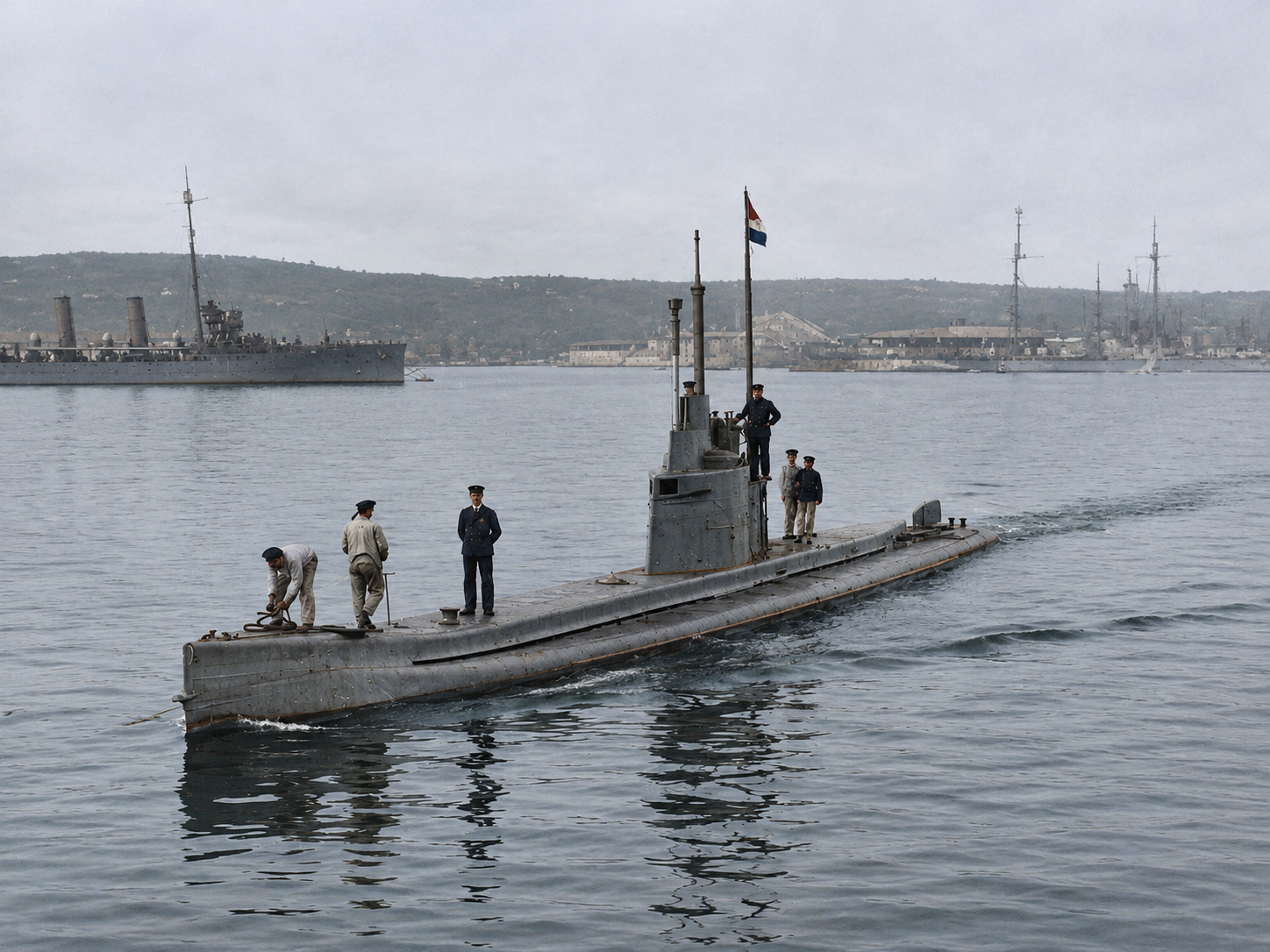
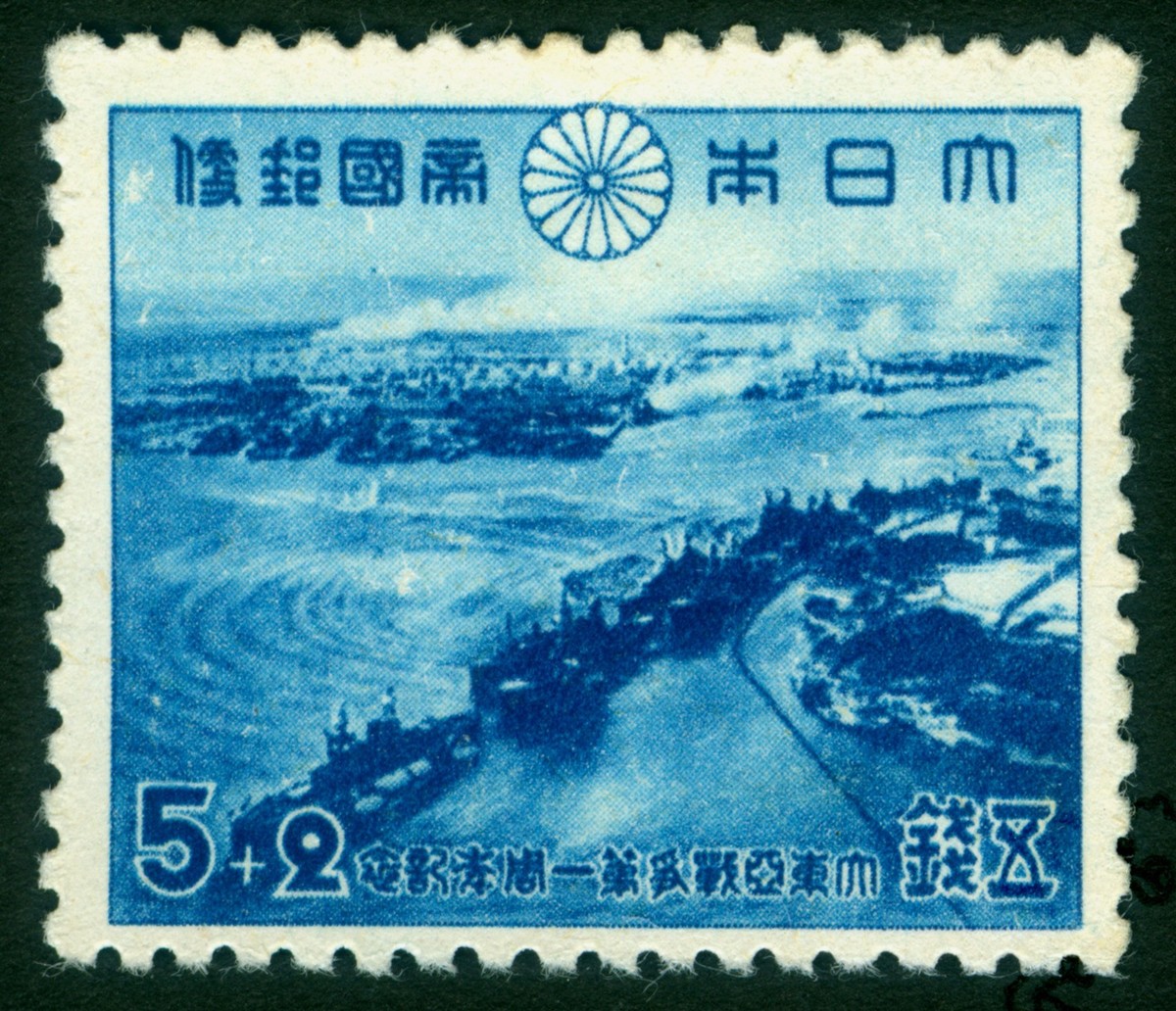
Images 1-3: The Austro-Hungarian Navy submarine U-4 in 1913, the Royal Italian Navy armoured cruiser Giuseppe Garibaldi in 1915, and a 1942 postage stamp issued by the Empire of Japan commemorating the air attack on Pearl Harbor (NHHC, 1913; Marina Militare, 1915; Japan Post, 1942).
Such hit-and-run operations will make it virtually impossible for Russian forces to conduct amphibious landings in the foreseeable future unless they adopt a Normandy-style approach, involving hundreds of targets at sea simultaneously and overwhelming the coastline through sheer numbers. Russia lacks both the quantity and quality required for such an undertaking, in terms of both equipment and personnel motivated to participate in such manoeuvres. This is particularly significant given that the Black Sea Fleet’s principal warship, notably possessing its most formidable air defence capabilities, has been sunk by the opposing forces.
It can now be concluded that the landing near Odesa, which Russia’s Black Sea Fleet has attempted unsuccessfully on several occasions – hampered by weather conditions and, ultimately, the reluctance of its own marines to participate – is joining the list of grandiose operations that never progressed beyond the planning stage (such as Seelöwe, 1940*; Herkules, 1942*, among others). Too many different anti-ship missiles have been added to the arsenal of Ukraine’s coastal defence forces, considerably increasing the likelihood of Russian vessels being hit since the outbreak of hostilities. Nevertheless, the threats facing Ukraine from the sea have not disappeared, and increasing attention is being drawn to a naval war in which opposing fleets do not encounter one another, yet whose consequences are felt both locally in Estonia and globally by our allies.
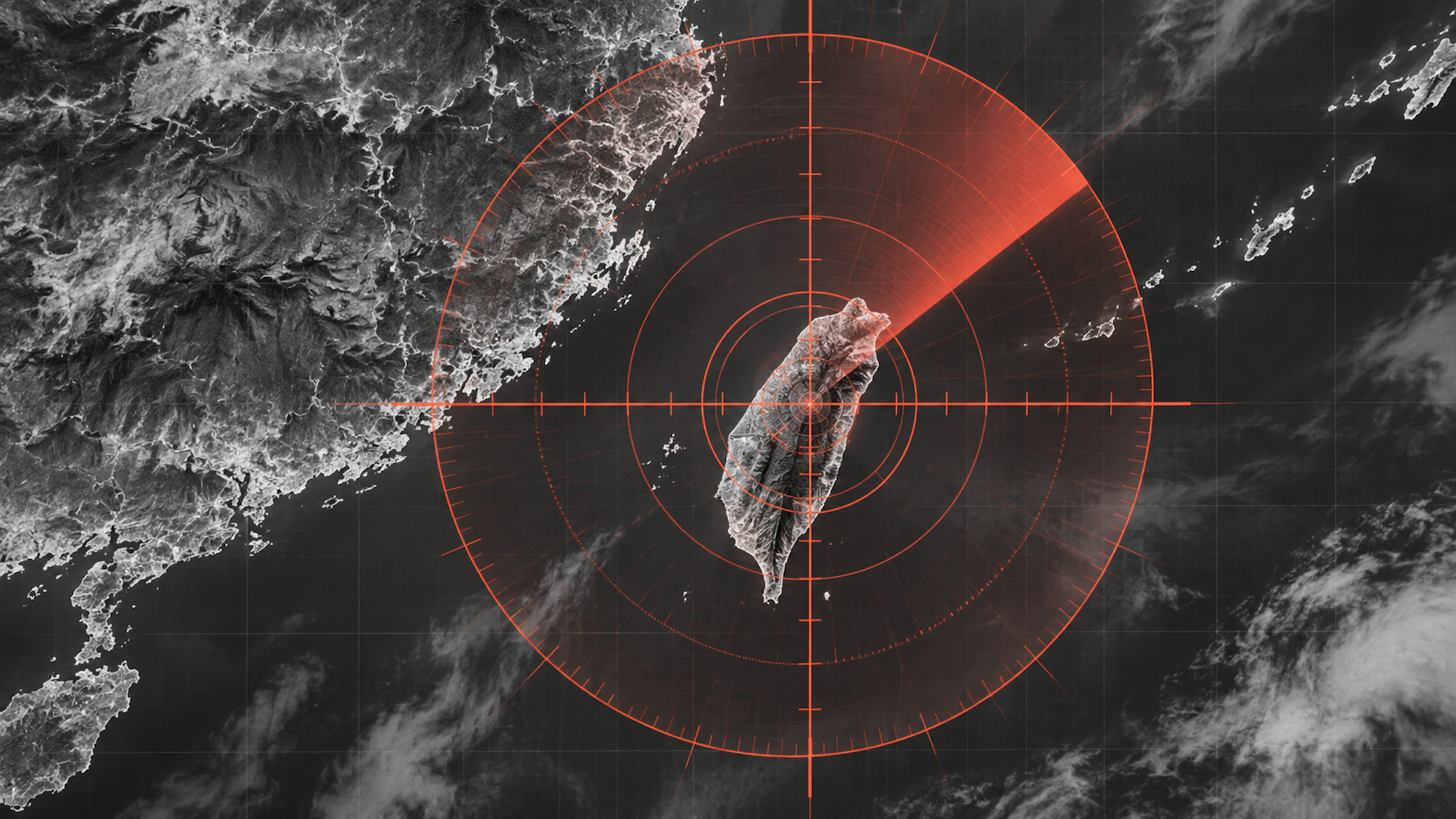
Taiwan in the Crosshairs
History tends to repeat itself even when we remember it. Japan, too, entered the Second World War as a formidable maritime power, seeking to establish the Greater East Asia Co-Prosperity Sphere16 (Japanese: Dai Tōa Kyōeiken; 大東亜共栄圏) through conquest. It likewise enjoyed initial military successes until 1942, when the Battle of Midway marked a turning point. Yet this was precisely what contemporary Japanese naval doctrine (Japanese: Kantai Kessen; 艦隊決戦) sought to achieve – a decisive naval battle17 that would lead to the surrender of the United States.18 In a broader context, Russia appears to be pursuing a similar strategy, seeking to establish the sphere of the Russkiy Mir, or Russian World, the realisation of which depends critically on the success of its ongoing invasion of Ukraine.
Much like Japan’s approach, the invasion was intended to deliver a powerful blow against the collective West, making a cautionary example of Ukraine. Had it succeeded, the resulting sense of helplessness and inaction would have secured a comprehensive victory and paved the way for further conquests. The success of this endeavour is significant for China, as the People’s Republic of China has never concealed its ambition to bring the Republic of China (Taiwan) under its control by force. To this end, it has quietly but systematically built up its navy over several decades, adopting an almost production-line approach, and now possesses the world’s largest naval fleet. Admittedly, Soviet-style quantity does not immediately translate into quality, but China has by now amassed more than enough naval capacity to pose a serious challenge to the United States.
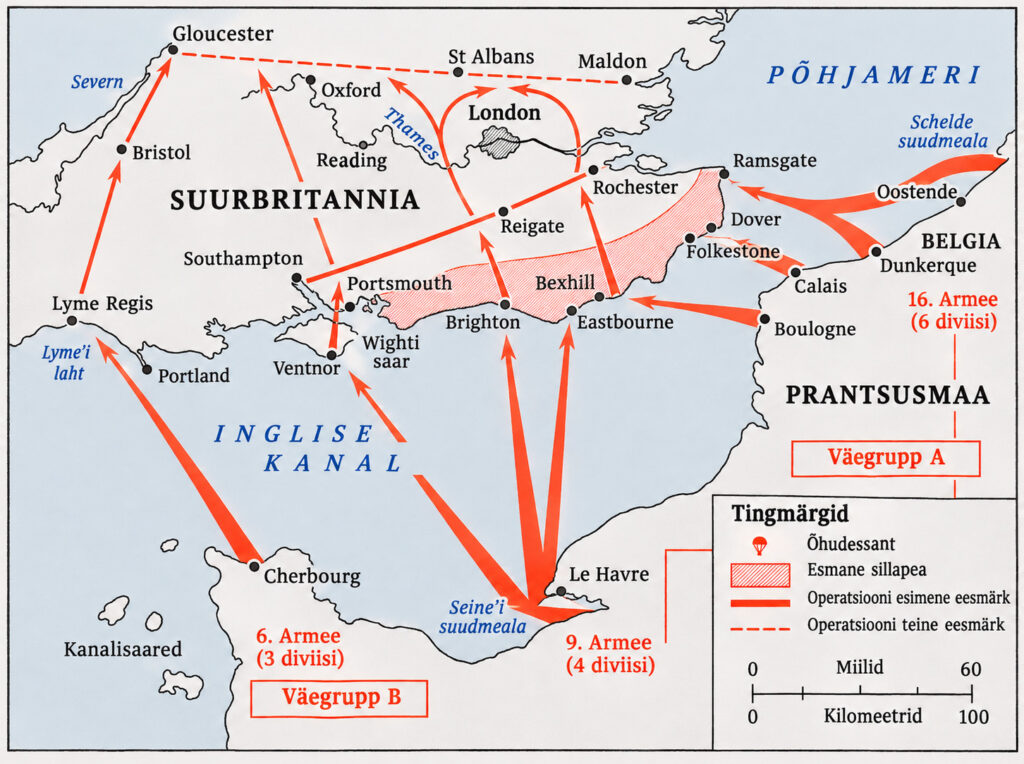
The map depicts Operation Sea Lion, the planned but never executed amphibious invasion of Great Britain in 1940. Reconstruction of the historical operational map (Crisis Research Centre, 2022).
Prior to 24 February, the prevailing view tended to be that, in the event of an invasion, the island nation would simply be overrun. Yet developments in Ukraine are gradually prompting a reassessment of this assumption, much to Beijing’s dismay. Might the West also manage to establish an air bridge to Taiwan before the outbreak of hostilities? It is difficult to say, but one thing is certain – an outnumbered army defending its freedom always holds the moral high ground over the aggressor. This was true during the Estonian War of Independence and remains true in Ukraine today. There is little doubt that Ukrainian resistance is also inspiring the Republic of China to revise its defence plans. The aim is to ensure that, following a communist invasion, Taiwan can count on the free world as its strategic rear, supported by a Lend-Leaseassistance programme. The modern Western weapons deployed in the Black Sea region and in defence of Ukraine’s coastline therefore provide a testing ground for preventing (and winning) a future war. This is taking place under ideal conditions. In terms of doctrine and mindset, Russia’s Black Sea Fleet mirrors the navy of China’s People’s Liberation Army.
Awaiting the White Ship
As far as grain is concerned, consideration could be given to responding to the aggressor using its own chosen methods. It is not inconceivable that unidentified ‘little blue men’ might one day appear in the Black Sea and begin seizing merchant vessels carrying stolen grain in international waters, firmly setting them on the right course. Another scenario might also become relevant at some point – for instance, if a convoy from a neutral country bound for Odesa under naval escort, carrying fuel and medicines, or indeed ammunition and military equipment, refused to comply with Russian warships’ demands to change course or submit its cargo to inspection. This, too, would amount to throwing down the gauntlet to the naval blockade, although its repercussions could extend far beyond the shores of the Black Sea. Although Russia’s aggression against Ukraine has already prompted the West to cross the RubiconB on several occasions, the international community must make it unequivocally clear to Russia, whether through conventional or hybrid means of communication, that this ‘special grain operation’ will have very serious consequences. Moreover, the theft of foodstuffs from occupied territories violates the 1949 Geneva Convention relative to the Protection of Civilian Persons in Time of War19 and constitutes a war crime under Article 8 of the Rome Statute of the International Criminal Court.20
New technologies and weapons systems, some of which have already been supplied to Ukraine in limited quantities, will play a key role in breaking the Black Sea blockade. The effectiveness of these weapons will also determine whether and how the West, once again led by the United States, develops the Republic of China’s defences against Communist China. Nevertheless, the primary responsibility must remain with the local population itself, for, at the end of the day, the rescue of a drowning person is ultimately in their own hands. The West, however, has a moral obligation to extend a helping hand to those who share its values. It is these values, and the decisions guided by them, that distinguish us in the democratic West today from Asian dictatorships and their latter-day Prince Potemkins.
Remarks
A Novorossiya was a region of the Russian Empire along the northern shores of the Black Sea and the Sea of Azov during the eighteenth and nineteenth centuries. In 2014–2015, pro-Russian separatists sought to revive it under the banner of the ‘Novorossiya Confederation’ during Russia’s first invasion of Ukraine.
B The expression ‘crossing the Rubicon’ is an idiom meaning to pass a point of no return. Its meaning derives from Julius Caesar’s crossing of the Rubicon in early January 49 BC. As bringing an army into Italy, whose northern boundary was marked by the River Rubicon, was unlawful, crossing the river under arms was synonymous with rebellion, treason and a declaration of war against the state.21
🟠 This analysis was also published in the Estonian Defence League’s military magazine Kaitse Kodu! (Issue 6, pp. 40–44) and on the Estonian Public Broadcasting news portal on 11 September. Image: The geographical location of Taiwan (Crisis Research Centre, 2022).
🔺The use, distribution, modification or publication of text, video and images is permitted only with the prior written consent of the NGO Crisis Research Centre. Any unauthorised use is strictly prohibited.
Sources
2 O’Connell, D. P. & Shearer, I. A. 1984. The International Law of the Sea, Volume II. Oxford: Clarendon Press, p. 1150.
17 Marston, D. & Kotani, K. 2005. Pearl Harbor: Japanese planning and command structure, In Marston, D. (ed.), The Pacific War Companion, pp. 42–43. New York: Osprey Publishing.
19 ICRC. 1949. Convention (IV) relative to the Protection of Civilian Persons in Time of War. The Geneva Conventions of August 12, 1949. Geneva: International Committee of the Red Cross, pp. 153–221.
Jaga postitust: