
SCIENCE | Study Reveals Contradictions in Public Communication on Civil Protection and Security Policy
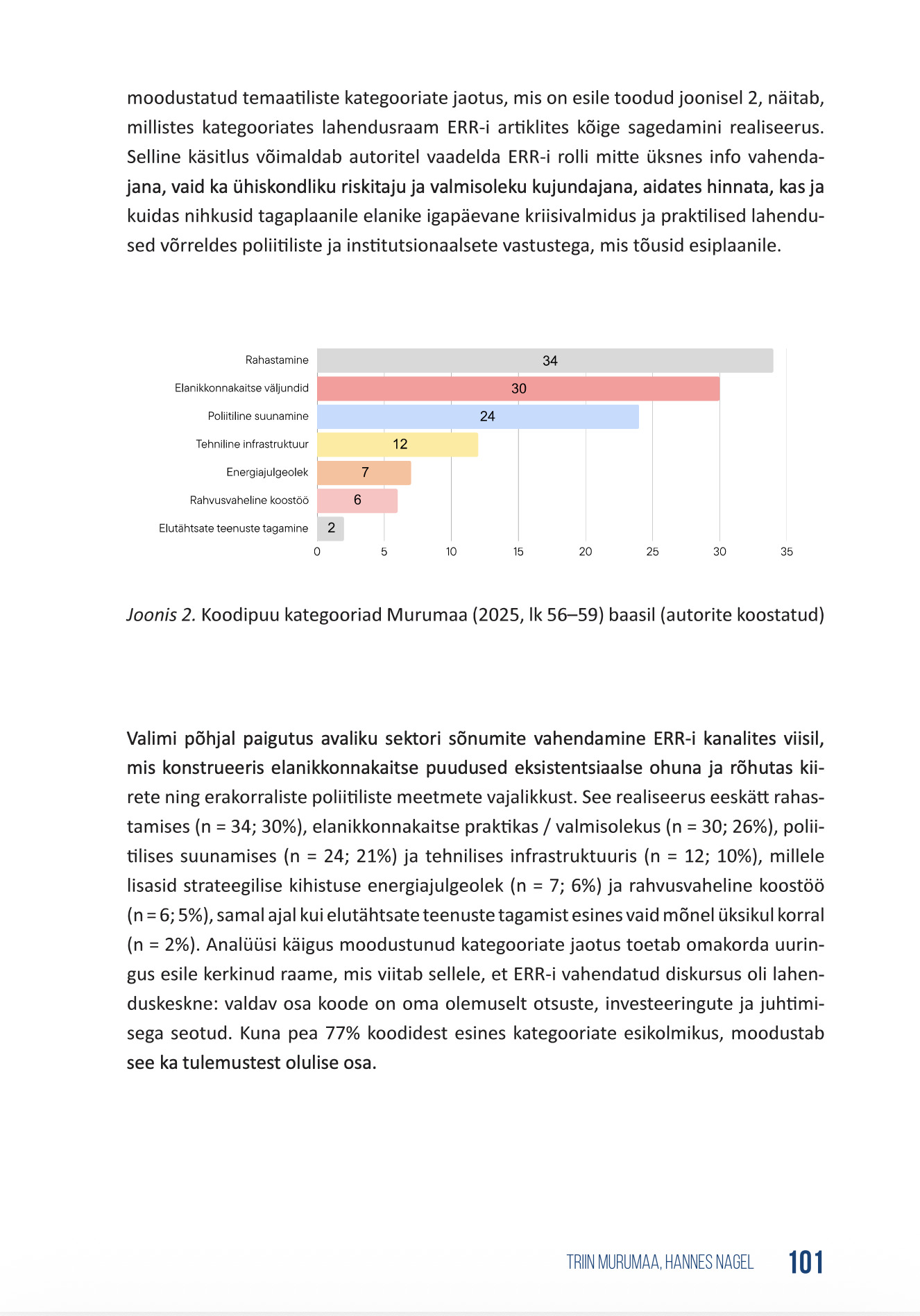
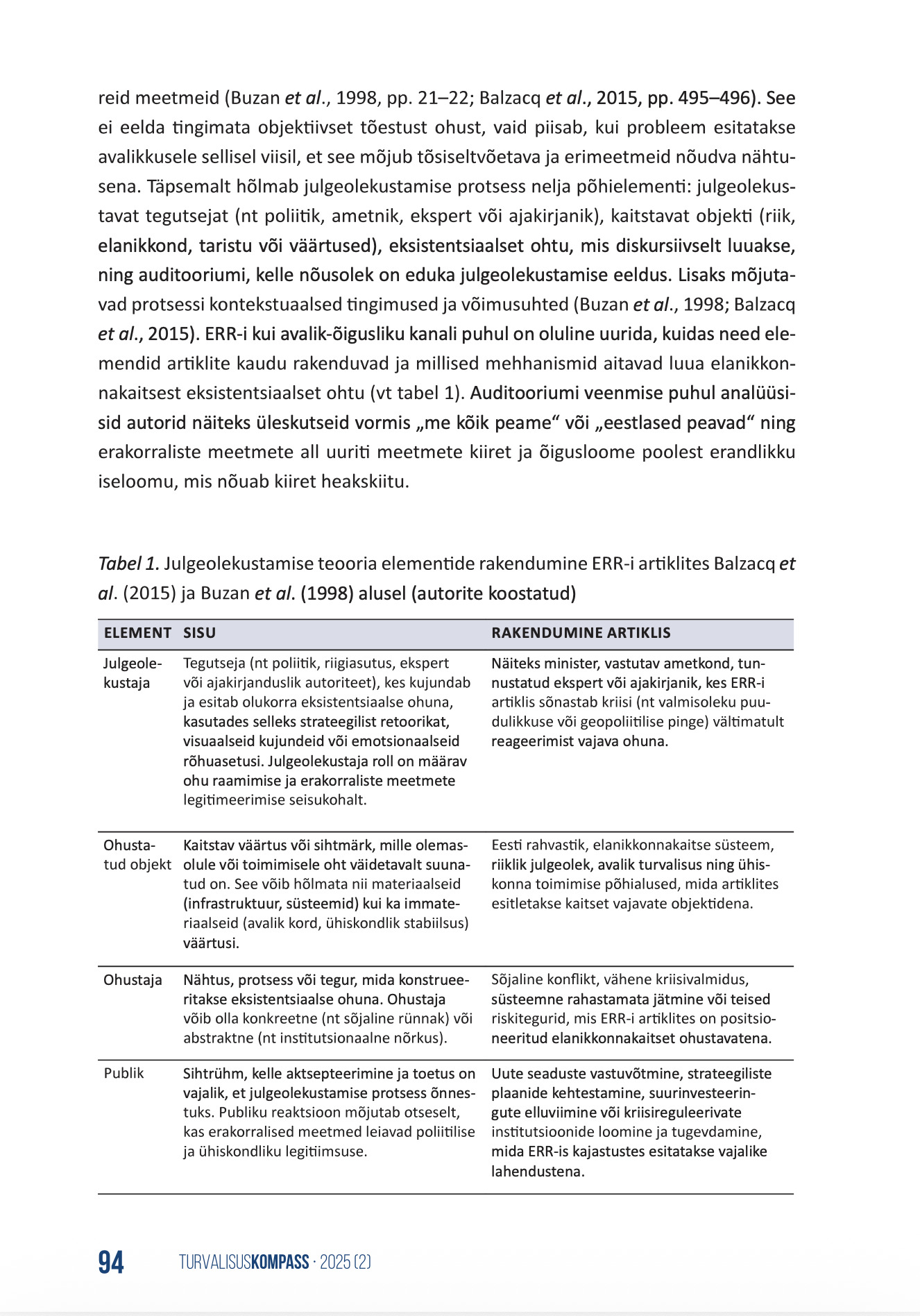
Russia’s full-scale invasion of Ukraine in 2022 brought civil protection more prominently into Estonia’s security policy debate. The study examined how public sector representatives presented civil protection to the public, which problems they emphasised, and how they justified the decisions and measures considered necessary to address them. The theoretical framework combined securitisation theory and media framing theory to explore how public perceptions of threats and the need for action are shaped. The researchers analysed 37 articles published on ERR’s news portal between 2022 and 2024 featuring statements by public sector representatives. Through qualitative content analysis, they identified 115 coded messages, grouped into seven thematic categories: funding, civil protection measures and capabilities, political steering, technical infrastructure, energy security, international cooperation and the provision of essential services.
A central finding was that public sector messages were dominated by justifications for political, financial and infrastructure-related decisions rather than practical approaches to resolving problems. Solution-oriented framing was the most prevalent, accounting for more than half of the identified messages. Shortcomings in civil protection were frequently presented as security threats requiring additional funding, strategic decisions and institutional reforms.
The analysis identified three principal areas of emphasis. First, funding for civil protection was portrayed as a security necessity, although the development of long-term and stable funding arrangements often remained unclear in public debate. Second, individual responsibility for crisis preparedness was strongly emphasised, including the maintenance of emergency supplies and participation in exercises. Third, political leadership, decision-making processes and institutional accountability featured prominently, while everyday service continuity and concrete practical solutions received comparatively less attention.
One significant contradiction concerned the gap between the strategic objectives of civil protection and the practical guidance provided to residents. Although public sector representatives encouraged people to prepare for crises, these appeals were not always accompanied by sufficiently specific explanations of how the expected level of preparedness could be achieved. The study identifies this as a shortcoming at the ‘how’ level, which may prevent political objectives from translating into meaningful preparedness among residents.
The study also examined ERR’s role in communicating public sector messages. According to the findings, the public broadcaster’s news portal served as a highly trusted communication channel through which political and institutional positions gained wider public significance. This does not, however, imply that ERR itself constructed all the securitising messages it conveyed. The research focused on the messages communicated by public sector representatives and how they were framed, rather than measuring the attitudes or behaviour of media audiences.
The authors conclude that civil protection policy objectives, funding decisions and public communication need to be more closely aligned with people’s actual capacity to prepare for crises. Emphasising threats and urging people to act is insufficient unless they are also given clear explanations of the practical steps they can take, together with the support and conditions that public authorities must provide.
The study contributes to the wider debate on the securitisation of civil protection, public sector crisis communication and political accountability. It highlights how messages constructed and communicated in the public sphere can shape perceptions of both the severity of threats and responsibility for addressing them.
🟠 The full research article is available in Estonian through the digital repository and can be accessed here.
🔺The use, distribution, modification or publication of text and images is permitted only with the prior written consent of the NGO Crisis Research Centre. Any unauthorised use is strictly prohibited.
Jaga postitust: