
Empty promises undermine trust in the state
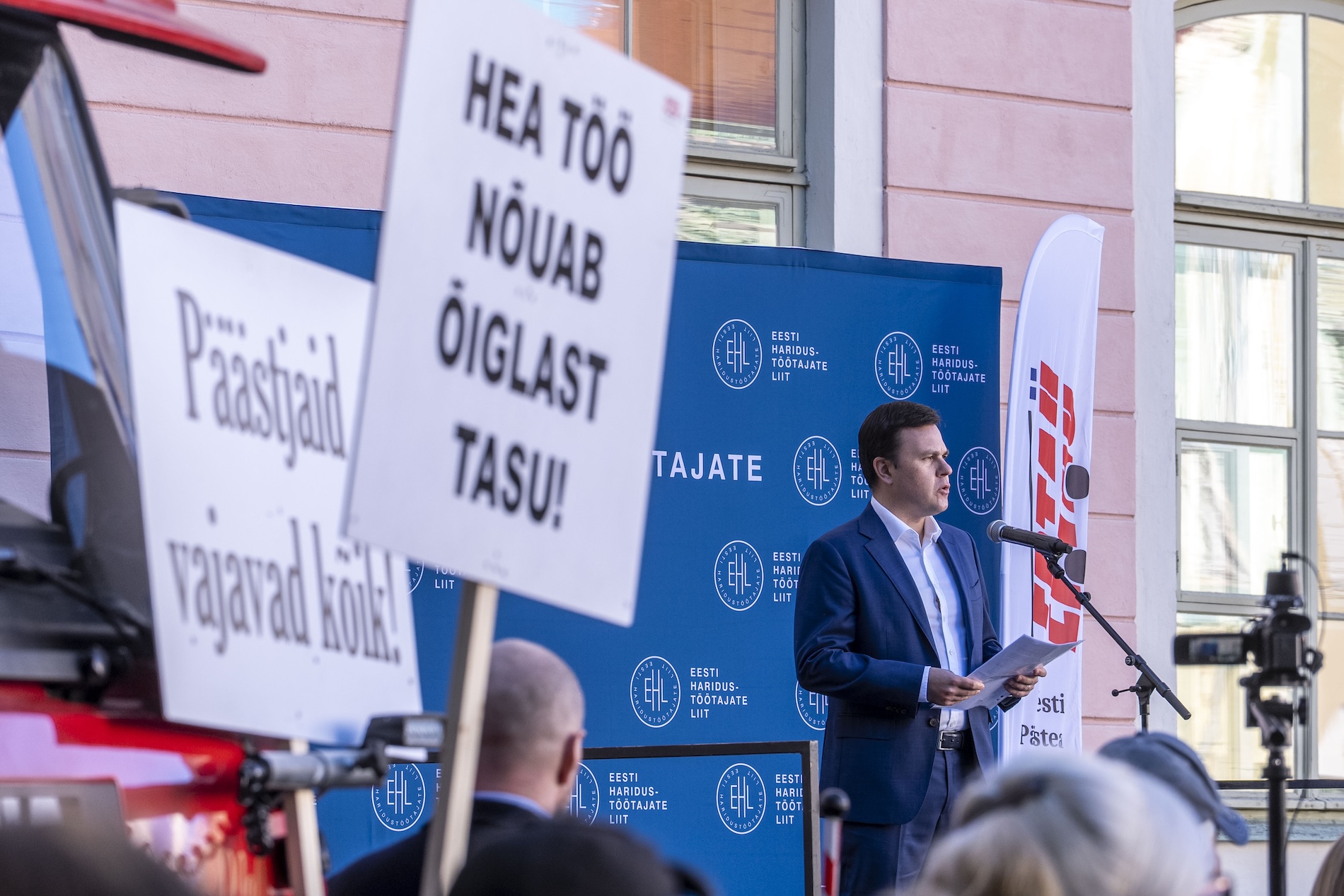
In his speech, Nagel emphasised that education and internal security are among the most essential public services provided by the state and that their functioning has a direct impact on people’s everyday sense of security and their trust in the state. Decisions repeatedly postponed, insufficient funding and recurring promises without adequate backing have brought both sectors to a point where the problems can no longer be regarded as temporary, but have developed into crises lasting for years.
For the Crisis Research Centre, the challenges facing education and internal security are not separate issues. A country’s crisis preparedness depends not only on military defence, but also on whether the police, rescue services, emergency medical services, education and other public services closest to people continue to function both in everyday life and during crises. If these systems increasingly depend on the personal resilience of their employees and their willingness to “hold on just a little longer”, both the continuity of the state and public trust in government will weaken over time.
Nagel stressed that strengthening national defence is necessary, but it cannot come at the cost of chronic underfunding of other essential public services. If the needs of teachers, rescue workers, police officers or emergency medical personnel are met only with words of gratitude and new promises, without being followed by decisions and corresponding budget allocations, those promises themselves become part of the crisis of trust. Below, we publish the Crisis Research Centre’s statement in full:
Dear education and internal security professionals! Dear people!
When a parent sends their child to school, they place their trust in others. They trust that someone will notice their child. That someone will help them grow. When a person calls the emergency number, they trust.
They trust that someone will answer. That someone will come. That at the worst moment of their life, there will be someone who knows what to do. That trust is very concrete. It has your face.
Today you stand here and ask: why is that same trust not reflected back to us in the decisions made by the state? Why are people’s lives entrusted to you, yet when you speak about the people, resources and pay you need to do your work, you are repeatedly forced to prove that you genuinely need them?
There is something special about your work. You see and experience real life. An emergency medical worker enters homes where people living in very different circumstances need help. Sometimes illness exists alongside poverty, loneliness and exhaustion. A police officer enters an apartment where violence keeps recurring and does everything possible to stop it. A rescue worker goes into the smoke knowing that somewhere inside there is a person. Later, they may stand beside that same person when nothing remains of their home. A teacher sees a young person whose belief in themselves has collapsed after a single failed exam. They see young people whose hope for a better life and future opportunities needs to be kept alive. And they encounter situations in which intervention is needed immediately.
These people cannot postpone their crisis until the next budget year. And you cannot tell the people you are going to help: please be patient, there are other priorities right now. You go, and you help.
Estonia must be capable of defending itself militarily. The threat posed by Russia is real. The war in Ukraine shows us every day what war means. But precisely because of this, we must be able to ask: what are we defending? We are defending people and freedom. Their homes. Their opportunity to study, work and raise children. Their right to receive help when accidents and unexpected events occur in life. The strength of the state must reach those people today as well.
Military defence has its own role. But a child suffering from domestic violence needs a police officer and support from social services. An elderly person struggling to breathe needs emergency medical assistance. A person trapped in a burning building needs a rescue worker. A young person losing faith in their future needs a teacher. These functions cannot replace one another. If teachers and internal security professionals are not valued in society today, the challenges we already face will only be amplified in any future crisis. That much is certain.
If, whenever a pay rise for a rescue worker or teacher is discussed, the question is where the money will come from, then when tens of millions are spent we must also be able to ask: where is the result? National defence must not be allowed to develop into the court of a Sun King, where asking questions becomes an act of disloyalty and scrutiny is treated as an insult. The importance of a sector does not grant it immunity. It creates a greater obligation. Especially when other sectors are forced to account for every cent.
When questions are silenced, space opens up for arbitrary action and corruption. Trust disappears. And then the system begins to resemble a snake eating its own tail: by using its own importance to justify everything, it ultimately destroys the very thing on which its strength depends – trust.
Trust also requires listening to the people who know their work. If a teacher says that they cannot continue under such a workload, they should be believed before they leave. If a rescue worker says there are too few people, they should be listened to before help arrives too late. But listening must be followed by a decision.
Words of gratitude are not enough. They must be followed by a line in the budget. Without that, they are merely empty words and yet another set of promises without backing. You need decent pay. Enough colleagues. Equipment that works. And agreements that allow you to plan your lives further ahead than the next budget dispute.
Esteemed decision-makers! The budget is in your hands. It is for you to decide how long the functioning of the state can continue to rely on the hope that good people will hold on just a little longer. But the resilience of good people is not an inexhaustible natural resource.
When these people leave, they leave behind more than an unfilled position. They leave behind a community where help is further away. A child who will be noticed later. A family that will be reached too late. People will genuinely be left in difficulty, even if the consequences are not immediately visible.
Our country must be protected in a way that also makes it a good place to live today. Therefore, trust those to whom people entrust themselves and their children. Believe them when they tell you what they need in order to do their work. And show that trust in the budget.
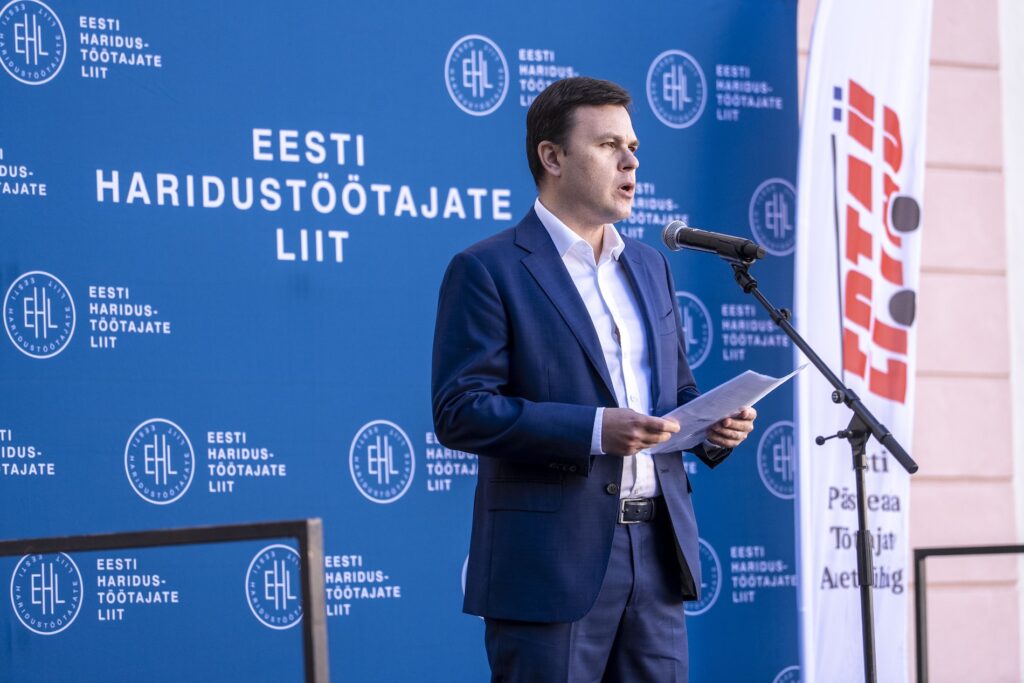
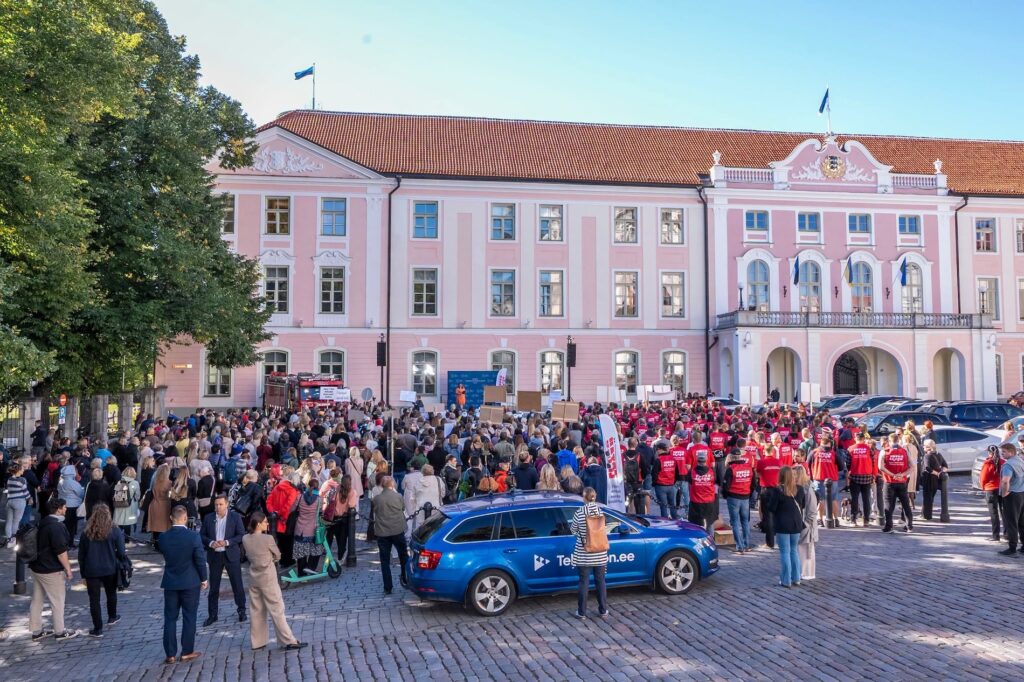
Photos: Estonian Educational Personnel Union and Aivar Kullamaa, 2026.
Jaga postitust: