
If the power plant has been blown up, the plug won’t help
Ukraine is not living through a hypothetical crisis. Russia has deliberately and systematically attacked thermal power plants, boiler houses, substations, and pumping stations — infrastructure objects that are critically necessary for providing essential services. The goal is not to cause isolated disruptions, but to make cities uninhabitable in a systematic way: cold, darkness, and stalled infrastructure.² In such conditions, the crisis is no longer about whether a building has electricity for a circulation pump, but whether heat can be produced at all and fed into the network.
This leads to an inevitable question: if the solution were truly this simple and cost only a few hundred euros, why has it not resolved the cold-season hardships of Ukraine’s civilian population? The answer is uncomfortable but honest. This solution works only under one very specific condition — the heating plant must still exist and be able to produce heat. Ukraine’s experience shows that in a crisis, this is not a condition you can reliably count on.
If the solution cost only 300 euros, Ukraine wouldn’t have a problem with the cold
Concerns are often met with the argument that production plants have black start capability and that air defence protects the infrastructure. But here too we must look at reality. Ukraine’s air defence is strong and effective, yet even there it cannot intercept all attacks, and the reliability of energy infrastructure remains a constant struggle. Moreover, the primary task of air defence is to protect military units and critical military assets. In our geopolitical reality, energy production inevitably remains vulnerable.
Getting heat into people’s homes is not rocket science for specialists in the field, but large Vital Service Providers (VSP) should recognise that in a military crisis they are key targets — the kind that will be blown up. This too is not rocket science, but a method designed to inflict maximum damage in the rear at minimal cost. For this reason, crisis preparedness cannot be limited to a scenario in which electricity is temporarily down but everything else continues to function
We must also ask the essential, more difficult questions that have so far been left unasked. What happens if the thermal power plant no longer exists? If the boiler house has been physically destroyed, not just taken offline?
If the network cannot be restored for days or even weeks? It must be understood that the greatest enemy of a district heating network is a flying object filled with explosives, not a mild power outage that merely stops water circulation. In such a situation, a plug in the basement or a small generator will not help. They may buy time, but they do not replace production. Indeed, generators, battery solutions, and temporary systems are widely used in Ukraine as well. But they are used knowingly as limited tools, not as a promise that the problem is solved in all possible scenarios.
Evacuation is one of the real scenarios
There is another nuance that is rarely discussed. Crisis preparedness does not only mean technical solutions but also the readiness to make the hardest decisions, including evacuation. Honest crisis planning must take into account the possibility that an essential service may be disrupted for an extended period. The message “don’t worry, a plug in the basement will fix everything” creates a false sense of security.
Saying that nothing can go wrong with heating in panel buildings if a 300–500€ solution is installed works at least partly against the efforts of the Rescue Board and municipal authorities, whose aim is to make people acknowledge disruptions, prepare for them, and think through very uncomfortable scenarios. Preparing for a crisis cannot be based on reassuring people at any cost — it must include an honest explanation of what could happen in scenarios A, B and C, and what must be done then. This applies even when Vital Service Providers (VSP) are targeted from the first days of a conflict and are therefore unable to provide services for a prolonged period.
Indeed, a few hundred euros can improve preparedness and buy extra time in the case of a simple power outage. A backup plug and generator are useful tools in more limited crises. Unfortunately, they are of no help when the heating plant simply no longer exists. This is precisely the question that should be asked and considered — what is the plan in such a case, rather than believing in convenient miracle solutions.
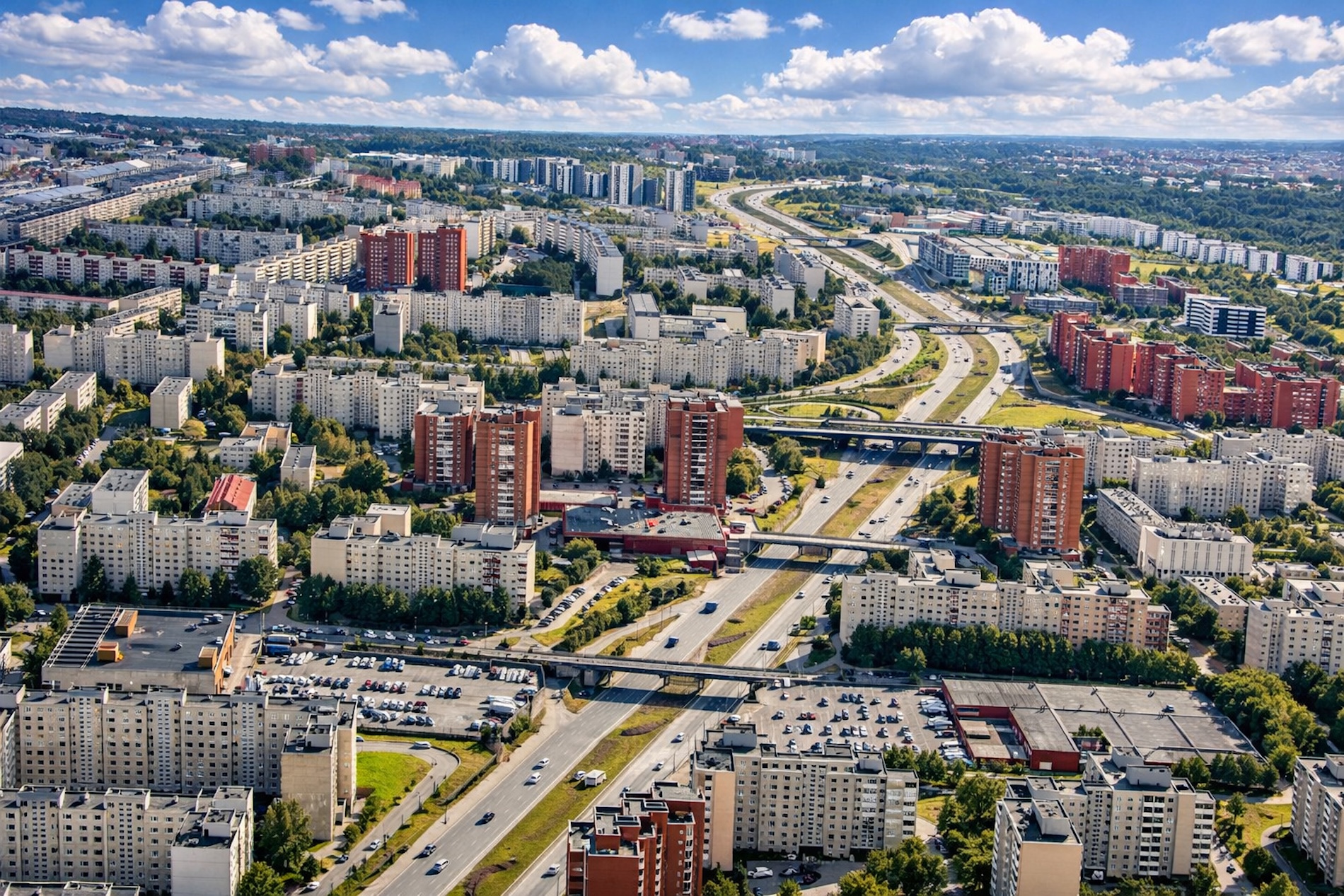
🟠 This op-ed (Hannes Nagel) was originally published on December 16, 2026 in the Delfi portal. Photo: large apartment building blocks in Lasnamäe (Kriisiuuringute Keskus, 2025).
Sources:
1 Raig, T. & Reivart, A. 2025. INTERVJUU | Utilitase kaugküttejuht: Lasnamäe külmumise jutt on jama. Soojakriisi lahendamiseks piisab fööni jagu elektrist. Ärileht, 16.12.2025.
2 Harding, L. 2025. ‘They decided to kill us with cold’: Ukrainians struggle against Russian assault on power network. The Guardian, 22.11.2025.
Jaga postitust: