
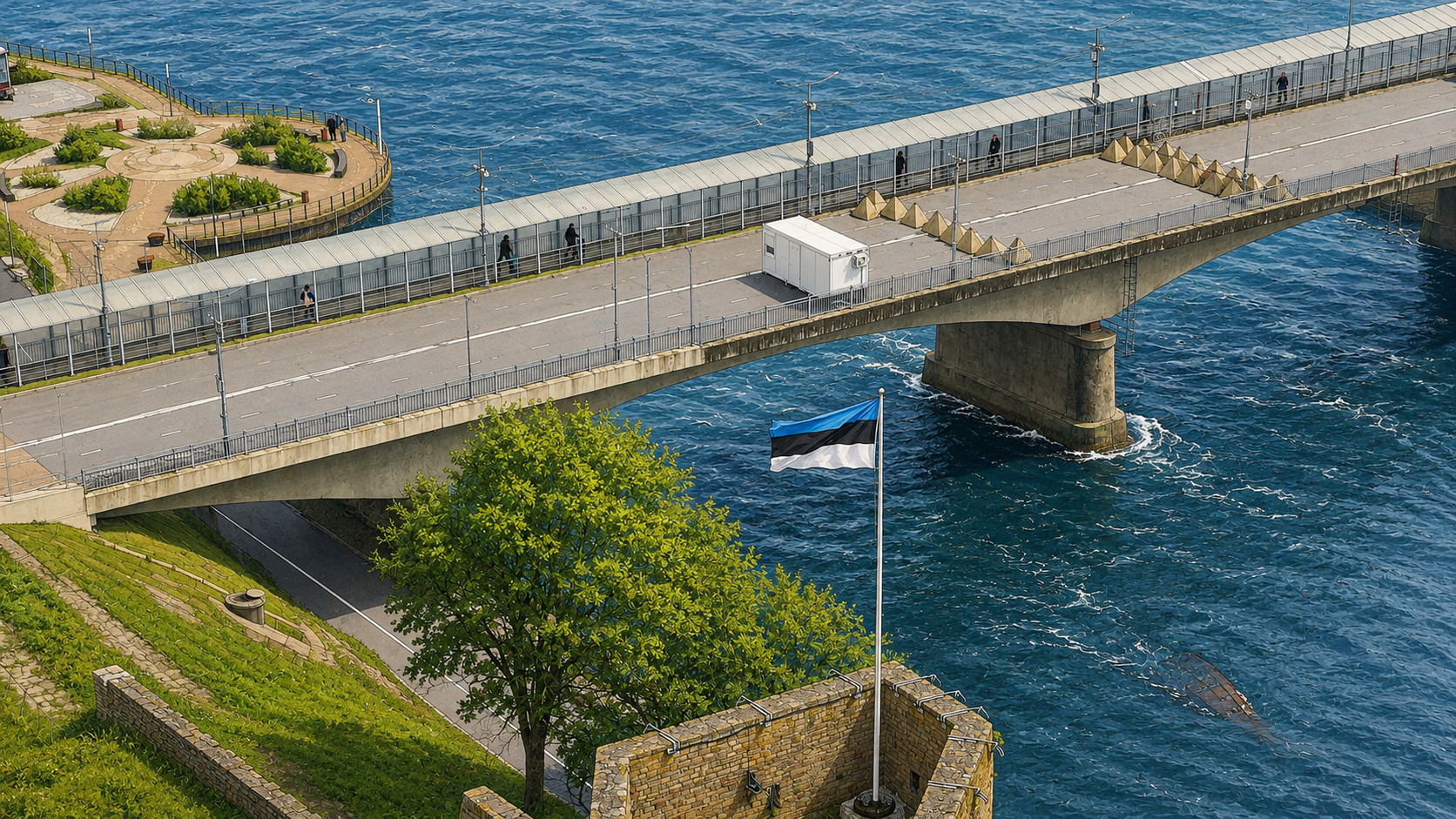
DISCUSSION | “The Narva People’s Republic” narrative as an example of today’s complex information environments
Crisis Research Centre intern Polina Odarych (Tallinn University) discusses the complexity of today’s information environments and how emotions, repetition, and information noise can shape public perception even in situations where the factual basis is weak or fragmented. How do propaganda strategies function under conditions of information overload, and why should crisis preparedness include not only physical security but also the ability to cope with complex and rapidly changing media environments?
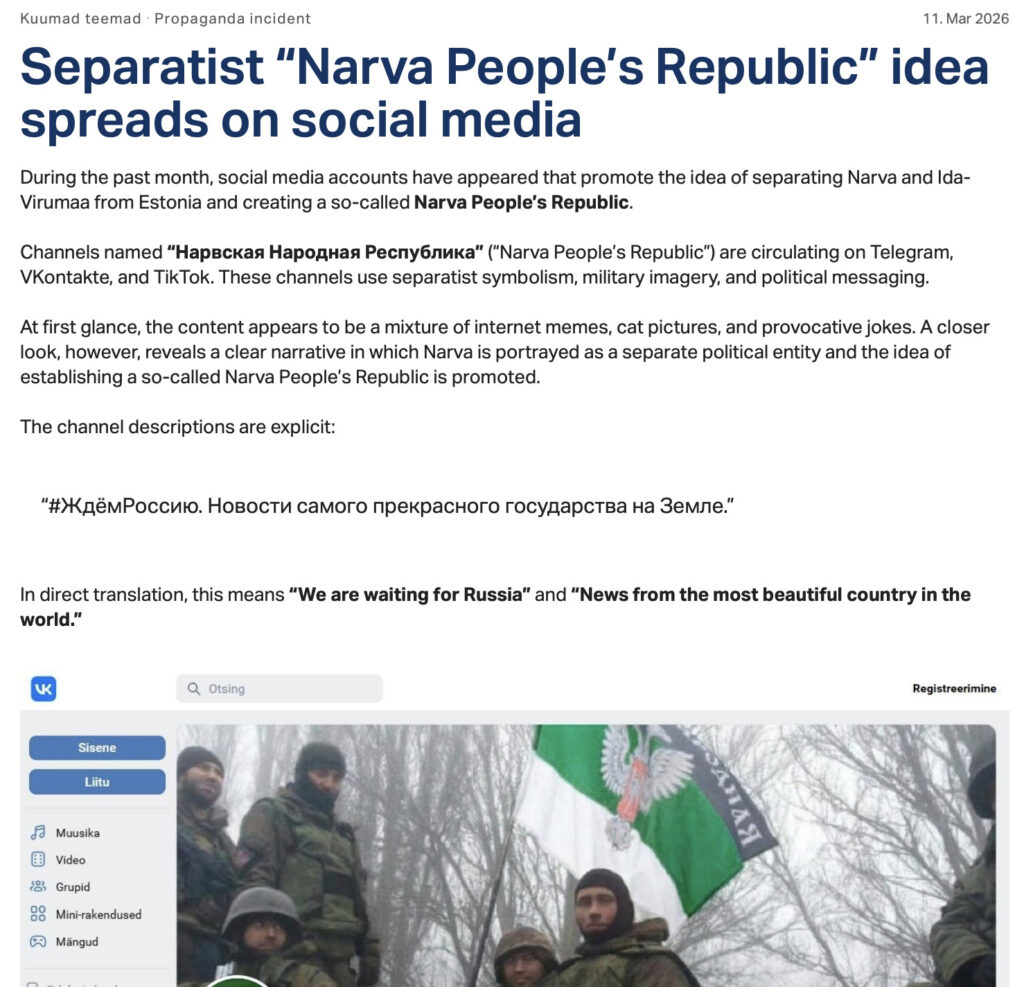
The recent story of the “Narva People’s Republic” – an alleged initiative to create an independent “People’s Republic” on the territory of Ida-Virumaa – has relatively quickly attracted the attention of both the Estonian and international public. What began with a fairly concise report by the Estonian NGO Propastop¹ on a relatively fringe local phenomenon, which at the time indeed was exactly that, has since reached the front pages of countless national and international media outlets (despite what appears to be little genuine public support among locals).
Without going deeper into the chronological details, the story of the “Narva People’s Republic” remains a topic that is widely speculated upon and closely followed. It is emotional, attracts attention, and sparks curiosity; yet beyond what has already been covered by local and foreign journalists, the phenomenon should also be recognized — as the title of this article suggests — for its potential to illustrate the complexity of situations in which attention directed at such sensitive topics may itself create additional vulnerability.
These dynamics have direct implications for crisis preparedness at the community level.
🟠 Since 2024, the Crisis Research Centre has provided students of the School of Governance, Law and Society at Tallinn University with opportunities to complete professional internships, and, where possible, students are also involved in cooperation projects. Photo: illustration of the border bridge and screenshot from the Propastop website (KRUK, 2026).
Sources
¹ [Anon.], 2026. Separatist “Narva People’s Republic” idea spreads on social media. 11.03.2026, Propastop.
² Paul, C. & Matthews, M. 2026. The Russian “Firehose of Falsehood” Propaganda Model: Why It Might Work and Options to Counter It. 11.07.2026, RAND Corporation.
Jaga postitust: