
The library as a multifunctional component of civil protection
Libraries do not require tickets, do not impose class boundaries, and are open to anyone who wants to learn, socialize, or simply be in a safe shared space. Where the compulsion to consume disappears, space for thinking and noticing emerges. This is the essence of democracy: access to information and a sense of community that comes from being together and realizing that other people are actually quite normal. In contrast to the algorithmic echo chambers of social media, libraries can break down silos and bring together people with different views and experiences who share the same physical space and forum for discussion.
Libraries are institutions of freedom—they protect freedom of thought, ensure equal access to information, and teach critical skills, including how to find reliable information. These are tools of democracy, the absence of which opens the door to manipulation and disinformation. Free nationwide access is not just a convenience, but a strategic resource. Even in times of crisis – as we saw in Estonia when Ukrainian war refugees used libraries to learn the language, familiarize themselves with the culture, and acquire new job skills – all in order to integrate into society and find their place in our economy and communities.
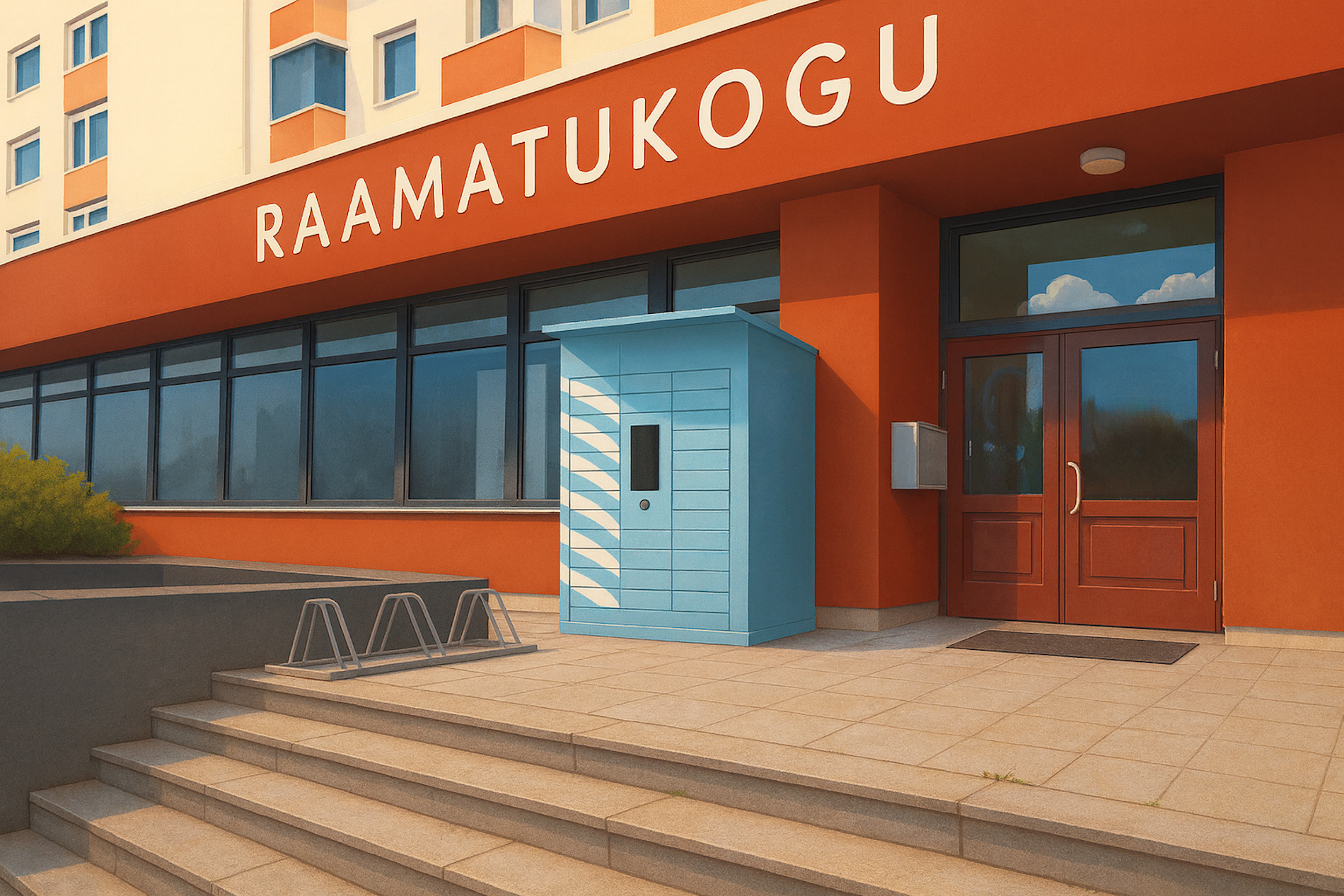
However, libraries only survive thanks to library staff. Recently, I have noticed an increasing use of self-service technology in libraries – at least in some libraries, items can be conveniently borrowed and returned using a machine. On the one hand, this is a great opportunity for libraries – it frees up the time of library professionals for advising people or community work, but at the same time, we must be vigilant.
The introduction of machines may discourage human contact in libraries, and the introduction of machines must not be used as an argument for laying off competent employees in order to save costs. A machine may be convenient for borrowing and returning items, but it does not notice people in need, nor does it recommend reading material that would broaden your worldview or help you understand a complex topic. If machines become an excuse to cut librarian jobs, we will lose something irreplaceable – the knowledge that someone is really listening and can guide you, as well as people who can help you in times of crisis.
A recent study (Lopatovska et al., 2025) highlights Ukraine’s experience, which, in my opinion, shows that a regular community library can literally be a matter of life and death.¹ Since February 2022, nearly 700 library buildings have been damaged or destroyed,² but the slogan “Незламні бібліотеки” (unbreakable libraries) remains. In wartime, libraries have become “dual-purpose” civil defense facilities: they protect people and preserve culture. Reading rooms in basements have been converted into shelters (some of which are open 24 hours a day), where those in need can get information, warmth, internet access, and a little rest. They also serve as volunteer centers where camouflage nets are woven for the army, trench candles are poured, and aid packages are packed. Library staff teach media literacy even during wartime, and so-called “fortress libraries” cover their rare items with sandbags or scan them with battery-powered devices to preserve them for future generations.
Maintaining the mental health of children and young people is also part of this work – for example, bibliotherapy corners and mobile reading buses reach those whose schools have been destroyed.³ A study by the Ukrainian Ministry of Health confirms that readings led by psychologists help reduce PTSD symptoms, but perhaps most telling is the fact that libraries in liberated settlements are reopening within weeks of the end of mine clearance. In essence, as soon as it is possible and safety is guaranteed. That is how important the role of libraries is.
We have a lot to learn from this experience. Statistics Estonia data for 2023 show that only 34% of people over the age of 15 visit libraries – this figure has fallen by nearly 6 percentage points in ten years.4 Visitor numbers are lowest in Ida-Viru County. Although the proportion of visitors among young people (aged 15–25) is over 60%, this has also fallen by 10% in ten years. There is also a gender gap – 43% of women and only 24.5% of men visit libraries.4 These are not just cultural statistics, but indicators of social cohesion, education, and information literacy.
It should also be borne in mind that every euro invested in libraries is also an investment in the capacity of shelters, community resilience, digital inclusion, and cultural resistance, i.e., broad-based national defense.
Libraries are not a “nice addition” to the culture budget, but a critical element of civil protection, and it is regrettable that this has to be explained using the example of a war against a neighboring country. What is happening in Ukraine also answers the question of whether and what role libraries play in crises and civil protection. It also explains why we must prepare for this here – individually, communally, and institutionally, including in libraries – because in a military crisis, no area remains untouched.
The op-ed (Hannes Nagel) was originally published in the magazine Raamatukogu (4/2025, pp. 14–15). Read the entire piece here.
Sources
1 Lopatovska, I., Pickering, G., & Coan, C., 2025. Ukrainian public libraries during the Russia-Ukraine war: Supporting individuals, communities, and the nation. Journal of Librarianship and Information Science.
2 (Anon.), 2025. Опис проєкту. ПЕН.
3 Aksjonova, N., 2024. Bibliotherapy as a Direction of Library Activity under the Russian-Ukrainian War. Наукові праці Національної бібліотеки України імені В.І. Вернадського, 64, pp. 107-119.
4 (Anon.), 2025. Raamatukogud ja raamatud. Statistikaamet.
Jaga postitust: